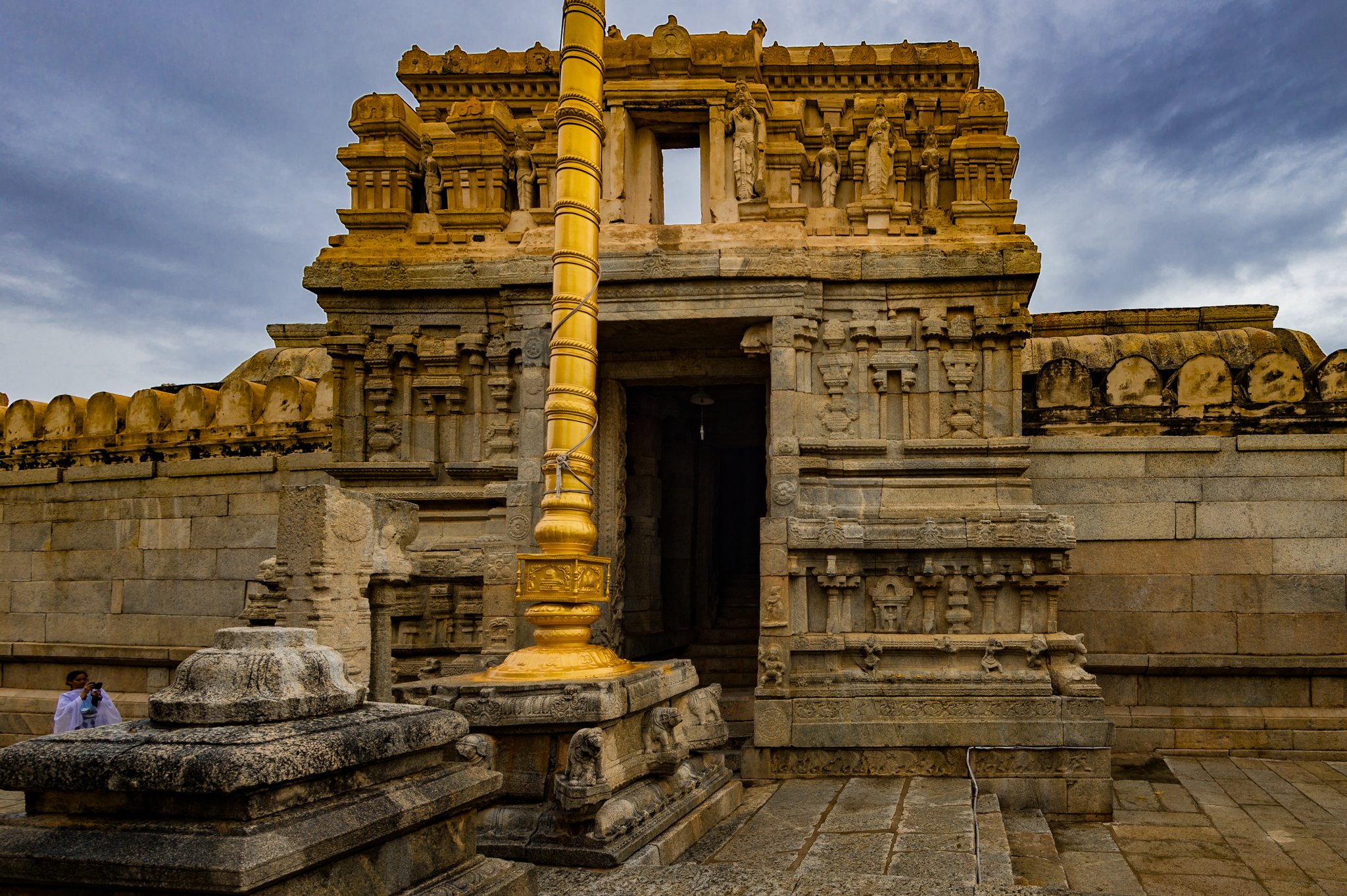
Andhra Pradesh village known for its 16th-century Veerabhadra Temple and Vijayanagara carvings.
Lepakshi is a small village in the Anantapur district of southern Andhra Pradesh, about 120 kilometres north of Bangalore and a short detour off the main highway to Hyderabad. It would be easy to drive past — but doing so would mean missing one of the finest examples of Vijayanagara architecture in India.
The centrepiece is the Veerabhadra Temple, built in the 16th century under the patronage of two brothers, Virupanna and Veeranna, who served as governors under the Vijayanagara Empire. The temple is a masterpiece of stone carving: its pillars are covered in intricate sculptures of gods, celestial musicians, and mythological scenes, and the ceilings carry some of the largest and best-preserved Vijayanagara-era murals in existence. One chamber's ceiling spans an enormous area in a single painting — extraordinary by any measure.
Before you reach the temple, you pass a monolithic Nandi bull, one of the largest in India, carved from a single granite boulder and sitting in calm attendance at the edge of the village. The main temple complex holds a massive Shivalinga sheltered beneath the hood of a seven-headed stone serpent, set in the open air rather than enclosed in a shrine.
Lepakshi is easy to visit as a day trip from Bangalore, and most people do exactly that. But the place rewards slowness — arriving early before the tour groups, sitting with the carved columns, noticing the details. There are no crowds to fight, no queues, and the entry is free.
Guide
Getting There
By car. Lepakshi is 130 km north of Bangalore on the NH44 (the old NH7) towards Hyderabad, around two and a half hours by road. Turn off at Kodikonda and follow signs east for 15 km. The road is good. Most visitors come as a day trip from Bangalore by hired car or taxi (around ₹3,500 round trip).
By train. The nearest railhead is Hindupur, 14 km away, with several daily trains from Bangalore (KSR Bengaluru) in about three hours. From Hindupur you can hire an auto-rickshaw to Lepakshi for ₹400–500 return including waiting time, or pick up the local APSRTC bus.
By bus. Andhra Pradesh State Road Transport runs occasional buses from Hindupur and Anantapur to Lepakshi village. The Karnataka KSRTC has direct buses from Bangalore's Majestic stand to Hindupur every half hour.
There is no commercial accommodation in Lepakshi itself worth recommending. Hindupur has basic hotels for an overnight stay if you want to see the temple at sunrise.
Guide
When to Go
October through February is the best window. Daytime temperatures sit around 26–30°C, mornings are cool, and the granite of the temple compound is bearable underfoot. The light is also at its best in these months — the low winter sun comes through the temple's stone windows and lights the ceiling mural directly for an hour either side of midday.
March to June is hot and dry, with afternoon highs over 38°C. The temple stones radiate heat well into the evening. Come at first light if you must visit in summer. The monsoon (July to September) is brief here — Anantapur district is one of the driest in India outside Rajasthan — and rarely disrupts a day trip, though clouds dim the mural.
The temple's annual chariot festival (Brahmotsavam), held in February, draws crowds of pilgrims. If you want to see the place at its liveliest, time your visit then; if you want it empty, avoid the festival week.