Bhadrachalam
©
Bhadrachalam

Bhadrachalam

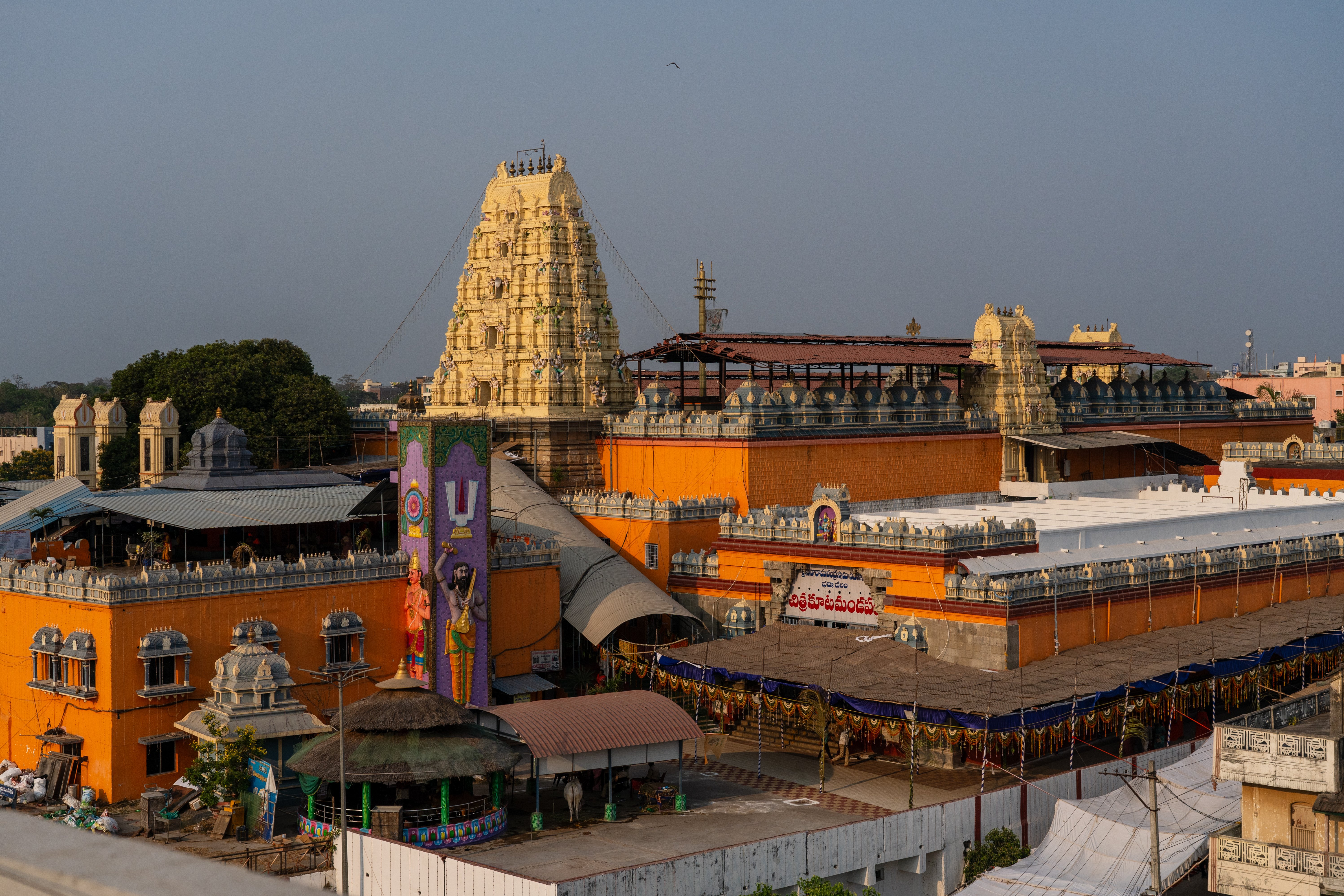
Godavari River pilgrimage town centred on the Sita Ramachandraswamy Temple dedicated to Lord Rama.

Bhadrachalam is a Hindu pilgrimage town on the banks of the Godavari River in what is now Telangana state. The town's principal draw is the Sita Ramachandraswamy Temple, one of the most revered Vaishnavite shrines in South India, dedicated to Lord Rama and believed to mark the site where he spent time during his forest exile. The temple's Rama Navami festival in March–April draws hundreds of thousands of devotees each year.

The setting on the Godavari River ghats is beautiful — the river here is wide and slow, flanked by forests and tribal villages. Most visitors come for the temple, but the river boat trips to the Papikondalu Hills and the day excursion to Parnasala, the legendary site of Sita's abduction, reward those who stay an extra day or two.

Guide

Bars and Cafes

Bhadrachalam is a pilgrimage town and alcohol is not a feature of its public life. The place to drink is at the tea stalls clustered around the bus stand — strong, sweet, milky chai served in small glasses. The small café on the steam boat that crosses the Godavari to the Perantapalli shore serves breakfast, snacks, and cool drinks with river views that no hotel lobby can match.

Most hotels near the temple precinct have in-house restaurants that double as gathering places in the evenings. Hotel Ratan, close to the temple entrance, is a reliable option for chai and light snacks late into the evening.

Guide

Day Trips

The forested terrain around Bhadrachalam offers several worthwhile excursions, all tied to the Ramayana landscape of the Godavari valley.

Parnasala (35 km) is the site traditionally identified with Rama's forest hermitage and Sita's abduction by Ravana. A small temple marks the spot, and rocky outcrops along the river are pointed out as bearing the traces of her sari and Ravana's chariot. Shared jeeps run from the bus stand.

Papikondalu Hills (50 km by river) is the highlight for nature lovers — a full-day boat journey through densely forested gorges, with waterfalls and tribal villages along the way. APTDC runs organised day trips from the river ghats; lunch is included.

Dummugudem is a forested island in the Godavari about 25 km away, linked to the mainland by a century-old colonial bridge. The island has an atmospheric Atmarama temple and is accessible by bus from Bhadrachalam.

Gundala (5 km) is known for hot springs on the riverbank — minor but unusual, and easy to combine with an early morning walk along the Godavari.

Guide

Eating Out

Bhadrachalam's restaurants are clustered along the main road near the bus stand and around the temple precincts. The town is overwhelmingly vegetarian — this is a temple town, and most eateries cater to pilgrims who observe dietary restrictions. The standard meal is a traditional Andhra thali served on a banana leaf: rice, sambar, rasam, dry vegetable curries, pickles, and curd.

Look for Bhavani Restaurant near the bus stand, which is popular with local pilgrims for its good-value thalis and clean surroundings. Street stalls sell bobbatlu (sweet stuffed flatbread), muruku (fried rice crackers), and Kakinada kaja — a distinctive flaky sweet pastry particular to the region. Putharekulu, paper-thin rice flour rolls filled with sugar and dry fruits, make a good take-home item and are sold near the temple entrance. Most hotel restaurants along the main road are open until 10pm.

Guide

Getting Around

Bhadrachalam town is small enough to walk around — the temple, the ghats, and the bus stand are all within fifteen minutes of each other on foot. Auto rickshaws cover the town and outlying areas; they have no meters, so agree on the price before you get in. Expect to pay around ₹30–50 for short trips within town.

For the Papikondalu Hills boat trip, tickets are sold at the APTDC counter near the river ghats. Full-day boat tours include lunch and are the standard way to see the gorge. For Parnasala (35 km) and other day trips, shared jeeps and occasional buses run from the main bus stand.

Guide

Getting There

The nearest large city is Khammam (about 100 km), with rail connections to Hyderabad, Vijayawada, and other major centres. The nearest airport is Rajiv Gandhi International Airport in Hyderabad, around 280 km away; from there, take a train or bus to Khammam and then a local bus or taxi to Bhadrachalam. APSRTC (Andhra Pradesh State Road Transport Corporation) buses run from Hyderabad, Khammam, and several other towns to Bhadrachalam.

Guide

Shopping in Bhadrachalam

For those who like to explore unique cultural offerings, the Bhadrachalam Shopping experience is an inescapable temptation. Though a small town that owes much of its identity to the presence of exotic Hindu temples, Bhadrachalam has become one of the most toured destinations in India, visited by regional and international visitors.

Bhadrachalam Shopping Season

It should be noted that unlike some of the cosmopolitan cities, Bhadrachalam doesn’t offer the convenience of year-round shopping opportunities. The reason is simple - this town owes its visitors due to its sprawling temples. It is only during the festive period that worshipers and visitors come flocking to witness traditional Hindu festivities. Therefore, if you are planning to do some serious shopping in Bhadrachalam and want to witness the entire range of the native offerings, schedule your visit during the prime festival season. The festival season in Bhadrachalam begins from December onwards. Ekadasi and Dasavatara Mahotsavams are the two main festivals during which huge processions are arranged. During this time, the entire town is lit up with oil lamps and decorated with colorful paintings, called rangolis.

Bhadrachalam Shopping Tips

Please note that there aren’t any shopping arcades or dedicated shopping zones in Bhadrachalam. All shopping prospects are limited to street-side stalls that seem to gain endless proportions, stretched out for miles. You can expect a range of native Indian arts and crafts, including decorative pieces of home decorations made of brass and wood. Some of the stalls selling beads and silver jewelry are found along the banks of the Godavari River.

The most famous offering of Bhadrachalam is the silk saree. These are traditional Indian garments worn by Indian women. The sarees are sold in a variety of silks and are embellished with handcrafted patterns. The most expensive and sought-after are the Rajmundri silk sarees that are supposed to have a royal heritage.

Another item worth consideration is the hand-woven carpets. The neighboring city of Hyderabad produces some of Asia’s most lavish carpet creations. As it turns out, some of the native weavers are based in Bhadrachalam and offer slightly simpler, but amazingly-affordable versions of these carpets.

Best Shopping Time

First-time visitors should avoid the small, crowded stalls that are set up along the periphery of the main Northern Gate of the temple complex. The rush can be maddening during the early morning and late-evening hours and visitors might be overwhelmed by the swarm of worshipers. It is best to step out for shopping during the post-lunch time. This is when the devotees have receded after offering their early morning prayers.

Contributors April 06, 2010

April 09, 2010
Guide

When to Go

October through February is the most comfortable time to visit — dry weather, temperatures between 12°C and 25°C, and low humidity. The boat trips to Papikondalu Hills are at their best in this period: the river is full from the monsoon, the forest is still lush, and the gorges are clear of haze.

The most significant time to visit is Rama Navami (March–April), when the temple hosts a 10-day festival celebrating the divine marriage of Rama and Sita. The event draws hundreds of thousands of pilgrims from across Telangana, Andhra Pradesh, and beyond; the atmosphere is extraordinary, but accommodation must be booked well in advance and prices rise sharply. Diwali in October–November brings a second, smaller surge of pilgrims. Summer (March–June) is very hot, often reaching 40°C. The monsoon (June–September) brings heavy rain and can flood roads to Parnasala and other riverside sites.