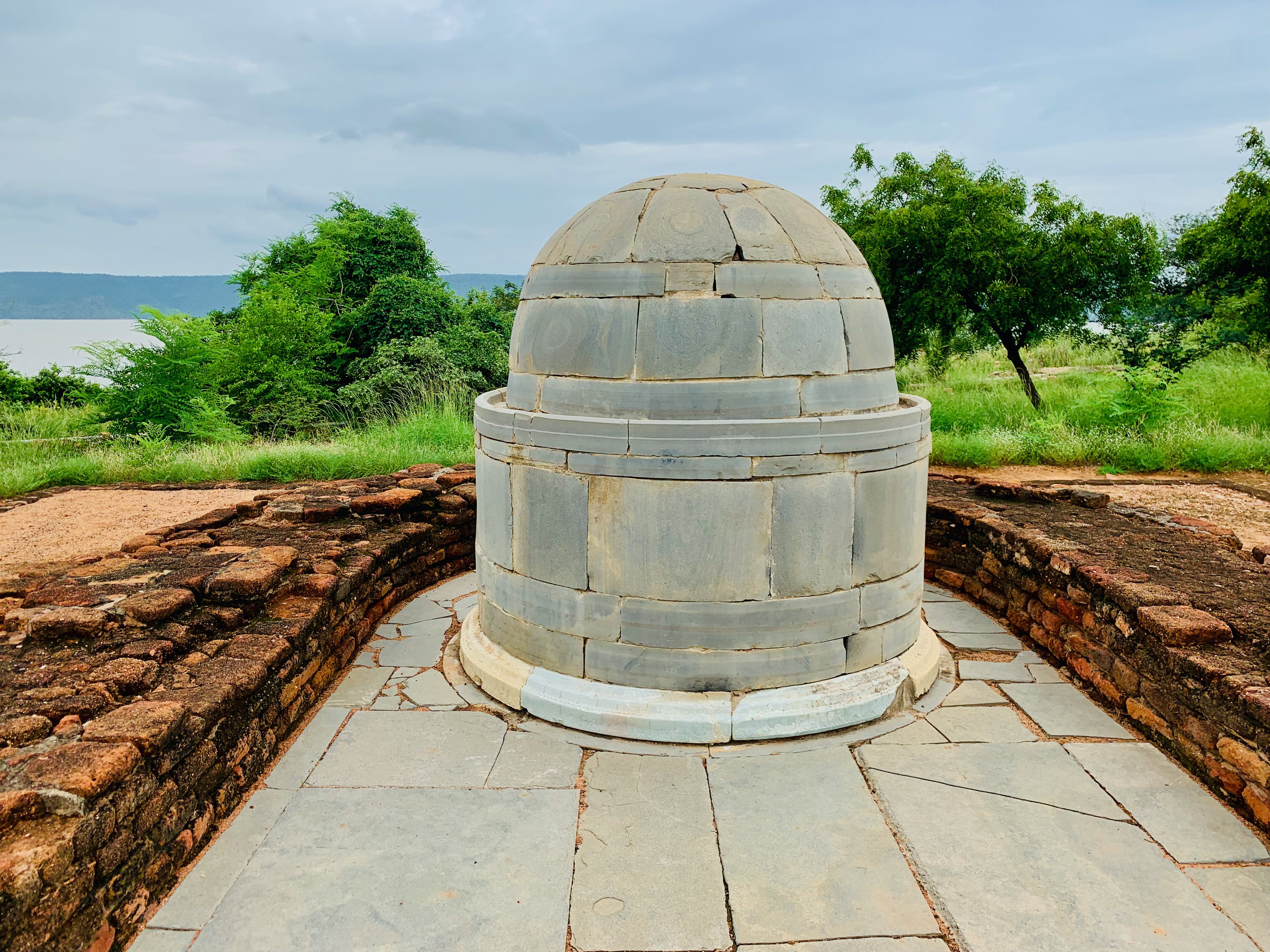
Nagarjunakonda is an island archaeological site in Nagarjuna Sagar reservoir, about 150 km southeast of Hyderabad in Andhra Pradesh. It preserves the remains of one of the most important Buddhist centres in South India, dating primarily from the 2nd century BC to the 9th century AD.
When the Nagarjuna Sagar Dam was built in the 1960s, the valley was about to be flooded. The Archaeological Survey of India conducted extensive excavations before the waters rose, uncovering over 1,000 sites — more than 30 Buddhist monasteries and stupas among them. The most significant finds were carefully relocated to the hilltop that became an island when the reservoir filled, and a museum was built there to house the smaller artefacts. The reconstructed ruins include a great stupa, several monastery complexes, and an apsidal temple, all painstakingly dismantled and reassembled stone by stone before the valley flooded.
The Nagarjunakonda Museum is one of the finest archaeological collections in South India. The sculpture galleries contain outstanding Buddhist stone reliefs from the 2nd–4th centuries AD, and the range of objects — coins, terracotta, jewellery, inscriptions — gives a vivid picture of a prosperous, cosmopolitan civilisation. The site documents the evolution of Buddhism through four distinct sects that operated here simultaneously.
To visit, you take a boat from the Nagarjuna Sagar dam site across the reservoir to the island — a pleasant ride with views of the surrounding hills. The museum and reconstructed ruins can be covered in a few hours. The site is most easily visited as a day trip from Hyderabad, though basic accommodation exists at Nagarjuna Sagar town.