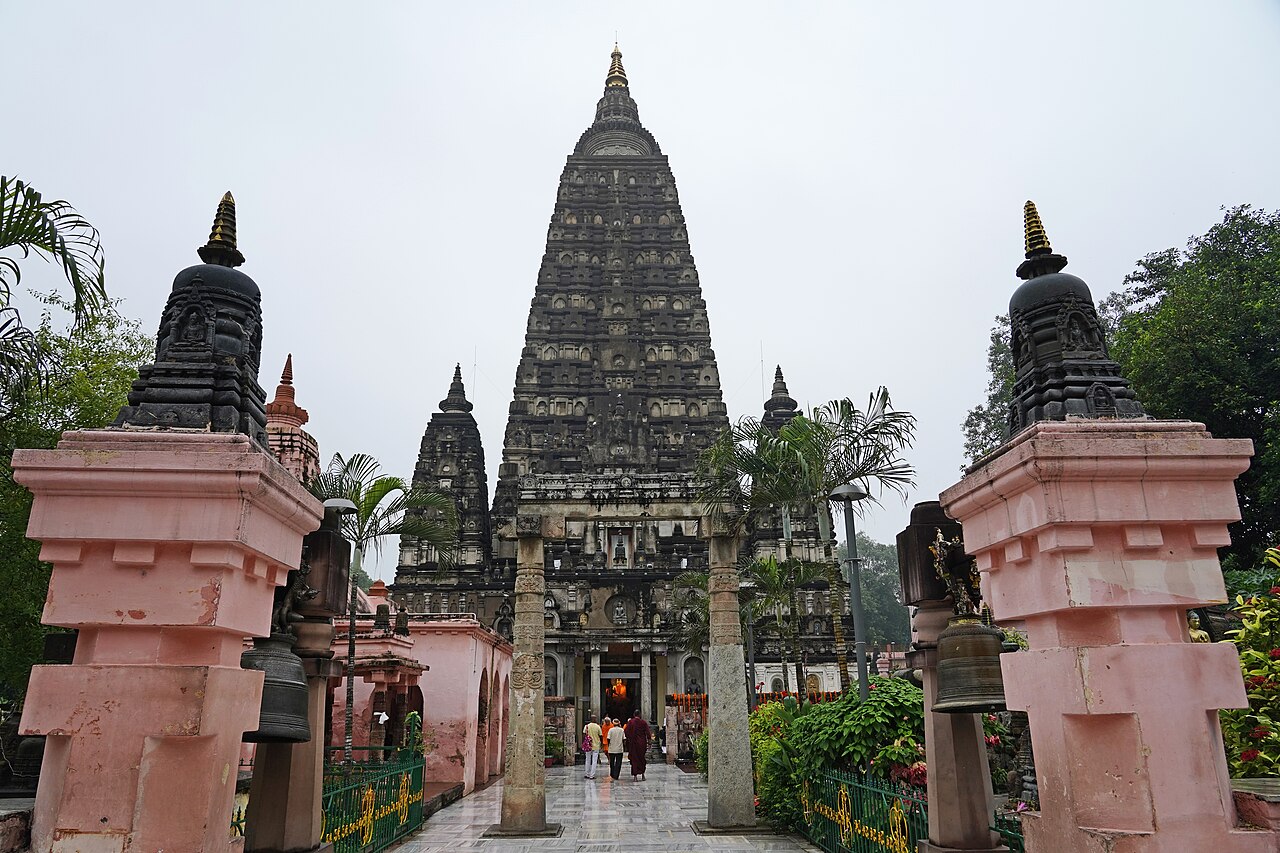
Bodh Gaya is where Siddhartha Gautama sat beneath a pipal tree and became the Buddha. That single event, some 2,500 years ago, made this small town in Bihar one of the most important pilgrimage sites in the world. Today it draws thousands of Buddhist monks, nuns, and pilgrims from across Asia, alongside a steady stream of curious travelers.
The centrepiece is the Mahabodhi Temple, a UNESCO World Heritage Site built in the 5th or 6th century on a spot where King Ashoka erected the first shrine in the 2nd century BC. Behind the temple stands the Bodhi Tree — not the original, which was destroyed by King Pushyamitra during his persecution of Buddhism, nor its replacement, which King Shashanka cut down in the 7th century. The current tree was planted by a British archaeologist in 1881 after the previous one died of old age. The lineage is contested but the atmosphere is not: monks chant, butter lamps flicker, and pilgrims prostrate themselves on wooden boards around the tree. Nearby, the small Muchalinda Lake holds a statue of the serpent king who sheltered the Buddha from a storm.
Bodh Gaya was once the site of a great monastic university and the premier centre for the study of early Buddhist schools in India for some 700 years. Its most famous institution was a huge monastery built by the King of Sri Lanka in the 4th century, which functioned right up to the 13th century. When the site was abandoned in the 14th century, its temples and shrines fell into ruin. Revival began only in the early 20th century, and today most Buddhist countries maintain temples here — you can visit the Thai Monastery, Tibetan Tergar Monastery, Royal Bhutan Monastery, and the elegant Japanese Temple all within walking distance of each other.
The Great Buddha Statue — 25 metres of seated sandstone — stands west of the Mahabodhi Temple, and the Archaeological Museum displays Pala-period sculptures recovered from the site. For those with more time, the Dungeshwari Caves 12 kilometres away mark where the Buddha practised extreme asceticism before abandoning it.
The town itself is modest and dusty, very much part of rural Bihar. But the concentration of devotion from so many different Buddhist traditions in one small place gives it a remarkable energy. If you are interested in Buddhism, or simply in seeing faith expressed in a dozen different architectural styles, Bodh Gaya is worth the journey.