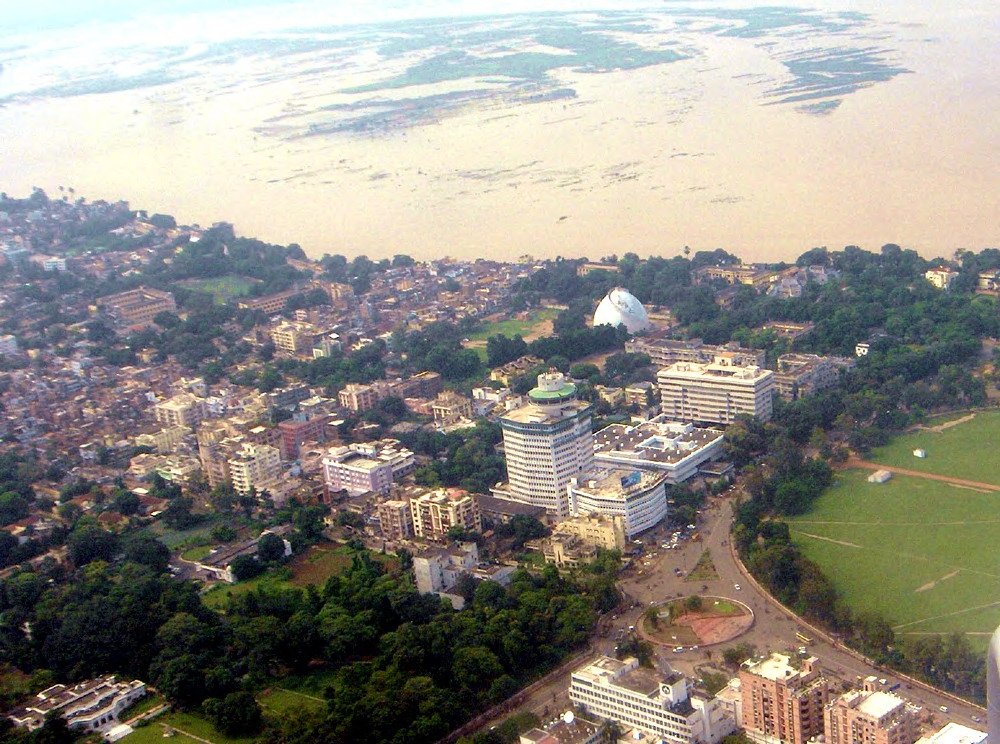
Patna is one of the oldest continuously inhabited cities in the world. As Pataliputra, it was the capital of the Maurya and Gupta empires -- the seat of Ashoka and Chandragupta -- and one of the great cities of the ancient world. Today it is the capital of Bihar, a sprawling, chaotic, and fascinating city stretched along the southern bank of the Ganges.
The city is not conventionally beautiful, and the infrastructure can be challenging, but it rewards the curious. The Patna Museum and the newer Bihar Museum together have an excellent collection of Mauryan-era sculptures, including the polished sandstone Didarganj Yakshi -- one of the finest pieces of ancient Indian art. The Golghar, a beehive-shaped granary built by the British in 1786, offers panoramic views from its spiral staircase. The Sikh pilgrimage site of Takht Sri Patna Sahib, birthplace of Guru Gobind Singh, is one of the five seats of Sikh authority.
The Mahatma Gandhi Setu across the Ganges, once the longest river bridge in the world, connects Patna to Hajipur in the north. The ghats along the river are busy in the mornings, and during Chhath Puja -- Bihar's most important festival -- the entire riverbank fills with devotees making offerings to the setting and rising sun.