Konark
©
Konark

Konark

Odisha temple town famous for its 13th-century Sun Temple, built as a stone chariot.

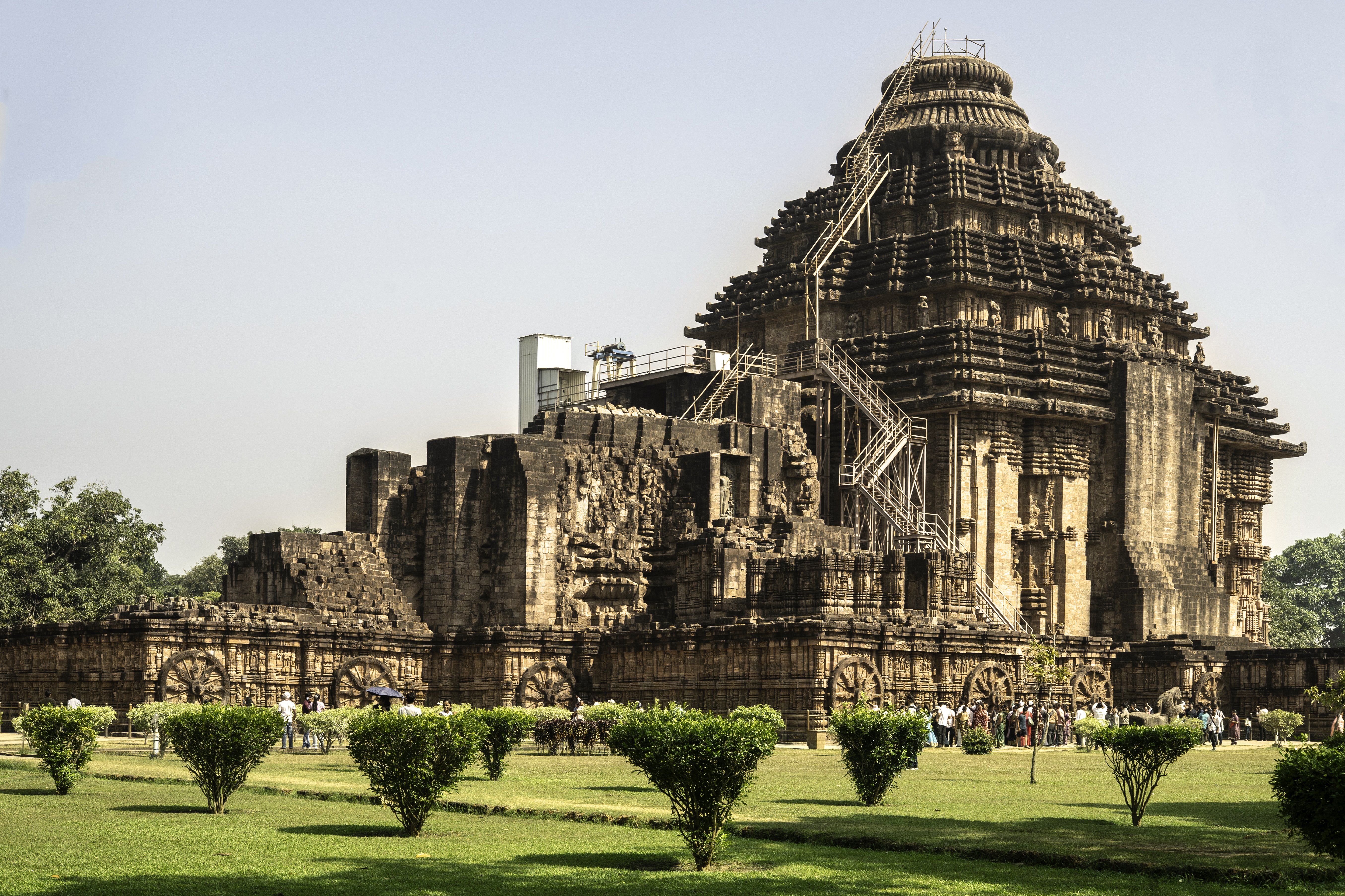
Konark is famous for its magnificent 13th-century Sun Temple, constructed by Narasimha Deva I of the Ganga dynasty. Standing in solitary splendour amongst the sand dunes near the Bay of Bengal, the temple is the most striking example of Kalinga architecture and a UNESCO World Heritage Site.

The temple was conceived as a giant chariot with 24 intricately carved wheels at its base and seven horses pulling it — a symbolic representation of the Sun God's chariot crossing the sky. The wheels themselves function as sundials, and the carvings across every surface depict scenes from daily life, mythology, and nature with astonishing detail. Three images of the sun — morning, midday, and setting — are positioned so that actual sunlight falls on them at the corresponding time of day.

The erotic sculptures that adorn parts of the temple walls attract plenty of attention, but they are only a fraction of the whole. The bulk of the carving depicts elephants, musicians, dancers, hunting scenes, and geometric patterns of extraordinary precision. What survives today is the audience hall and a detached dancing hall; the main tower collapsed centuries ago, but even in ruin the scale and ambition of the place is breathtaking. The Archaeological Museum nearby holds the finest removed sculptures and is well worth a combined visit. Chandrabhaga Beach, a few kilometres east, provides a quiet stretch of Bay of Bengal coastline for those who want to decompress after the temple.

Guide

Getting Around

Konark is small enough to explore on foot, and walking is genuinely the best way to take it in. Cycle rickshaws are available for those who prefer a ride.

Guide

Getting There

The nearest airport is Bhubaneswar (64 km). The nearest railway stations are at Puri (34 km) and Bhubaneswar. Konark is well connected by regular bus services with both Puri and Bhubaneswar. Conducted coach tours from either city typically include Konark on their itinerary.

Guide

Things to Do

Konark is essentially a single-destination town. Almost every visitor comes for the Sun Temple, and it deserves as much time as you can give it — plan at least two to three hours for a thorough visit. Beyond the temple, the Archaeological Museum houses a strong collection of the sculpture removed from the site, and Chandrabhaga Beach a few kilometres to the east offers a quiet stretch of coast where you can decompress after the intensity of the carvings.

Guide

When to Go

October to February is the best time to visit Konark. Temperatures are comfortable — roughly 20–28°C — and the monsoon has cleared. December and January can be slightly hazy but are rarely unpleasant.

March to May brings rising heat; by June the Bay of Bengal monsoon arrives in force and stays through September. The rains are heavy and the humidity is extreme, but the landscape turns deep green. The temple itself is accessible year-round but can be wet and slippery during the monsoon.

The Konark Dance Festival is held in the first week of December each year, with classical Indian dance performances staged against the backdrop of the Sun Temple at night. It is one of the finest settings for classical dance anywhere in India and worth timing a visit around.