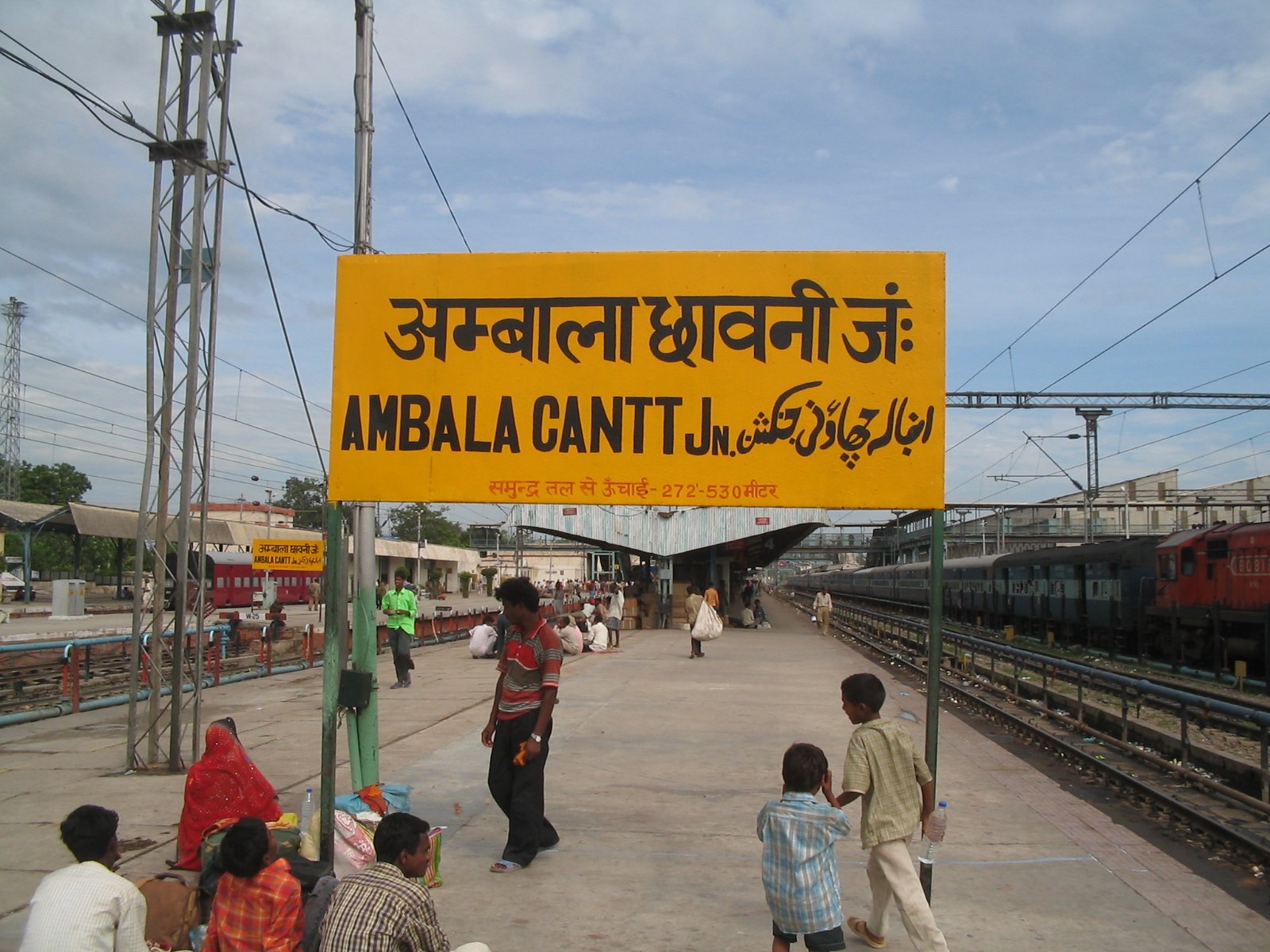
Ambala is one of north India's great junction towns: part old trading city, part military cantonment, and part railway crossroads between Delhi, Punjab, Himachal Pradesh, and Chandigarh. It is not polished as a tourist stop, but it has the layered feel of a place that has had armies, merchants, pilgrims, and trains passing through for a long time.
The two halves matter. Ambala City is older, busier, and more local, with Sikh shrines such as Gurudwara Manji Sahib and market streets that still feel tied to the Grand Trunk Road. Ambala Cantonment is wider and greener, with railway yards, parade-ground geometry, churches, cemeteries, and the old British imprint visible around Holy Redeemer Church and the European Cemetery.
Most travellers pass through rather than plan a night here, and that is fair. But if you are changing trains or driving between Delhi and the hills, Ambala is worth a slow half day. The cantonment has the best atmosphere, especially around Rani Ka Talab in the evening, while the older city gives you the religious and trading side of Haryana that the highways usually hide.