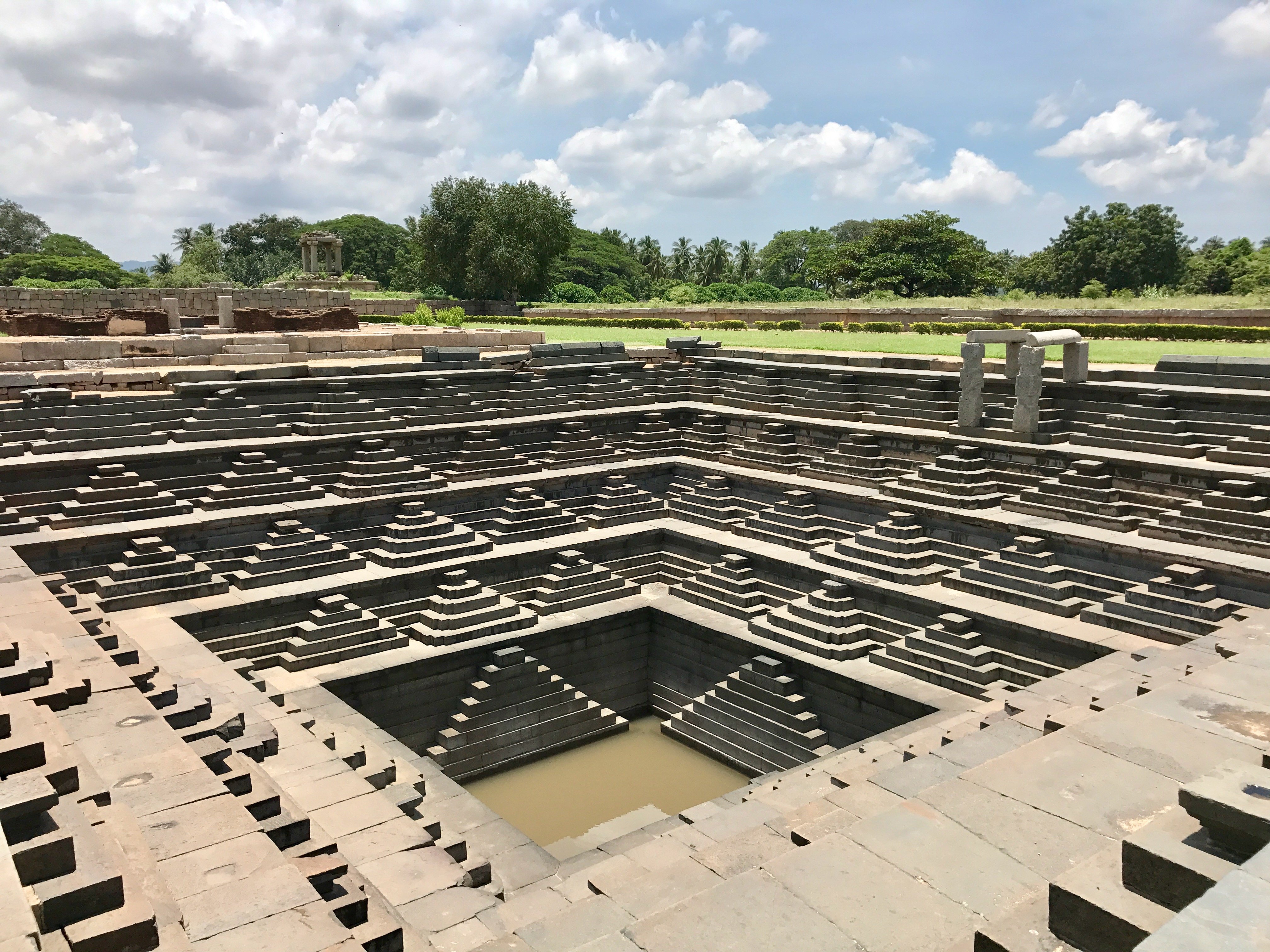
Hampi is one of the great ruined cities of the medieval world. At its height in the 15th century, Vijayanagara — the city of which Hampi was the heart — had a population of half a million and was probably the second-largest city on earth after Beijing. In 1565 a coalition of Muslim sultans defeated the Vijayanagara king at the Battle of Talikota, then spent five months sacking and burning the capital. What they left behind, strewn across a dramatic landscape of granite boulders and the Tungabhadra River, was declared a UNESCO World Heritage Site in 1986.
The ruins are extraordinary in their scale and variety. The Vittala Temple complex — with its famous musical stone pillars and iconic stone chariot — is the architectural highlight. The Virupaksha Temple, the spiritual centre of the city, has been in continuous use since the 7th century and is still an active place of worship today. The royal enclosure to the southeast holds the Lotus Mahal, the Elephant Stables, and the Queen's Bath. The Hazara Rama Temple, the private royal chapel, carries one of the most complete Ramayana narrative sculptural programmes in India on its outer walls. Dotted among these clusters: the Ugra Narasimha Monolith, the Achyutaraya Temple, and Matanga Hill — the best viewpoint over the entire site.
You need at least two full days. The site is large enough that trying to compress it into one is exhausting and unrewarding. Hospet, 13 km away, is the nearest town with reliable accommodation and banking; Hampi Bazaar itself has a concentration of budget guesthouses and small cafes. Hampi can also be reached as a two-day trip from Goa or Bangalore.