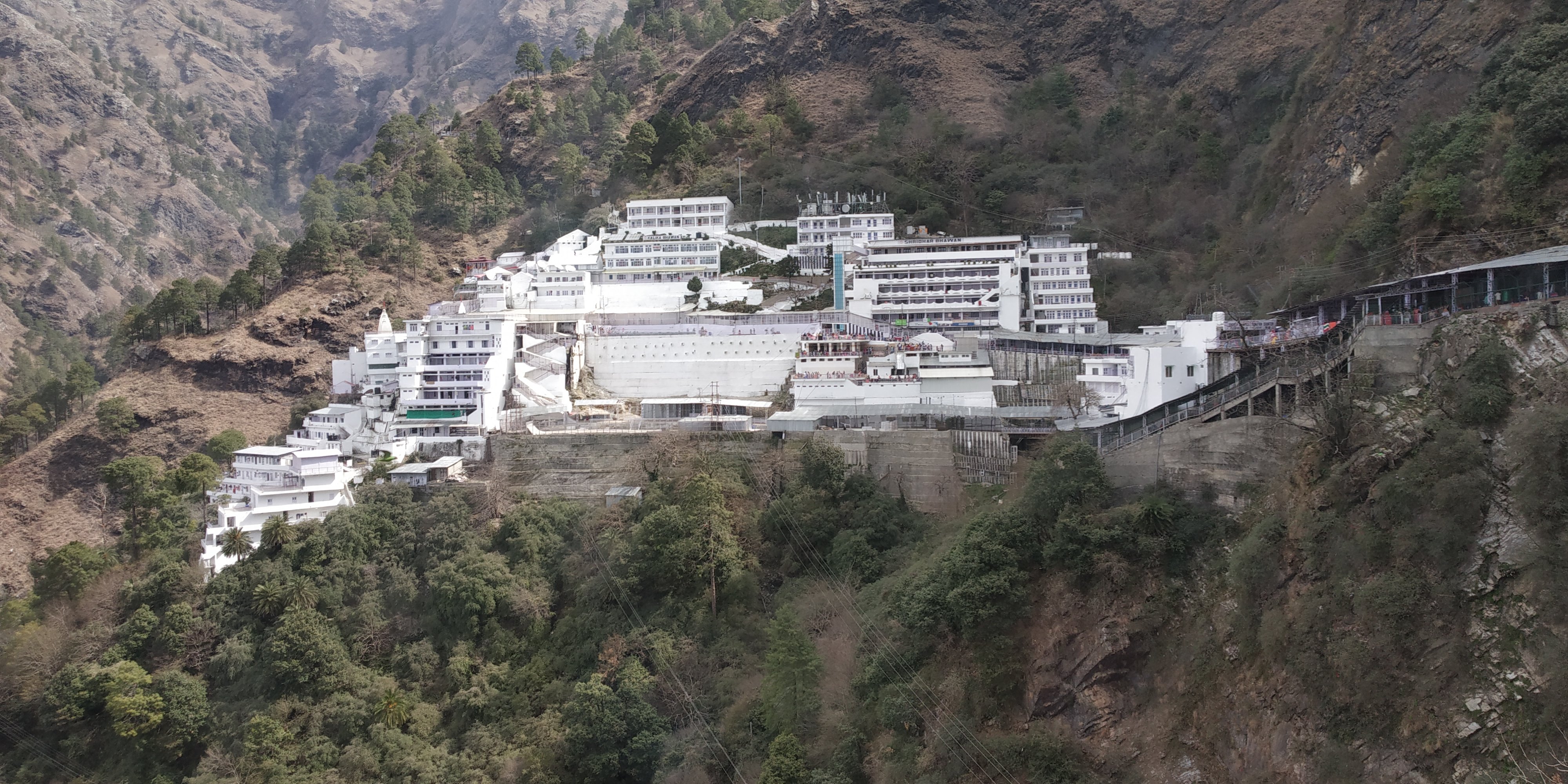
Vaishno Devi
©
Vaishno Devi

Vaishno Devi

Pilgrimage town on the Trikuta Mountains, centred on a cave shrine to Mata Vaishno Devi.

Vaishno Devi — more fully Mata Vaishno Devi — is one of the holiest Hindu pilgrimage sites in India, a shrine to the goddess dedicated in a cave at 1,585 metres on the slopes of the Trikuta Mountains in Jammu and Kashmir. It draws around 8–10 million pilgrims every year — the second most-visited Hindu pilgrimage site in India after Tirupati — and on the busiest festival days the number of pilgrims climbing the mountain in a single day can exceed 30,000. For Indian Hindus, a visit here is a major life event; foreign travellers are rare.

The shrine itself is in a narrow natural cave where the goddess is represented not by an idol but by three pindis — naturally formed stone outcrops representing the three aspects of the Mother Goddess: Maha Kali, Maha Lakshmi, and Maha Saraswati. The cave is at the top of a 13 km trek from the base town of Katra, which is the starting point for everyone: you must register for a free Yatra Slip at the Yatra Registration Centre in Katra before starting the climb, and you will be checked at various points along the route. The walk takes 5–6 hours on foot and climbs steadily from Katra via Banganga, Charan Paduka, and the halfway point of Ardhkuwari (where a pilgrimage tradition has you squeeze through the Garbh Joon — the "womb passage", a narrow natural gap in the rock). Those unable or unwilling to walk can hire ponies, take a palanquin carried by porters, or ride in the modern cable car that now runs part of the way. An electric shuttle covers some of the less steep sections, and helicopter flights from Katra land at Sanjichhat just below the cave.

After darshan at the main cave, the pilgrimage is traditionally not considered complete until you have also visited the Bhairav Nath Temple, 2.5 km further up the mountain. Cameras, leather items, and combs are not allowed in the main shrine. The best months to visit are March to October, though the pilgrimage runs year-round; the summer months (particularly the Navratri festivals in April and October) see the largest crowds. Foreign visitors should note that this is an active religious site — respectful dress and behaviour are essential.

Guide

Getting There

Katra is the base for the yatra and where you arrive. The Indian Railways extended the line here in 2014, and there are now direct express trains from Delhi, Mumbai, Kolkata, and several other cities — the Vande Bharat Express from Delhi to Katra is the fastest at about 8 hours. The station is a short auto-rickshaw ride from the yatra start point.

By road, Jammu is the nearest major city, about 50 kilometres south. Frequent share-jeeps and buses make the run; the highway is well maintained but slow at weekends. Jammu Airport is the closest airport, with daily flights from Delhi, Mumbai, and Srinagar — from there, a taxi takes 2 to 3 hours.

Once in Katra, the only way up the mountain is on foot, by pony, by helicopter from Sanjichhat helipad, by battery-operated shuttle on parts of the trail, or by the cable car opened in 2024 between the main shrine and Bhairav Nath.

Guide

Things to Do

There is essentially one thing to do at Vaishno Devi: the yatra, the 13-kilometre climb from Katra to the cave shrine, and the further 2.5 kilometres up to Bhairav Nath that completes the pilgrimage. Side stops along the way mark stages of the goddess's mythological journey. Even for non-Hindu travellers, the spectacle of tens of thousands of pilgrims climbing the mountain together is unforgettable.

Guide

When to Go

The shrine is open year-round, but the experience varies enormously by season. The pilgrimage is most pleasant from March to October when the weather on the mountain is mild. April and October–November correspond to Navratri, the two annual nine-night festivals of the goddess — these are the busiest periods, with single-day pilgrim counts that can exceed 30,000 and queue waits of many hours for darshan.

Summer (May–June) is hot at the base in Katra (over 35°C) but cool at the cave; the climb is sweat-drenched but doable. July–August brings the monsoon, with landslides occasionally closing parts of the trail. December–February brings snow on the upper sections and below-freezing nights — fewer pilgrims, but you may not be able to reach Bhairav Nath at all.

The busiest days are weekends and the new-moon days; pick a weekday in shoulder season for the shortest queues.