Datia
©
Datia

Datia

Madhya Pradesh city dominated by Bir Singh Deo Palace, a seven-storey Rajput landmark above town.

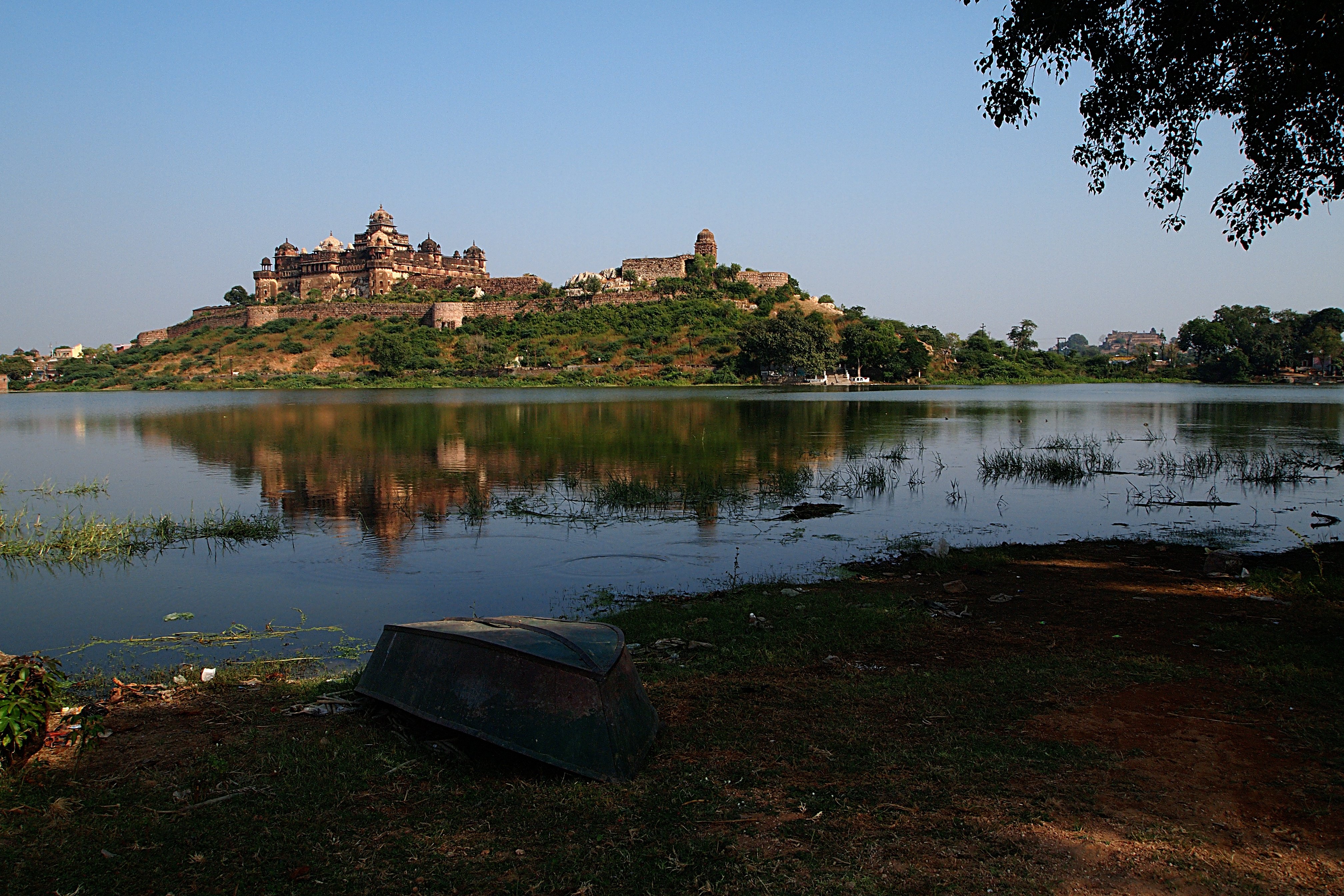
Datia is a small city in Madhya Pradesh caught between two more famous neighbours — Gwalior to the west and Jhansi across the Uttar Pradesh border to the east — but it has one thing they don't: the Bir Singh Deo Palace, one of the finest examples of early 17th-century Rajput architecture anywhere in India. The seven-storey palace rises from a rocky hill above the old town and its reflection in the Lala Ka Talab lake below is one of those compositions that rewards the effort of getting here.

The old town itself is compact and largely unchanged, surrounded by sections of the original stone wall. Datia was the seat of a princely state under the Bundelkhela rulers and later the British Raj, and the palace is the main legacy of that era. The rest of the town moves at a quiet pace — market stalls, pilgrims heading to the nearby Pitambara Peeth temple, and very few other foreign visitors.

Guide

Things to Do

Datia's main draw is a single, extraordinary building — the Bir Singh Deo Palace — and the pilgrimage temple of Pitambara Peeth. Between them, they account for almost all visitor time in the city. The palace is an architectural landmark; the temple is one of the most important Tantric shrines in India. Both can be visited in a single day, which is how most travellers use Datia — as a half-day detour from Gwalior or Jhansi.

The old town surrounding the palace has a market and a slower pace than either of those larger cities. If you have a few hours before the Gwalior train, it is worth wandering rather than rushing back.

Guide

When to Go

Datia is in central India and shares the Bundelkhand climate: hot and dry from March to June, monsoon from July to September, and pleasantly cool and dry from October to February. The best time to visit is October through March, when temperatures are comfortable for walking around the palace and the old town. Summer heat in May and June regularly exceeds 44°C and makes outdoor sightseeing genuinely punishing.

The temple of Pitambara Peeth is most crowded on Navratri (nine nights of the goddess, in October and again in spring) when pilgrims arrive in large numbers. If you want a quieter visit to the temple, avoid festival periods; if you want to experience the devotional atmosphere at its most intense, these are the times to come.