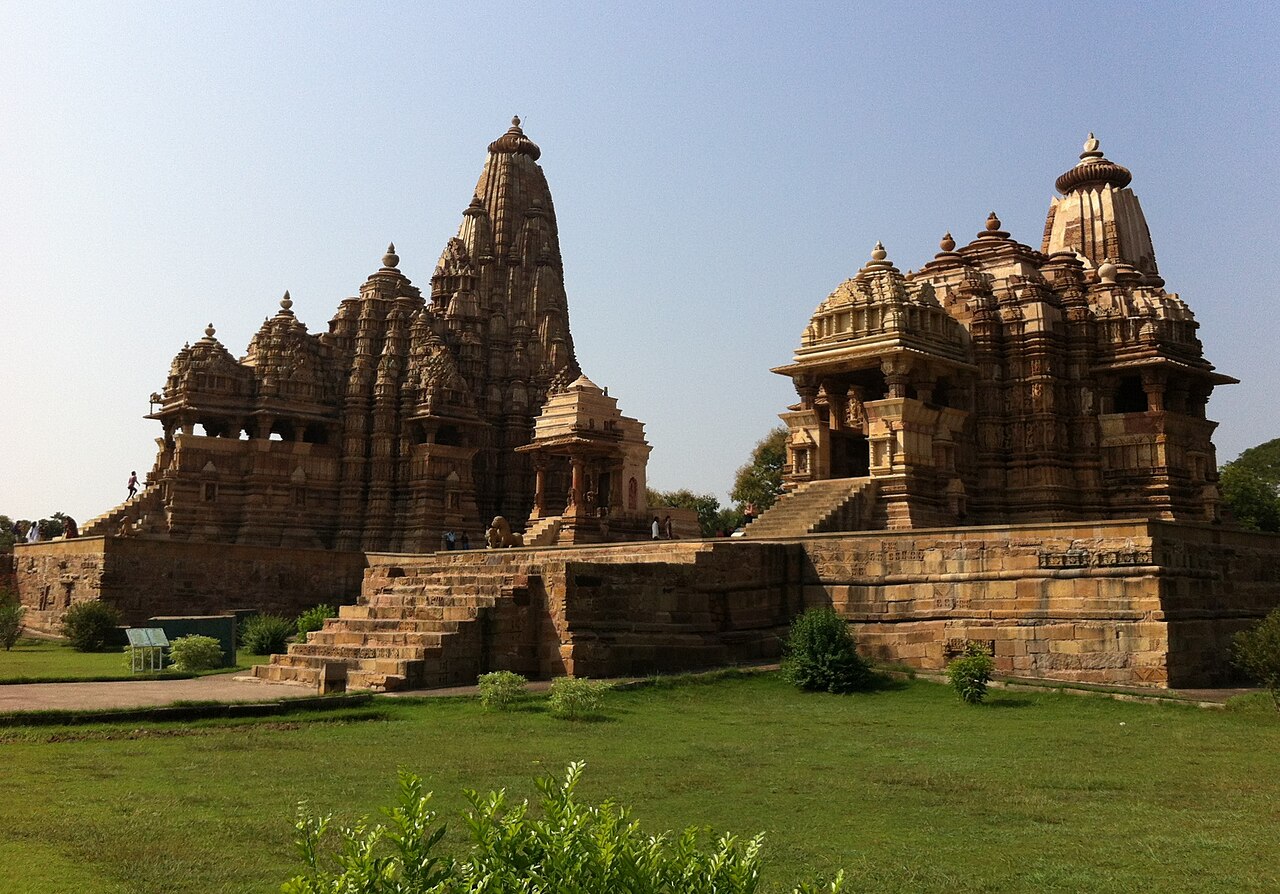
Khajuraho is one of India's great surprises — a small, dusty town in the middle of Madhya Pradesh that happens to contain one of the most extraordinary groups of medieval temples in the world. The Khajuraho Group of Monuments is a UNESCO World Heritage Site: around 25 surviving temples built by the Chandela dynasty between roughly 950 and 1050 CE, covered in thousands of sculptures including the frankly erotic carvings that have made the site famous worldwide.
The isolated location works in the village's favour. There is no railway station, and reaching Khajuraho requires some effort whether you come by air, by road from Varanasi, or overland from Agra. The effort filters out casual visitors. Those who make it find a place that has not yet been overwhelmed, with quiet lanes, relatively unhurried temples, and very little to do in the evenings — which turns out to be exactly right.
The temples are divided into three groups spread across several kilometres. The western group, inside a garden maintained by the Archaeological Survey of India, contains the grandest temples: the Kandariya Mahadeva Temple, the tallest and most ornate, and the Lakshmana Temple, the oldest surviving example of the full five-shrine plan. The eastern group holds the Jain temples — less visited, quieter, with the Parshvanatha Temple containing some of the finest carvings in the complex. The southern group is scattered across farmland and takes more effort to reach.
The common misconception is that all the carvings are erotic. In fact, erotic images make up roughly 10% of the total. The rest depicts gods, celestial beings, musicians, dancers, soldiers, animals, and scenes of daily life. The erotic carvings are remarkable precisely because they coexist so naturally with everything else — they are part of a total vision of human and divine life, not a separate scandal. The oldest temple on the site, the Chausath Yogini Temple, predates the famous sculptures by decades and was dedicated to fierce tantric goddesses in an open granite courtyard that still feels distinctly strange.
Allow at least a full day, and two if you want to see everything properly. The Khajuraho Dance Festival in February or March, with classical Indian dance performed on the floodlit lawns in front of the western temples, is one of the finer cultural events in central India.