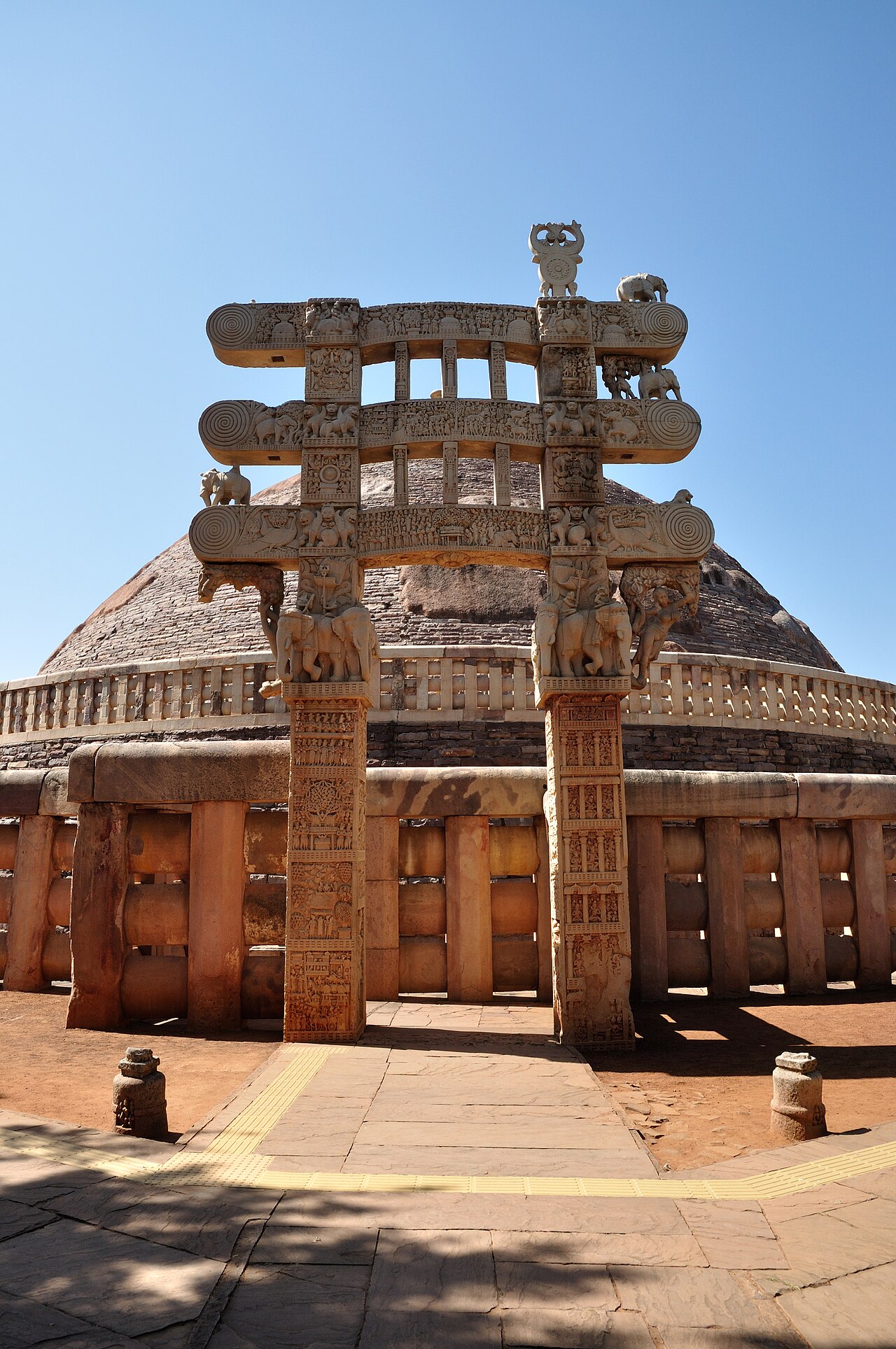
Sanchi is a small village about 68 km northeast of Bhopal that contains one of the most remarkable concentrations of Buddhist architecture in the world — a UNESCO World Heritage Site. The hilltop complex spans nearly 1,000 years of continuous building from the 3rd century BC through the 12th century AD, and includes stupas, temples, chaityas, and monasteries in various states of preservation.
The Great Stupa (Stupa No. 1), commissioned originally by the Emperor Ashoka in the 3rd century BC and enlarged by later dynasties, is the centrepiece. Its four elaborately carved gateways (toranas) are among the finest examples of early Indian art, depicting scenes from the Buddha's life with extraordinary detail and vitality. The Ashoka Pillar — now broken, with its lion capital in the Sanchi Archaeological Museum — stands as physical evidence of the emperor who spread Buddhism across Asia. Stupa No. 2, lower on the hillside, has an elaborately carved stone balustrade and holds the relics of ten Buddhist teachers. Temple 17, a small Gupta-period structure from the 5th century AD, is one of the earliest surviving examples of the Indian temple form.
The site museum provides essential context; visit it before climbing the hill. Most visitors come as a day trip from Bhopal, but the site at dawn — before the tour groups arrive — is worth the effort of an early start or an overnight stay in the village.