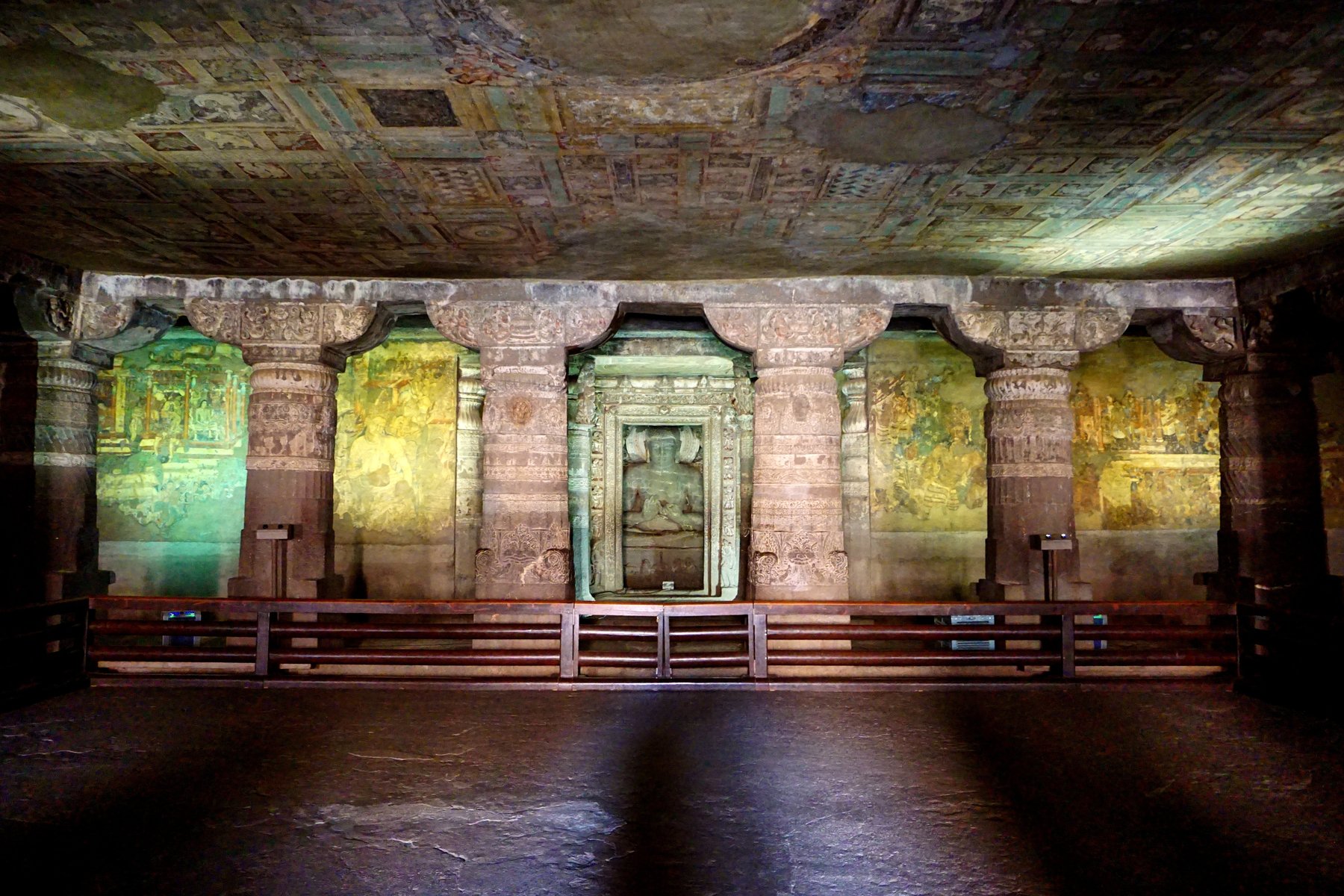
Cut into a horseshoe-shaped cliff above the Waghora river, the Ajanta Caves are one of the greatest artistic achievements of the ancient world. The 30 rock-cut Buddhist sanctuaries date from around the 2nd century BCE to the 6th century CE, and contain extraordinarily well-preserved paintings and sculptures that document the evolution of Buddhist art across seven centuries. The site was abandoned around 650 CE and lay forgotten under jungle until a British officer stumbled across it in 1819 — which is why so much survives intact. UNESCO listed Ajanta as a World Heritage Site in 1983.
The paintings are the real draw. The cave interiors are covered in murals depicting Jataka tales (stories of the Buddha's past lives), court scenes, and everyday life in early medieval India — vivid, detailed, and surprisingly human. Bring a torch or rent one at the entrance; the government lighting is inadequate for the detail on the walls.
Ajanta is about 100 km from Aurangabad, which is the nearest city with good transport connections. The caves are typically combined with a visit to Ellora (about 30 km from Aurangabad), which is equally spectacular and shows Hindu, Buddhist, and Jain rock-cut architecture side by side.