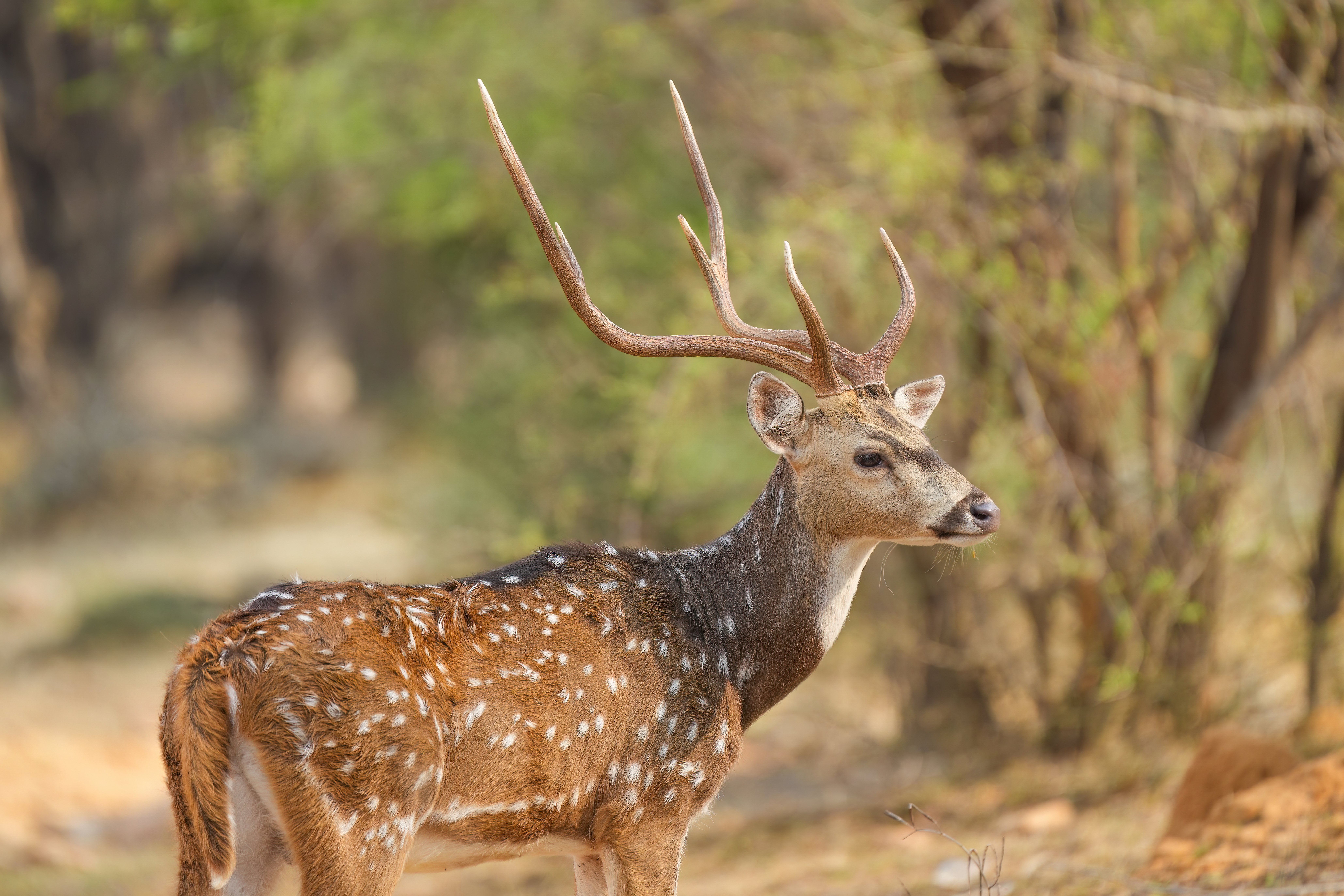
Ranthambore is the most celebrated tiger reserve in India, and arguably the best place in the world to see a wild Bengal tiger. The park covers roughly 1,334 square kilometres of dry deciduous forest in eastern Rajasthan, where the Aravalli and Vindhya ranges meet. Tigers here are unusually habituated to jeeps and can sometimes be seen lying in the open beside lakes or walking along forest roads in broad daylight — an experience that, once had, makes every other wildlife sighting feel ordinary.
The drama does not end with tigers. Ranthambore's landscape is remarkable: ancient banyan trees, crumbling chattris, dry riverbeds, and three beautiful lakes — Padam Talao, Raj Bagh, and Malik Talao — where crocodiles bask and painted storks fish in the shallows. Dominating it all from a rocky outcrop is Ranthambore Fort, a UNESCO World Heritage Site, 1,000 years old, now enclosed within the park boundaries and accessible by jeep.
The closest town is Sawai Madhopur, about 10 kilometres from the park gate. Safari permits are allocated by an online lottery system and genuinely limited — you cannot simply show up and drive in. Book months in advance for the peak season (October to April), or accept uncertainty in exchange for last-minute deals. There are good lodges both near the park gate and in the town itself.
Beyond the big cat, Ranthambore rewards patience: leopards patrol the rocky ridges, sloth bears forage in the forest, dholes (wild dogs) sometimes follow deer herds, and the birdlife includes the great hornbill, painted sandgrouse, and wintering raptors. Even a safari without a tiger sighting is time well spent in a landscape this charged with history and beauty.