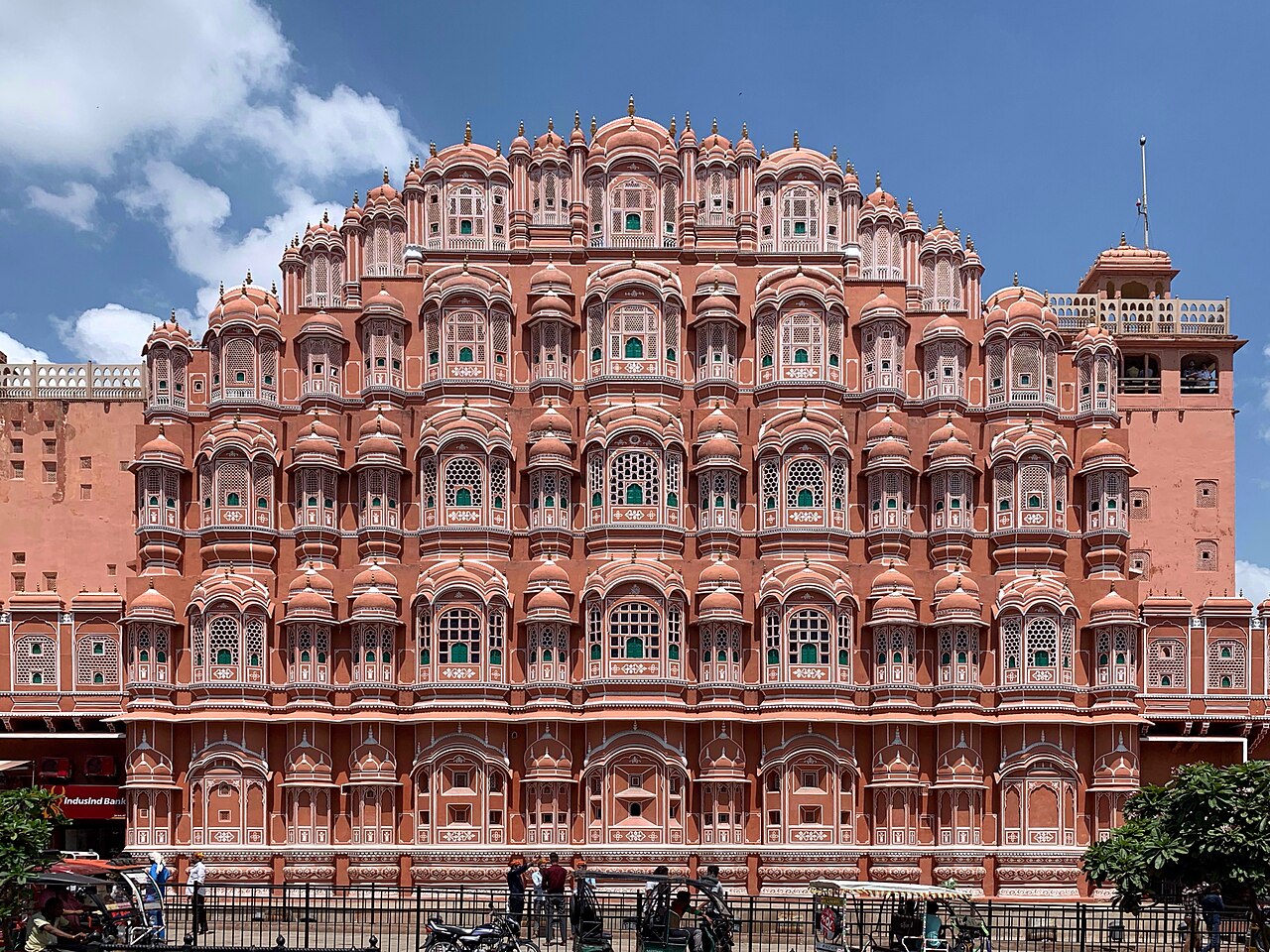
Jaipur, the capital of Rajasthan, earned its nickname 'the Pink City' when the old town was painted terracotta-pink in 1876 for the visit of the Prince of Wales. The color has stuck, and the walled old city remains a startling sight — a grid of broad avenues lined with uniform pink buildings, teeming with traffic, traders, and tourists.
The city's big draws are genuinely impressive. The Hawa Mahal (Palace of the Winds) is that famous facade with 953 tiny windows, built so the women of the royal household could watch street life without being seen. The City Palace complex, the Jantar Mantar observatory, and the massive Amber Fort 11 km north of town could fill two or three days on their own. The Nahargarh Fort on the ridge above provides the best panoramic views over the Pink City, while Jaigarh Fort above Amber houses the world's largest wheeled cannon.
Jaipur is also a serious shopping city. The bazaars of the old town sell gemstones, blue pottery, block-printed fabrics, and leather mojari shoes. Johari Bazaar for jewelry, Bapu Bazaar for textiles, and Tripolia Bazaar for lac bangles are the main ones to target. The Albert Hall Museum in Ram Niwas Garden is worth an afternoon, and Galtaji Temple — the "Monkey Temple" in the hills to the east — offers a complete change of pace from the main monuments. Be prepared for aggressive touts, especially around the main tourist sites — this is one of the most heavily touristed cities in India, and the hassle factor is real.