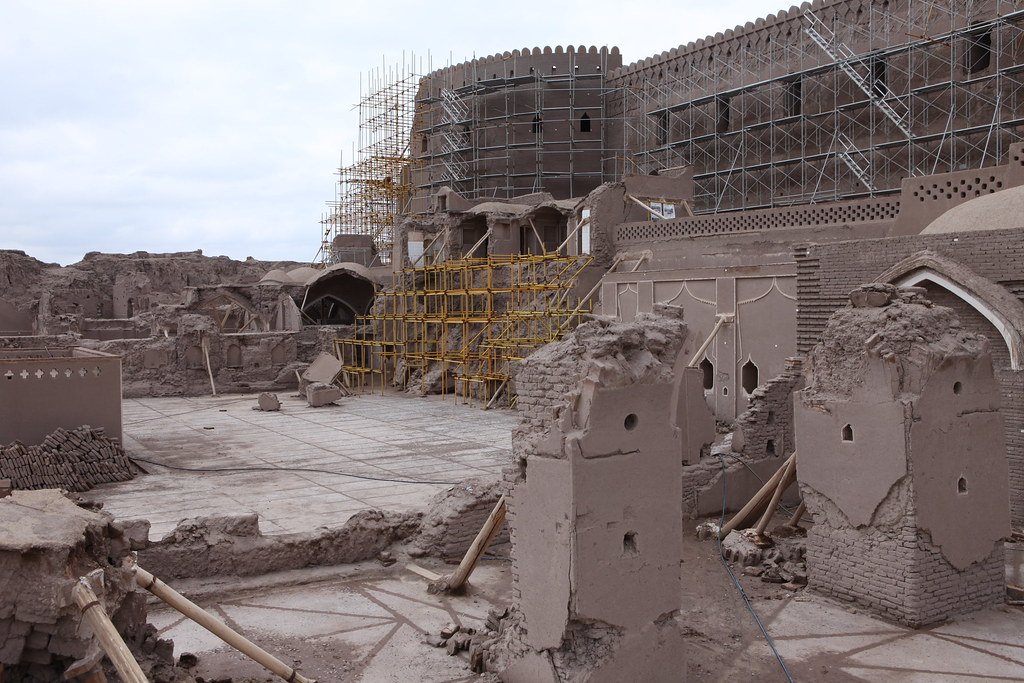
Desert oasis city known for Arg-e Bam, a vast mud-brick citadel slowly rebuilt after earthquake damage.
Bam is an oasis city in the desert of southeastern Iran, known above all for its extraordinary mud-brick citadel, the Arg-e Bam. The citadel, a UNESCO World Heritage Site, was one of the largest adobe structures in the world — a fortified city within a city, with towers, bazaars, and houses rising from the desert floor. It dated back over two thousand years and was still largely intact until December 2003, when a devastating earthquake struck and killed over 26,000 people.
The earthquake levelled much of the city and reduced large sections of the Arg to rubble. Reconstruction has been ongoing since, with Iranian and international teams painstakingly rebuilding the citadel using traditional methods. The site is open to visitors and remains deeply impressive even in its partially restored state — the scale of the complex and the colour of the adobe against the surrounding desert are striking.
Bam sits in a date-palm oasis and has been an important stop on trading routes for millennia. The surrounding region produces some of Iran's finest dates. The city itself has been largely rebuilt and life has returned, though the memory of the earthquake defines the place for most visitors and residents alike.
Guide
Getting There
Bam has a small airport with domestic flights to Tehran and occasionally to Kerman. The more reliable approach is to fly to Kerman — about 190 kilometres to the west — and travel by bus or shared taxi from there. The Kerman-Bam road is good and the journey takes around two to three hours. Kerman itself has flights to Tehran and is a worthwhile destination in its own right, with the Ganjali Khan complex and the bazaar making it worth a day's stop.
The bus network connects Bam to Kerman, Zahedan (the capital of Sistan and Baluchestan province), and via Kerman to the rest of the Iranian intercity bus network. Shared taxis (savaris) operate between Kerman and Bam and are faster if slightly more expensive than the bus.
Guide
When to Go
Bam is in the Kerman province desert of southeastern Iran and the climate is extreme. Summers (June to August) are brutally hot, with temperatures regularly exceeding 45°C. The best time to visit is autumn through spring: October to March offers warm days and cool nights, with January and February occasionally chilly. March brings the Persian New Year (Nowruz) when many Iranians travel and the country's sites are busy; February is a good compromise — mild weather and fewer crowds.
The date harvest runs from August through September; if you want to see the oasis at its most active and buy fresh Mazafati dates, this is the time, despite the heat. Foreign visitors to Iran should check the current visa situation and travel advisories before planning a trip; independent travel is possible but requires some advance organisation including an Iranian-sponsored visa.