Qazvin sits northwest of Tehran, where the road toward Tabriz and the routes over the Alborz meet. It was Persia's capital for part of the Safavid period, before Shah Abbas moved the court to Isfahan, and the city still has the feel of a serious old crossroads rather than a showpiece rebuilt for visitors.
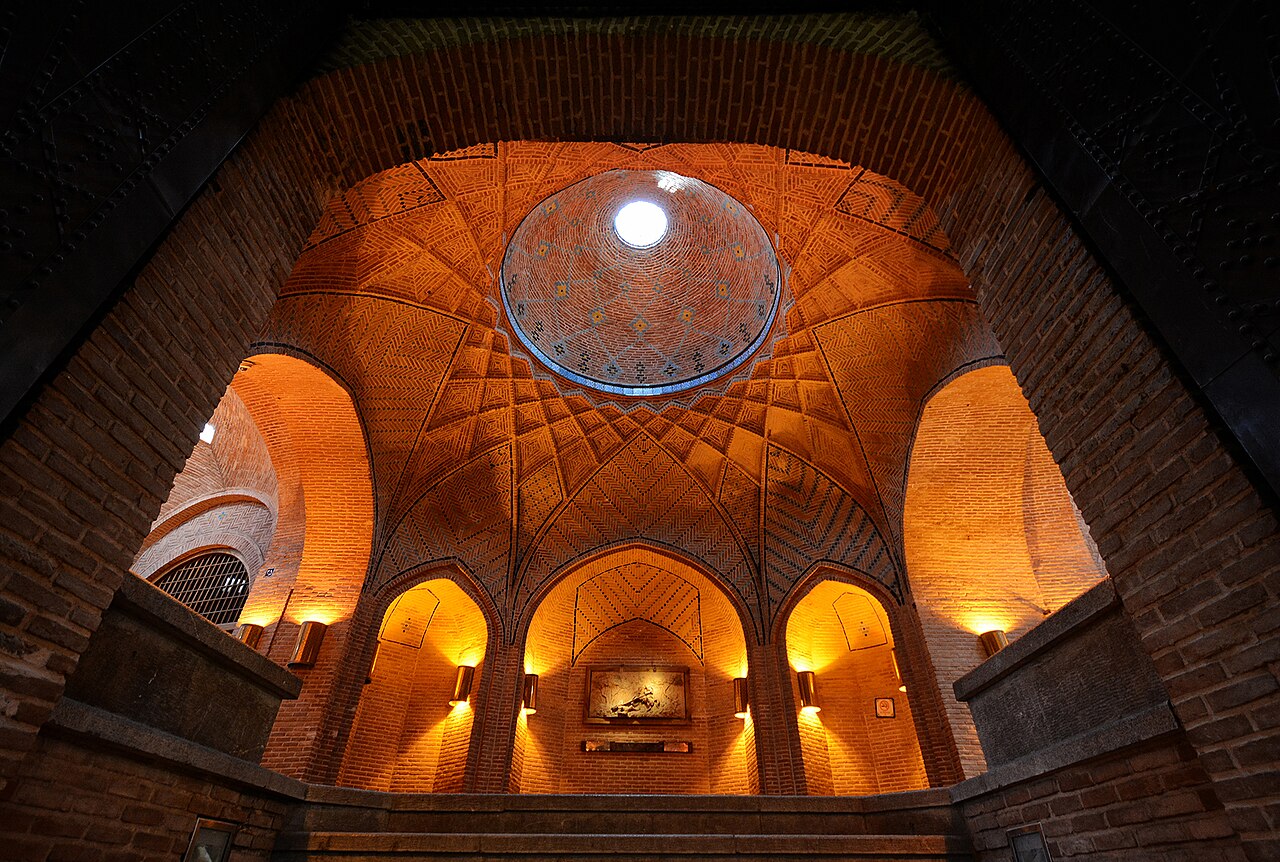
The best place to start is the Sa'd al-Saltaneh Caravanserai, a vast Qajar trading complex folded into the bazaar. Its brick domes, courtyards, craft shops, and cafe corners make it one of the most rewarding urban caravanserais in Iran. Nearby, the Jameh Mosque reaches back to the early Islamic centuries.
The city is good for a day on foot, especially if you like old religious architecture and quiet historic houses. Aminiha Hosseiniyeh is the most atmospheric domestic interior, with mirrored halls and stained glass built for mourning ceremonies. The Tomb of Hamdallah Mustawfi, the 14th-century historian and geographer, adds a more scholarly note.
Qazvin is also the practical base for the Alamut mountains. The ruined Alamut Castle is not in the city, and it deserves a full day rather than a casual detour, but the link between Qazvin and the high Ismaili fortresses is a major reason travellers stop here.