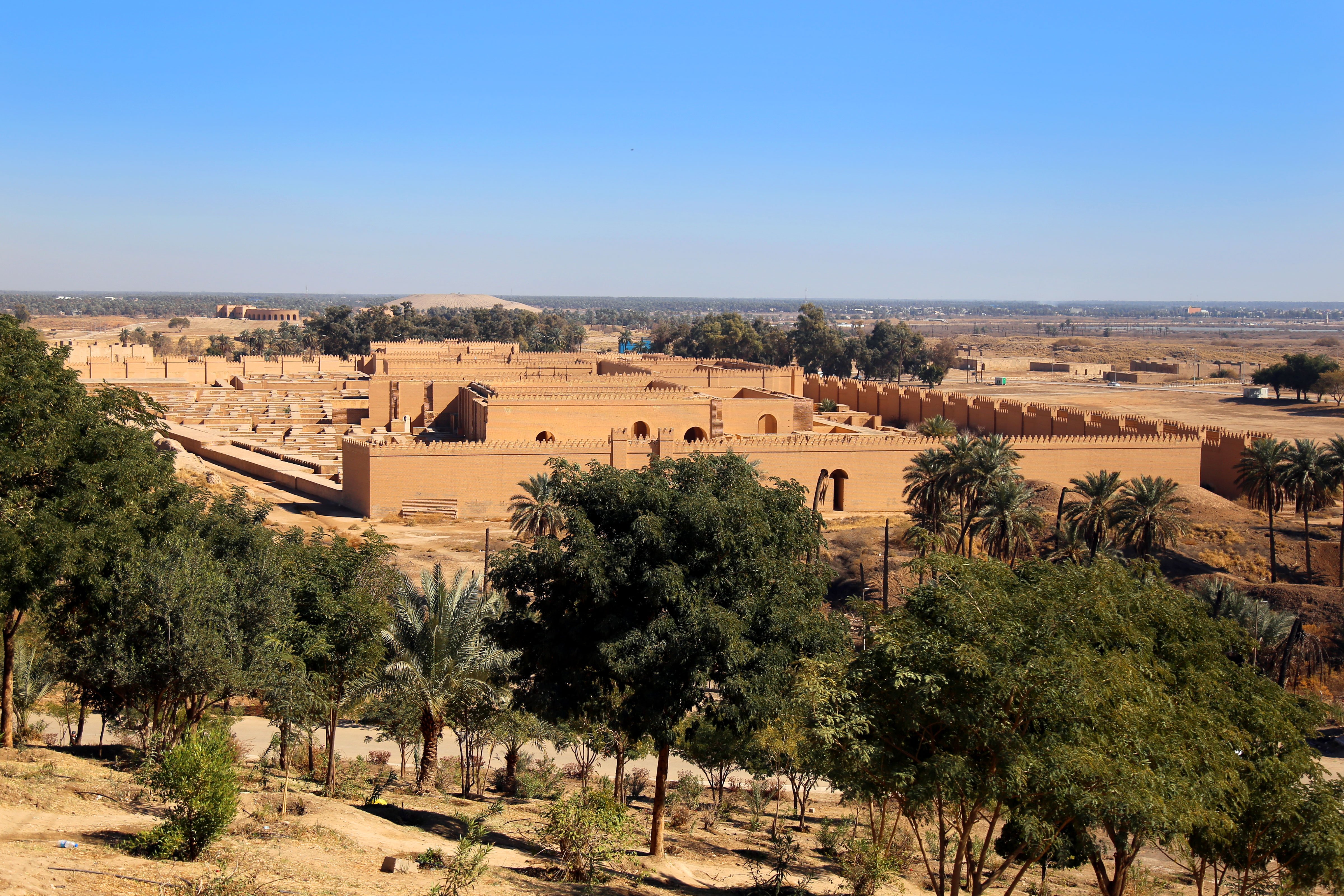
The name still carries weight. Babylon was the capital of no fewer than ten Mesopotamian dynasties over two thousand years, and at the height of its power in the 6th century BC under Nebuchadnezzar II it was the largest city in the world. The Hanging Gardens were one of the Seven Wonders of the ancient world; the Ishtar Gate — with its brilliant blue-glazed bricks and procession of dragons and bulls — still astonishes, though the original is in Berlin and what stands here is a reconstruction.
The ruins are located near the modern town of Al Hillah, about 90 km south of Baghdad. They require patience and imagination to read. Saddam Hussein undertook extensive and archaeologically controversial rebuilding works in the 1980s, superimposing new mudbrick over ancient foundations. The result is layered — genuine antiquity mixed with modern reconstruction — and separating the two takes some knowledge or a good guide.
Despite all of this, the site is well worth the trip. The scale of the ancient city becomes apparent as you walk it: the Processional Way, the ruins of the great palace, the site of the ziggurat. And the sense of standing in a place that shaped the course of human history is genuinely affecting.
Babylon is an easy day trip from Baghdad, usually combined with a visit to Karbala or An Najaf on the same road south.