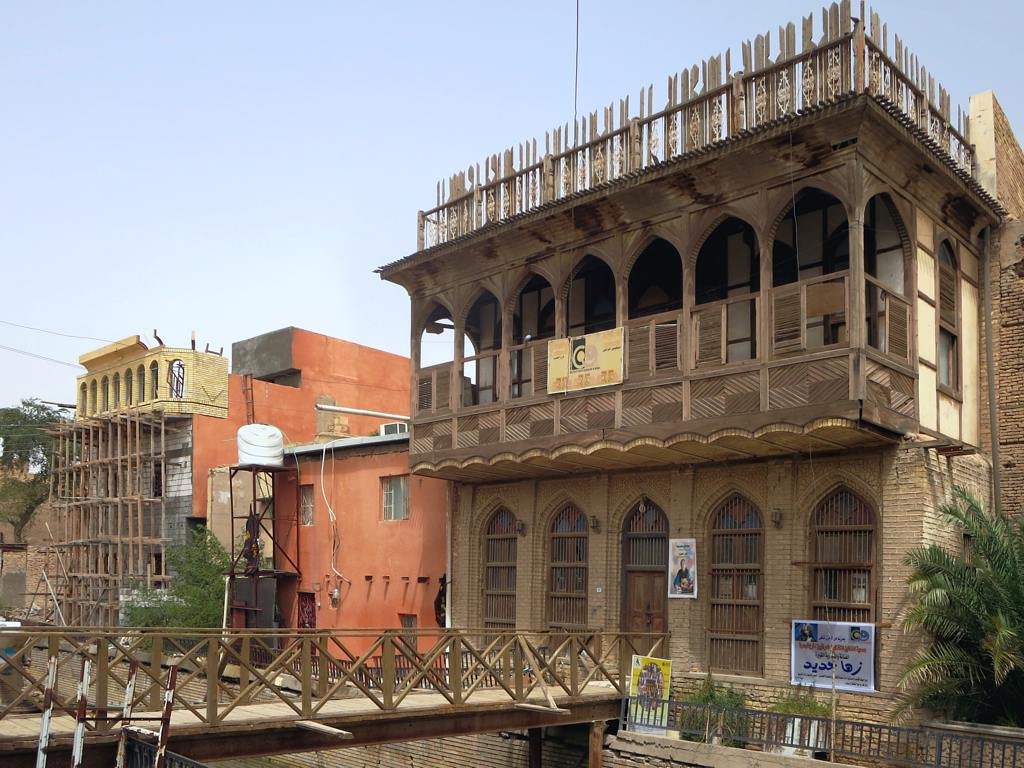
Iraq's second-largest city and main seaport, Basra sits in the far south of the country, about 130 km from the Persian Gulf and 550 km southeast of Baghdad. It was founded as a military base by Caliph Omar in the 7th century and quickly became a major trading port — in the tales of the Thousand and One Nights, Sinbad the Sailor always sets out from Basra.
The city has three main districts. Ashar is the old commercial centre, with the Corniche along the Shatt al-Arab waterway and the main bazaar — narrow streets overhung by wooden balconies in the old Arab style. Margil has the port and modern residential areas. Basra proper is the old residential quarter, where traditional houses with elaborately carved facades still stand among newer buildings.
The Basra Museum, housed in one of Saddam Hussein's former palaces, holds Sumerian, Babylonian, and Islamic objects from the region. The Shatt al-Arab waterway itself — the confluence of the Tigris and Euphrates — is one of the great geographical features of the Middle East. The Basra War Cemetery is one of the best-preserved Commonwealth cemeteries in the Middle East, a reminder of the WWI Mesopotamian Campaign that few travellers expect to find here.
Basra has suffered enormously from decades of war, and infrastructure remains patchy. Summers are brutal — regularly exceeding 50°C — making winter the only comfortable time to visit.