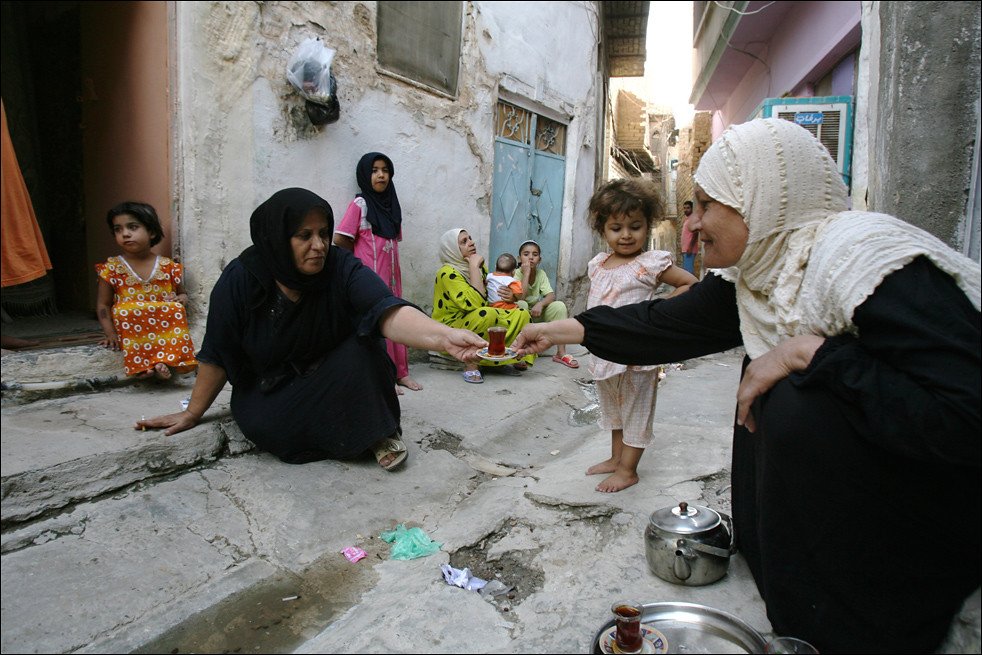
An Najaf is one of the holiest cities in Shia Islam and the natural highlight of any pilgrimage to Iraq. The Imam Ali Shrine, with its golden dome that can be seen from 40 km on a clear day, dominates the old city. Around it press the seminaries of the hawza, the souks selling prayer beads and turbas, and a constant tide of pilgrims from Iran, Lebanon, the Gulf and beyond.
West of the shrine lies Wadi al-Salaam, one of the largest cemeteries in the world — a city of the dead with 'streets' winding through countless brick and cement tombs, some modest, some the size of small mosque-shrines. Some are gaily painted pink or green; some display photographs of the dead: turbaned graybeards or bright-eyed youngsters with proud moustaches and hair in fashionable quiffs.
You might also want to visit the Al-Yazdi Madrasa, a Quranic school with seventy rooms, immensely deep cellars and brick-lined wells that plummet down some one hundred feet. Young divines with beards, cropped hair, skullcaps or turbans, sit about, read, or wash their faces, feet and arms before praying. They are pale from studying away from the sun; many of them come from Afghanistan or Iran. The nearby Great Mosque of Kufa is among the oldest in Islam, and the Sahla Mosque a short way beyond it is one of the most beloved minor pilgrimage sites in the country.