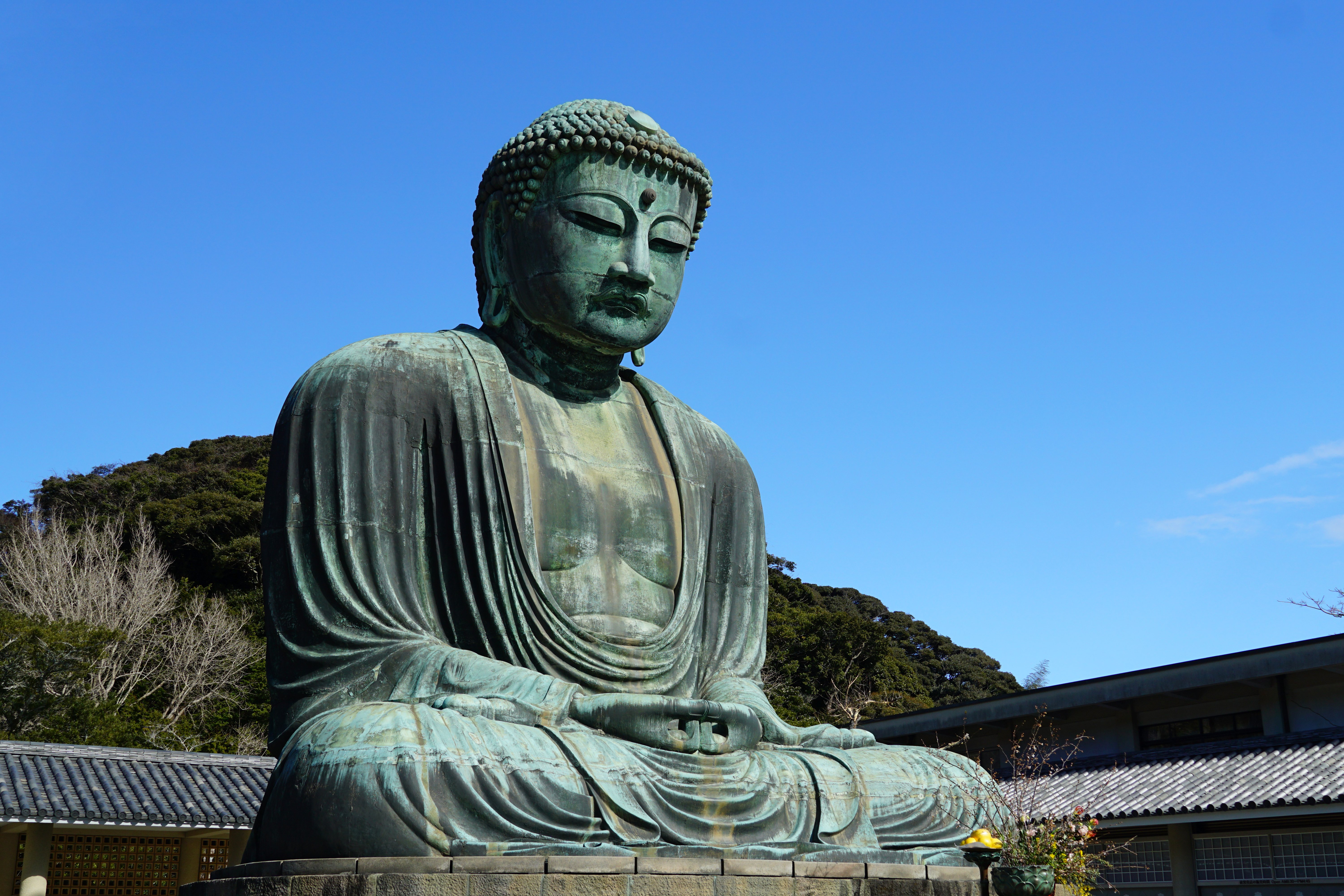
Kamakura is the ancient warrior capital of Japan, a city that ruled the country for nearly a century and a half from its fortified position on the Miura Peninsula south of Tokyo. Ringed on three sides by forested hills and open to the sea on the fourth, it is one of the most naturally defensible cities in Japan — and one of the most beautiful. Samurai history, Zen Buddhism, and excellent coastal scenery combine here in a way found nowhere else.
The city's golden age ran from 1185 to 1333, when the Minamoto clan established Japan's first military government here and presided over a flowering of Zen culture. The great temples built in that period — Engaku-ji, Kencho-ji, Tofuku-ji — still stand in their wooded valleys north of the city. South towards the sea, the Great Buddha of Kotoku-in sits in the open air where it has sat since the 13th century, the wooden hall that once housed it long since swept away by a tsunami.
Kamakura rewards walking. The main drag between the station and Tsurugaoka Hachimangu shrine, Komachi-dori, is lined with shops selling sweet rice crackers, ceramics, and every form of Daibutsu souvenir known to humanity. But the real city lives in the valleys behind: narrow trails connect temple to temple through cedar forests, past mossy stone Buddhas and hidden shrines. The so-called Daibutsu hiking trail links the Great Buddha area with Kita-Kamakura and can be done in a few hours.
The beaches at Yuigahama and Zaimokuza are popular with Tokyo surfers and summer swimmers. The Enoden railway, a charming single-track line that runs along the coast from Kamakura to Fujisawa, is one of the most enjoyable short train rides in Japan — it passes close enough to the sea that waves sometimes spray the windows.
Day trippers from Tokyo flood in on weekends, particularly in spring when the hydrangeas bloom and autumn when the maples turn. Come on a weekday if you can. The city is only an hour from Tokyo by train, and most visitors do it in a day, but two days lets you explore at a proper pace.