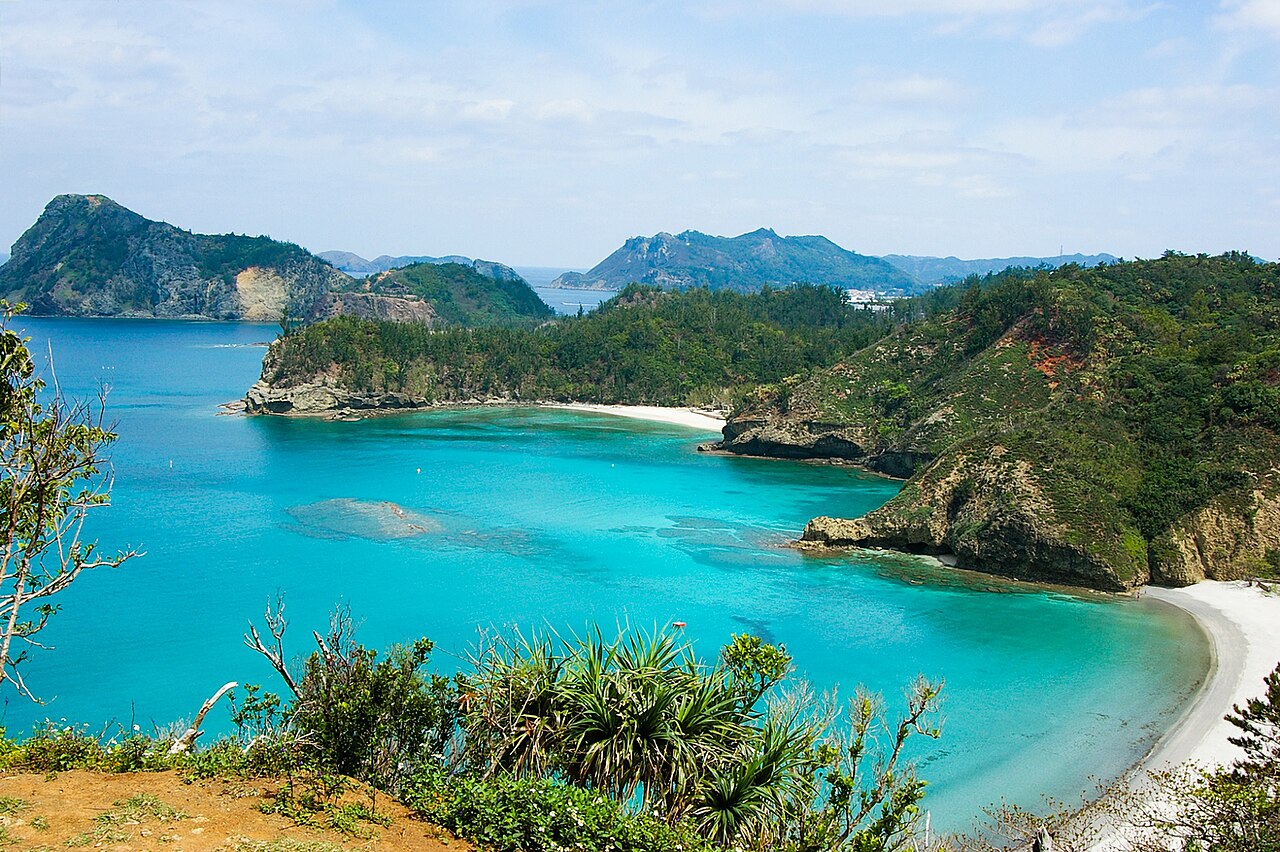
The Ogasawara Islands, also known as the Bonin Islands, are Tokyo's farthest-flung territory: a subtropical archipelago about 1,000 km south of the capital, reached by a ferry that takes roughly 24 hours each way. That awkward journey is part of the point. You don't come here casually; you come because the islands are one of Japan's strangest and most rewarding natural destinations.
The headline is nature. Ogasawara has never been connected to a continent, and that isolation produced endemic plants, land snails, birds, and the endangered Bonin flying fox. UNESCO listed the islands as a World Natural Heritage Site in 2011, and the comparison with the Galapagos is not just tourist-board noise. The main inhabited island, Chichijima, has beaches, hiking trails, whale and dolphin tours, and viewpoints over bright blue bays. Smaller Hahajima is quieter still, with forest walks and a more remote island feel.
The sea is as important as the land. Humpback whales pass in winter and spring, sperm whales can be seen offshore, and dolphin swimming trips run from Chichijima when conditions allow. Minamijima, an uninhabited limestone island, is the classic boat excursion: a white sand cove, a rock arch, and water that looks almost unreal in strong sun.
Ogasawara is not a quick add-on to a Tokyo trip. Ferry schedules force you to stay several days, weather can delay departures, and the islands have limited services. For the right traveler, that constraint is a gift. It gives the place time to work on you.