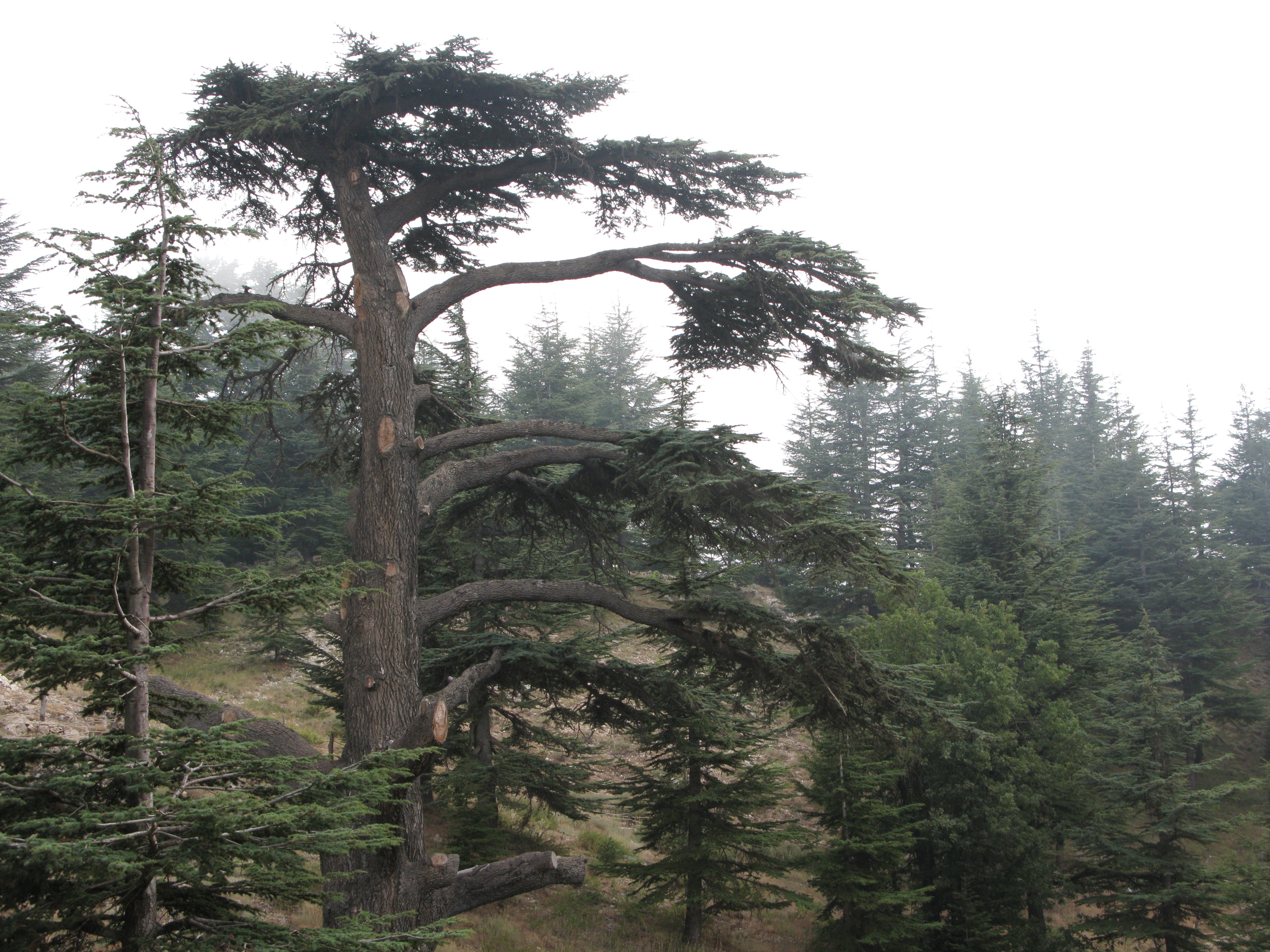
Mountain cedar grove on Mount Makmal, preserving ancient trees central to Lebanon's national symbol.
A cedar tree graces Lebanon's flag, but few of the fabled trees that once covered the mountains remain. The best place to see them is the grove on Mount Makmal, about 8 km east of Bcharre, at an altitude of 1,800 metres. Bring a warm layer -- it is noticeably cooler up here.
The Cedars of God (Arz al-Rab) is a UNESCO World Heritage site, a grove of ancient trees, some estimated to be over 3,000 years old. The grove is small but atmospheric -- these are gnarled, massive trees with enormous spreading branches, and they carry the weight of millennia. A French artist carved a sculpture from the trunk of a dead cedar rather than let it be cut down, and you can also look for "Adam and Eve" -- two trees whose trunks are joined at the base.
There are two entrances to the grove: one off the main road near the souvenir stands, and another further up the road toward the ski resort, which tends to stay open later.
The cedars combine naturally with a visit to Bcharre and the Qadisha Valley. The drive from Beirut takes about two hours along mountain roads. Note that the road leading east from Bcharre over the mountains into the Bekaa Valley (and to Baalbek) is only open during summer.
Guide
Getting There
The cedars sit at the head of a mountain road that climbs out of Bcharre, the nearest town, 8 km west and 700 m lower. From Beirut the drive is about two hours: take the coastal motorway north to Chekka and then turn inland on the Tripoli–Bcharre road, which winds up the Qadisha Valley. Shared taxis (service) and minibuses run from Beirut's Charles Helou or Dora stations as far as Bcharre, but the final stretch up to the cedars usually needs a private taxi or hire car.
The road continuing east from the cedars over the pass and down to Baalbek is one of the most spectacular drives in the country, but it only opens once the snow clears, typically late May through October. In winter you must descend back through Bcharre.
Guide
When to Go
The grove is open year-round but the road in can close for days at a time in winter. June to October is the easy season: clear days, cool nights, accessible high paths, and the pass east to Baalbek and the Bekaa is open. July and August are the busiest — Lebanese families come up to escape the coastal heat — but the cedars rarely feel crowded.
December to March turns the area into a ski resort. The grove itself can be magical under snow, but you need a four-wheel drive or snow chains and you should check road conditions before setting out from Bcharre. Spring (April–May) is shoulder season — the snow lingers above 2,000 metres, the lower paths are clear, and the wildflowers in the Qadisha Valley are at their best.