Baalbek
©
Baalbek

Baalbek

Bekaa Valley city where colossal Roman temples preserve Lebanon's grandest classical ruins.

Baalbek in the northern Bekaa Valley is one of the world's oldest cities and home to the most impressive classical ruins in Lebanon -- and arguably the most important Roman site in the Middle East.

Although the town predates Roman times, little is left of the Phoenician city of Baal or the subsequent Greek city of Heliopolis (City of the Sun). The architectural attractions still standing are entirely of Roman design, built in the 1st century AD. Some historians attribute the enormous scale and rich detail of the buildings to religious rivalry: Christianity was growing in popularity, and the Romans wanted to entice the local population to stick with pagan worship.

You enter the complex through the Propylaea, a colonnaded entrance, then proceed through a hexagonal court to the Great Court with its two sacrificial altars. Straight ahead, up a wide set of stairs, is what remains of the Temple of Jupiter. Only six of the original 54 columns still stand, but these alone convey the incredible scale of the building. They are said to be the tallest Roman columns in the world.

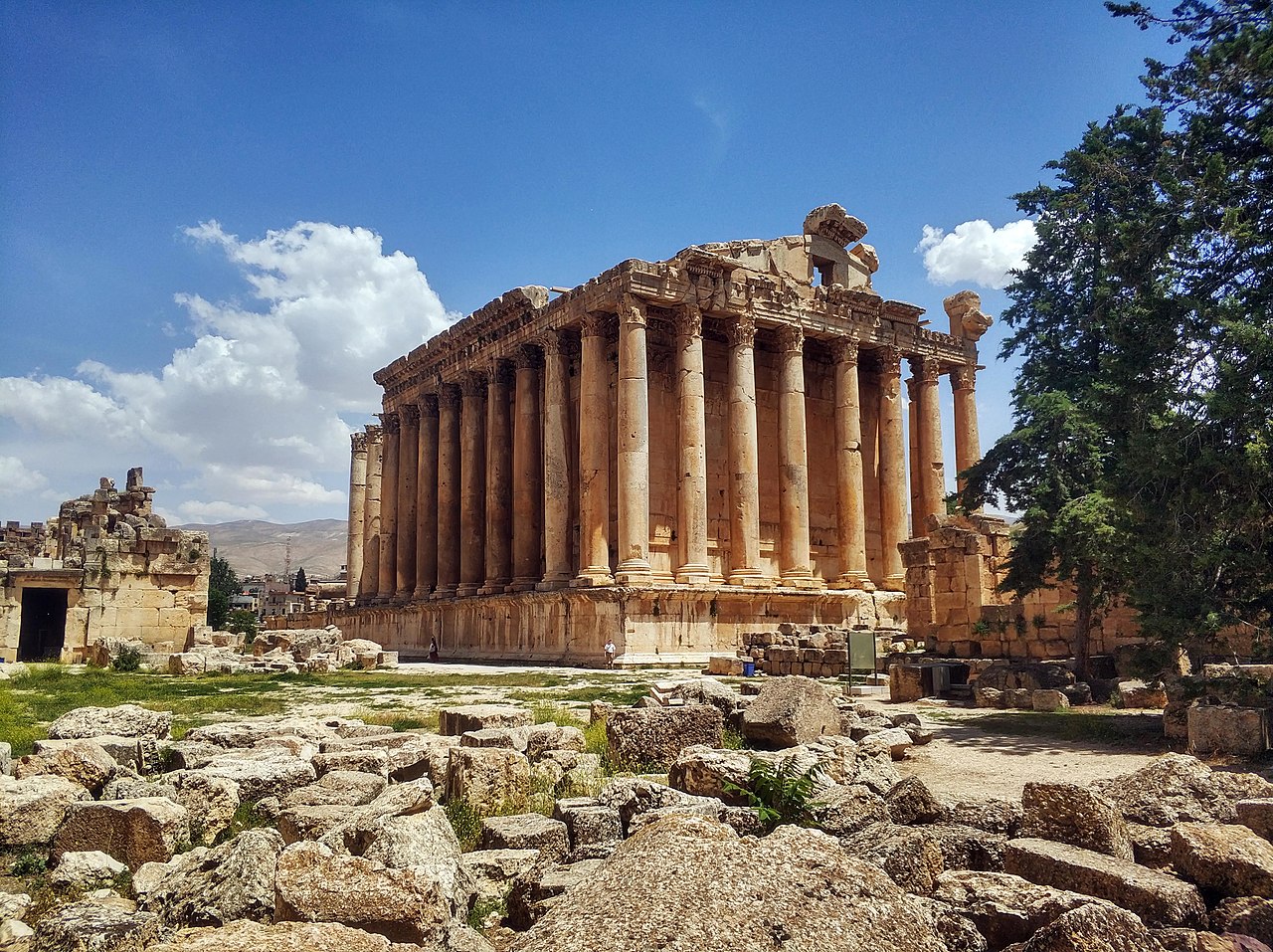
Though smaller than the Temple of Jupiter, the nearby Temple of Bacchus is a wonderfully preserved architectural masterpiece. Take your time walking around its outer portico, marvelling at the intricately carved stone. From here you also have a good view of the enormous foundation blocks that supported the Temple of Jupiter. Enter the Temple of Bacchus at its eastern end, climb the flight of stairs and pass through the ornate doorway. Look up at the famous keystone that 18th-century European travelers loved to sketch, convinced it was about to fall.

About a kilometre south of the main complex, in the quarry where the Romans cut their stone, lie the Baalbek Stones — unfinished megalithic blocks that were never moved, including one weighing an estimated 1,650 tonnes, the largest known hewn stone in the ancient world. They are open to visitors and startling to stand next to.

The Baalbeck International Festival, held annually in July or August, is one of the premier cultural events in the Middle East, with performances in the extraordinary setting of the temple complex. The Hotel Palmyra, built in 1874, is worth visiting whether you stay or not — its guest book includes Kaiser Wilhelm II, Jean Cocteau, and Fairuz.

Baalbek is about 85 km northeast of Beirut, roughly 1.5 hours by car across the Mount Lebanon range. It can be visited as a day trip from Beirut. Allow at least half a day for the site itself, not including travel time.

Guide

Eating Out

Baalbek has a handful of restaurants near the ruins and around the main square, most serving Lebanese standards — grilled meats, mezze, fresh bread, and local produce from the Bekaa Valley. The valley grows an abundance of vegetables and is also Lebanon's main wine region. Expect simple, generous cooking rather than anything sophisticated.

Look for restaurants serving kibbeh nayyeh (raw lamb with bulgur, herbs, and spices), which is a Bekaa Valley speciality, and fattoush with local herbs. Fresh arak (the anise spirit) is widely available and goes naturally with a mezze spread.

Guide

Getting There

Baalbek is about 85 km northeast of Beirut, roughly 1.5 hours by car across the Mount Lebanon range via the Dahr el-Baydar pass. The road climbs steeply out of Beirut and then descends into the flat Bekaa Valley — the change in landscape is dramatic.

There is no train service. Minibuses and shared taxis (service taxis) run from Cola transport hub in Beirut to Baalbek most days; journey time is around 1.5–2 hours depending on traffic and waiting times. The return trip may require more patience finding a service back in the late afternoon.

Renting a car or hiring a private driver for the day from Beirut is the most flexible option, and allows stops at Anjar (Umayyad ruins) or the Bekaa Valley wineries on the way. The roads are in reasonable condition but Lebanese driving standards require attention.

Travel advice: check the current security situation before going. The Bekaa Valley has historically been controlled by Hezbollah, and while tourists visit without incident most of the time, conditions can change. Most Western embassies issue specific travel advisories for this region.

Guide

When to Go

Baalbek sits at around 1,170 metres altitude in the Bekaa Valley, which gives it a continental climate quite different from the coast. Summers are warm and sunny but not oppressively hot — highs around 28–32°C from June to August. Winters are cold, with snow possible from December to March, and the mountain roads can be challenging.

The best time to visit is late spring (April–May) or early autumn (September–October), when the weather is pleasant, the light is good for photography, and the crowds at the ruins are manageable. The ruins look spectacular in late afternoon light.

The Baalbeck International Festival runs through July and August, filling the temple complex with concerts and performances. If you want to combine a ruins visit with the festival, this is the time to come — but book accommodation and festival tickets well in advance.

Ramadan is worth bearing in mind: restaurants may have limited hours and the town's atmosphere changes, though the ruins remain open.