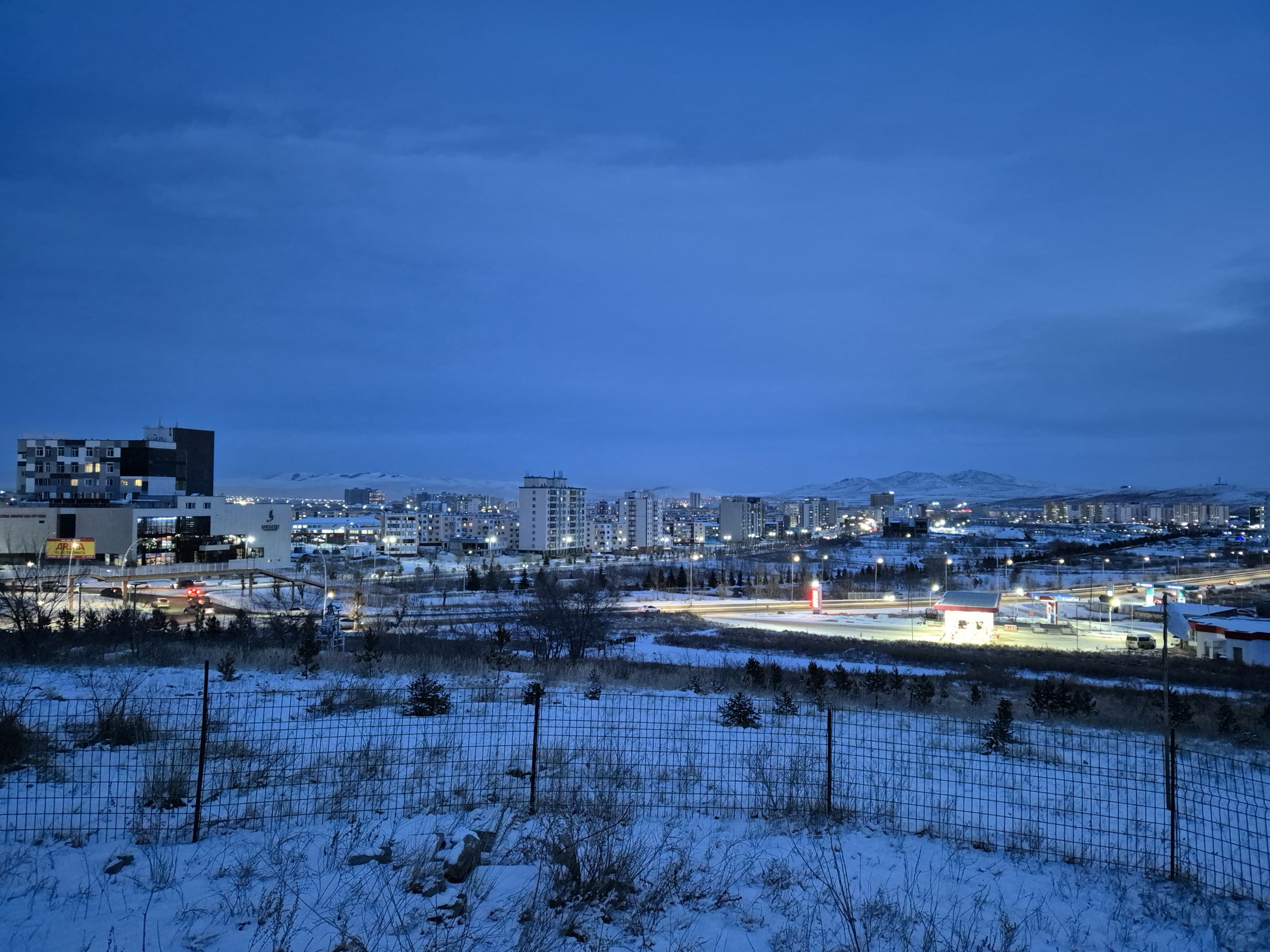
Soviet-built Mongolian industrial city on the Trans-Mongolian line, useful for monastery country.
Darkhan is Mongolia's third-largest city, a Soviet-built industrial centre about 200 km northwest of Ulaanbaatar, connected to the capital by daily buses and frequent express trains on the Trans-Mongolian line. The city itself is not a prime attraction — its wide Soviet-era streets and industrial districts have more in common with Siberian towns than the nomadic Mongolia of the tourist imagination — but it is an honest, functional place with a few cultural highlights and, more importantly, good access to two of the most rewarding monasteries in the country.
The Morin Khuur Complex, dedicated to Mongolia's iconic horsehead fiddle, and the Museum of Darkhan-Uul Province give a sense of local culture and history. But the real reason to come to Darkhan is to arrange a jeep and driver for Amarbayasgalant Monastery, about 100 km east — one of the most complete surviving Buddhist monastery complexes in Mongolia, built in the 1720s and dedicated to the lama Zanabazar. The road passes through rivers and forest and can take two to three hours each way depending on conditions. The smaller Haragiin Khid is closer and easier to reach as a half-day excursion.
Guide
Day Trips
Darkhan's main value is as a base for reaching two monasteries that would be difficult to visit directly from Ulaanbaatar.
Amarbayasgalant Monastery (Амарбаясгалант хийд) is the most complete surviving Buddhist monastery complex in Mongolia and the main reason to come to Darkhan. Located about 100 km east of the city, the monastery was built between 1727 and 1736 and dedicated to the lama Zanabazar — the greatest Mongolian sculptor and Buddhist scholar. It survived the Soviet purges in a damaged state and has been slowly restored since the 1990s. Getting there requires arranging a jeep and driver in Darkhan; the road involves river crossings and rough tracks through forest and steppe, and the journey takes two to three hours each way depending on conditions. The monastery is active and monks live here year-round.
Haragiin Khid is a smaller monastery close to Darkhan, accessible as a half-day excursion. It lacks the grandeur of Amarbayasgalant but is easier to reach and gives a sense of the quiet monastic life of the Mongolian steppe without the long journey.
Guide
Getting There
Darkhan is well connected to Ulaanbaatar, about 200 km to the south, by both rail and road. Express trains take around three hours; several services run daily on the Trans-Mongolian line, making Darkhan one of the easiest provincial cities to reach from the capital. Buses also run frequently, taking a similar time by road.
Darkhan-1 railway station is the main stop, about 1 km from the city centre. If you are continuing north toward the Russian border at Sukhbaatar, Darkhan is a natural stop on the Trans-Mongolian route between Ulaanbaatar and Ulan-Ude in Russia.