Karakorum (Kharkhorin in modern Mongolian) was the capital of the Mongol Empire under Ögedei Khan, founded in 1235 at the crossroads of the Silk Road. For a brief period it was the most powerful city on earth, seat of an empire stretching from Korea to Hungary. Marco Polo described it, though by the time he wrote the city had already been eclipsed by Kublai Khan's move to Beijing.
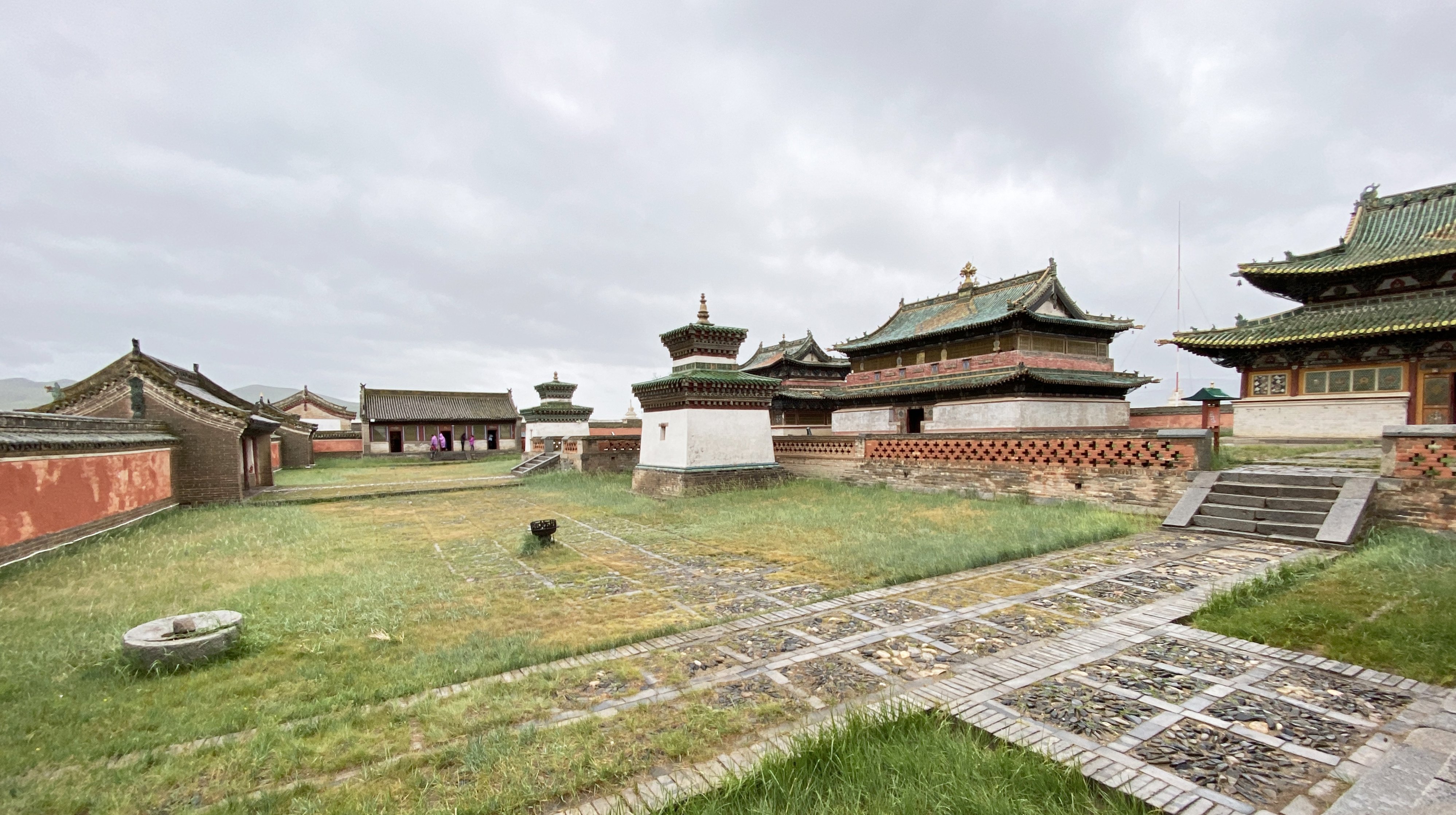
Almost nothing of the original city survives above ground — the site was systematically destroyed and the stones reused. What does survive, and magnificently, is the Erdene Zuu Monastery, built in 1586 from the ruins of the old capital. Its outer wall, punctuated by 108 stupas, encloses temples with extraordinary Buddhist murals and statuary. It is the oldest surviving Buddhist monastery in Mongolia and a UNESCO World Heritage Site as part of the Orkhon Valley Cultural Landscape.
The small town of Kharkhorin serves as a base. The Orkhon Valley itself is beautiful — wide grasslands along the river, with nomadic ger camps and good horseback riding. Karakorum is about 370 kilometres from Ulaanbaatar, reachable in a long day's drive on a paved road.