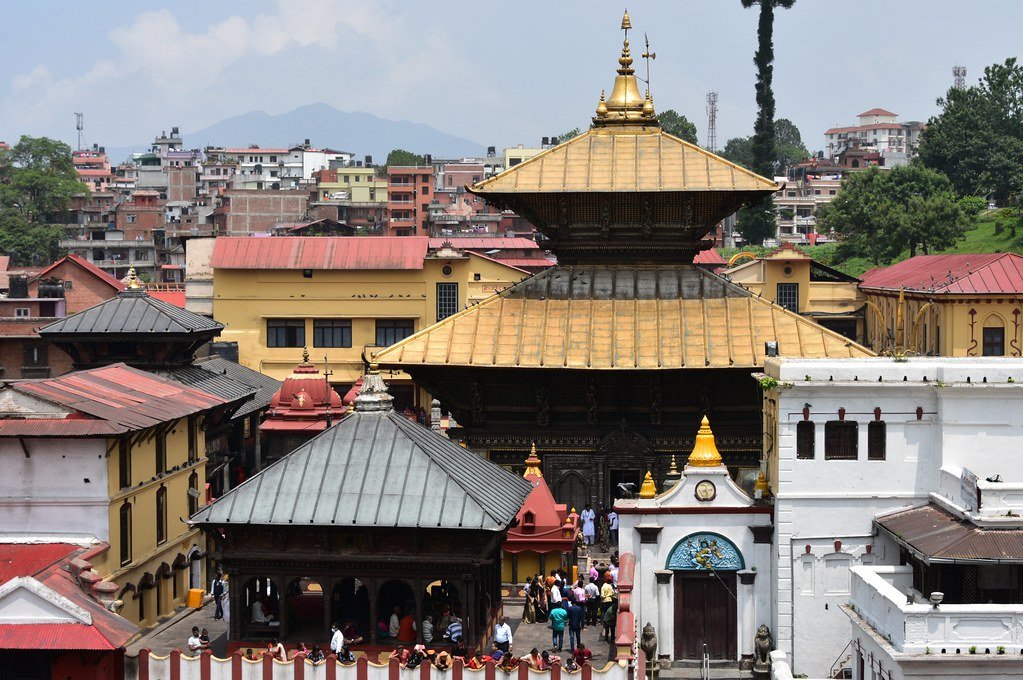
Pashupatinath is Nepal's most sacred Hindu temple complex, spread along the banks of the Bagmati River on the eastern edge of Kathmandu. It is to Nepali Hindus what Varanasi is to Indian Hindus — the holiest place to be cremated, with the belief that having your ashes scattered in the Bagmati (which flows into the Ganges) releases you from the cycle of rebirth.
The complex is a UNESCO World Heritage Site and centres on a golden-roofed pagoda Pashupatinath Temple dedicated to Lord Shiva. Non-Hindus cannot enter the main temple, but you can see it from across the river and explore the surrounding grounds freely. Along the riverbanks, cremation ghats are in almost constant use — Arya Ghat for royal and wealthy families, Bhasmeshvar Ghat for ordinary citizens. Watching the cremations is confronting but profoundly moving, and is a normal part of visiting.
On the opposite bank, a series of smaller shrines and Shiva lingams line the terraces. Sadhus — Hindu holy men with painted faces and matted hair — sit around the temple grounds and will pose for photos (usually for a small donation). The complex is large enough to spend a couple of hours wandering, and the atmosphere shifts from the intensity of the cremation ghats to quiet forest paths further upstream. A short walk east along the river brings you to Guhyeshwari Temple, one of the most sacred Shakti shrines in the Himalayan world. The best time to visit is early morning, when the light on the river is beautiful and the crowds are thinner.