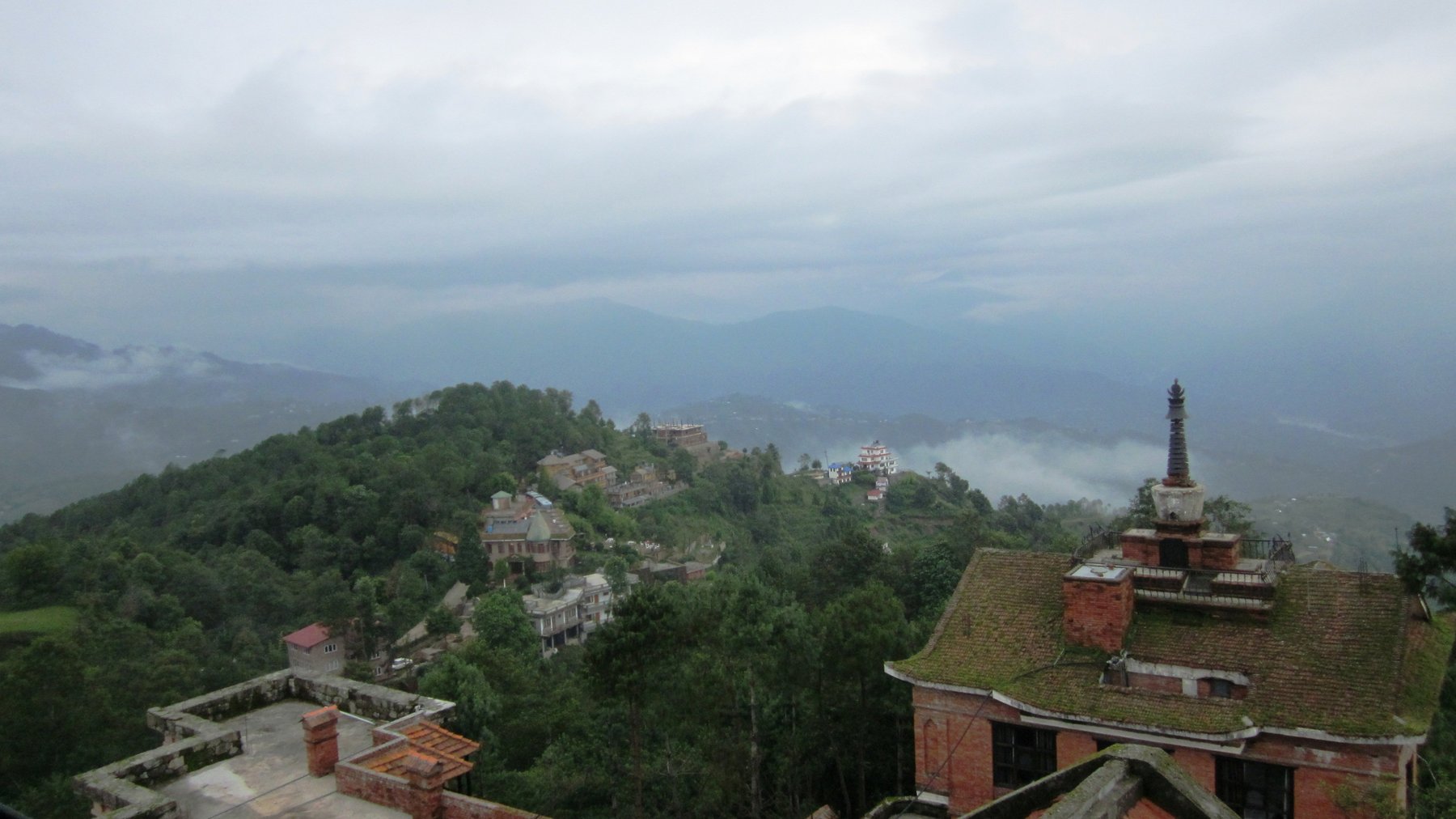
Kathmandu Valley hilltop village known for sunrise views across Himalayan ranges from Manaslu to Everest.
Nagarkot is a small hilltop resort village on the eastern rim of the Kathmandu Valley, about 32 km from Kathmandu and reached by a winding two-hour drive up through terraced rice fields and rhododendron forest. At 2,175 metres it is one of the highest points accessible by road on the edge of the valley, and its reason for existing is a single extraordinary feature: on a clear morning, the view from Nagarkot takes in eight of the world's highest mountain ranges, including the snow walls of Manaslu, Ganesh Himal, Langtang, Jugal, Rolwaling, and — weather permitting — even a distant glimpse of Everest itself to the north-east.
There is not much to the village. A few dozen lodges and resorts of varying quality cling to the ridge, and most visitors come for a single night: up in the afternoon, dinner as the sun sets on the Himalayas, an early wake-up call at 5 am to bundle up on a rooftop and watch the peaks turn pink and then gold in the first light. The Nagarkot View Tower at the top of the village is the traditional gathering point for sunrise. Clear views are much more reliable in autumn (October–November) and spring (February–April) than in the monsoon months; winter can also be excellent but is cold at night.
For those who want to stretch their legs, the best option is the Changu Narayan Hike — a four to five hour descent through forest and villages to the old Newari town of Changu Narayan, with its UNESCO-listed 4th-century temple and extraordinary stone carvings. Bus or taxi back to Kathmandu from there. The Buddha Peace Park offers a quieter alternative walk through landscaped gardens with mountain views. Nagarkot is also easily combined with the medieval Newari city of Bhaktapur on the same trip.
Guide
Getting There
Nagarkot is about 32 kilometres east of Kathmandu, a journey that takes between one and two hours depending on traffic and road conditions. The road winds steeply up through terraced fields and small villages — public buses run from Bhaktapur's old city bus park and take around 45 minutes from there, making Bhaktapur a natural stopping point on the way up or down.
Taxis from Kathmandu cost around NPR 2,000–3,000 one way; agree on the fare before departing. Some guesthouses in Kathmandu can arrange a shared taxi at lower cost if you are flexible on timing. Many visitors come up by taxi in the afternoon, spend the night for the sunrise view, and then walk down to Changu Narayan and take a bus from there back to Bhaktapur or Kathmandu — this is the most satisfying way to experience the area.
Guide
When to Go
Nagarkot is a year-round destination but the mountain views that justify the trip are strongly seasonal. The two best windows are autumn (October to November) and spring (February to April). In autumn, the monsoon has washed the sky clear and the air is crisp; you can sometimes see peaks all the way to Dhaulagiri on a good October morning. In spring, rhododendron forests below the ridge are in bloom.
Monsoon season, from June to September, brings clouds that reliably obscure the mountains — sometimes for days at a time. The forest is lush and green and the landscape is beautiful, but you may wait a week without seeing a single peak. Winter (December to January) can be excellent for views on clear days but is cold at night, and frost and occasional snow are possible on the ridge.
Weekends bring day-trippers up from Kathmandu who crowd the view tower for sunrise but mostly leave by mid-morning. If you arrive on a Friday afternoon and stay until Sunday, you will share the viewpoints; midweek visits are significantly quieter.