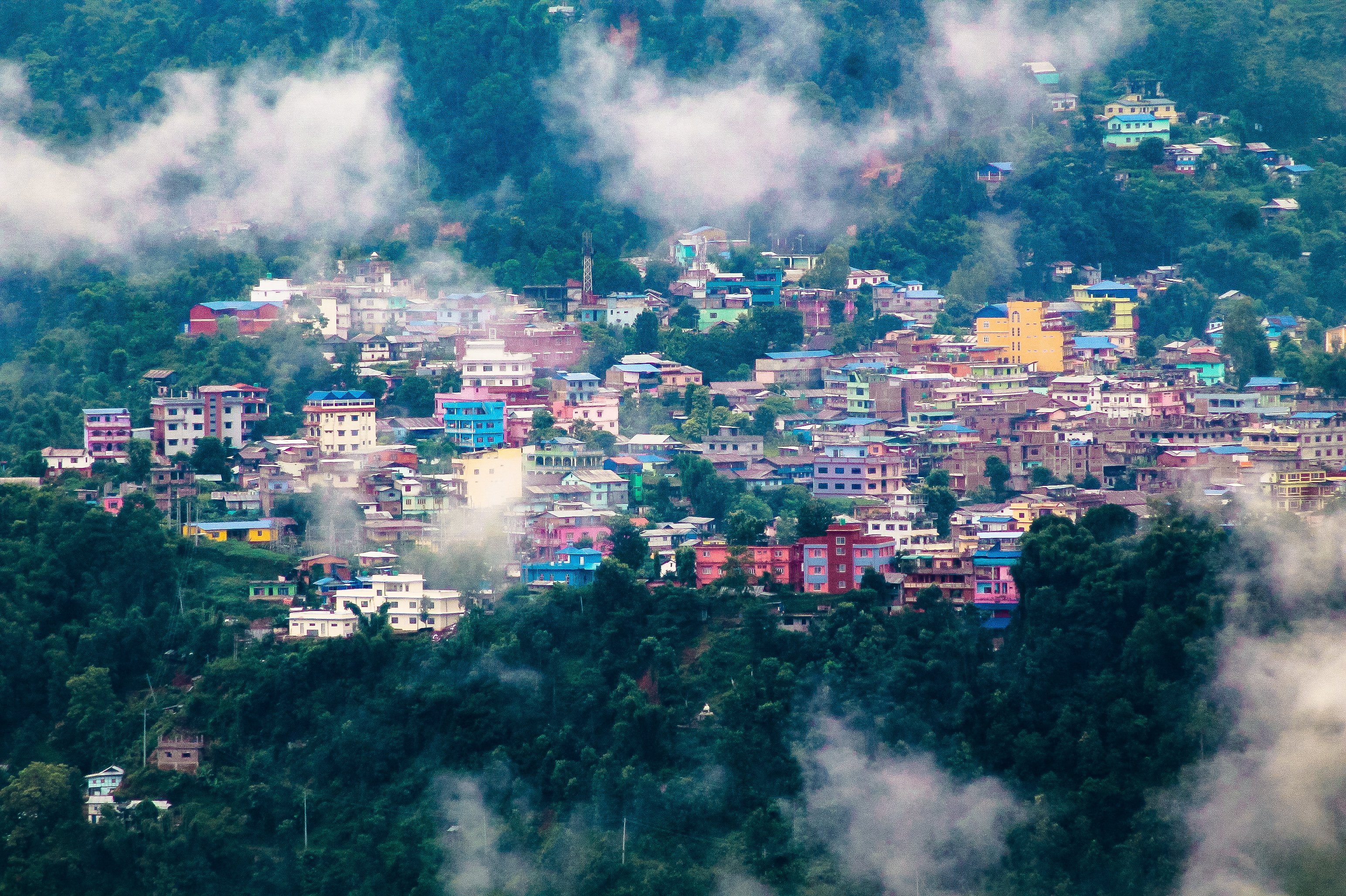
Eastern Nepal hill town below Kanchenjunga, serving trekkers and the Panchthar district.
Phidim is a small hill town in eastern Nepal, perched in the foothills below Kanchenjunga — the world's third highest mountain. It's the district headquarters of Panchthar, a practical stop for trekkers heading toward the Kanchenjunga Conservation Area, and a place that rewards a slower look.
Two rivers — the Phewa and the Hewa — run through the town, which spreads across terraced hills in the usual Nepali mix of tin-roofed houses and concrete blocks. The setting is genuinely lovely: green valleys, cloud-draped ridges, and on clear days the white mass of Kanchenjunga rising to the north.
The population is ethnically mixed — Limbu, Magar, Rai, Tamang, Brahmin, Chhetri — making it one of the more diverse towns in the region. That diversity shows in the Panchthar Bazaar and festivals if you're passing through at the right time.
Getting here means a six-hour drive from Charaali in Jhapa on the Mechi Highway, winding up through dense forest and terraced farmland. The road trip itself is one of the better ones in eastern Nepal — slow, winding, and worth it.
Guide
Getting There
Phidim is connected by road to Charaali on the Mechi Highway, the main east-west road along the Nepal-India border. From Charaali, the drive takes around six hours by local bus or shared jeep — the road climbs steadily through forested hills into the district headquarters.
From Kathmandu, the easiest option is to fly or take a bus to Biratnagar, then connect onward to Charaali and Phidim. The nearest airport with scheduled flights is at Taplejung or Suketar, which cuts overland travel time significantly when seats are available.
Guide
When to Go
The best time to visit Phidim is October through December and March through May. These months offer clear skies, good mountain views, and manageable trekking conditions on the trails leading toward Kanchenjunga. October and November are peak trekking season and bring the clearest Himalayan panoramas.
The monsoon (June to September) makes some roads difficult and obscures the mountains, though the lush green landscape has its own appeal and lodge prices drop sharply. Winter (January to February) brings cold nights and occasional snow on the higher trails, but Phidim town itself remains accessible and sees very few visitors.