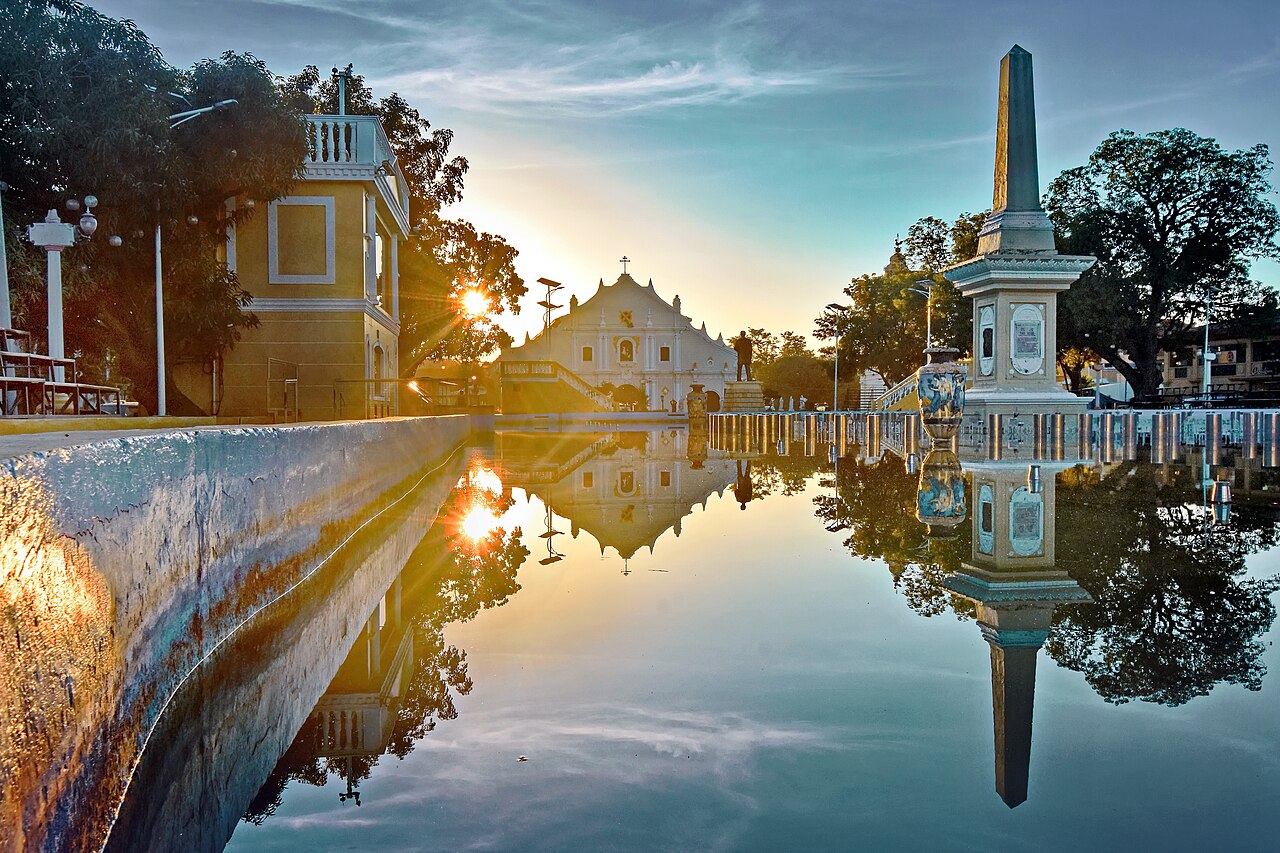
Vigan is a colonial town on the northwest coast of Luzon in the Philippines, and one of the best-preserved examples of a Spanish colonial town in Asia. The old quarter, Calle Crisologo, is a cobblestone street lined with ancestral houses — two-storey stone-and-wood buildings with capiz shell windows that glow amber at sunset. UNESCO listed the historic centre as a World Heritage Site in 1999.
The town is compact enough to explore on foot, though horse-drawn calesas are the traditional way to get around. Beyond the photogenic main street, there is a potters' village in Pagburnayan where you can watch traditional jar-making, and the Bantay Bell Tower on a nearby hill offers views over the Abra River valley.
Vigan is known for its food: longganisa (a garlicky local sausage), empanada stuffed with green papaya, and bibingka. The best place to eat is at the stalls along the plaza, particularly in the evening when the whole town seems to be out.
Getting here from Manila takes eight to twelve hours by bus, depending on traffic leaving the capital. Overnight buses are the most practical option. Vigan can also be combined with a trip to the nearby coast, where the old port town of Salcedo and the beaches further north are worth exploring.