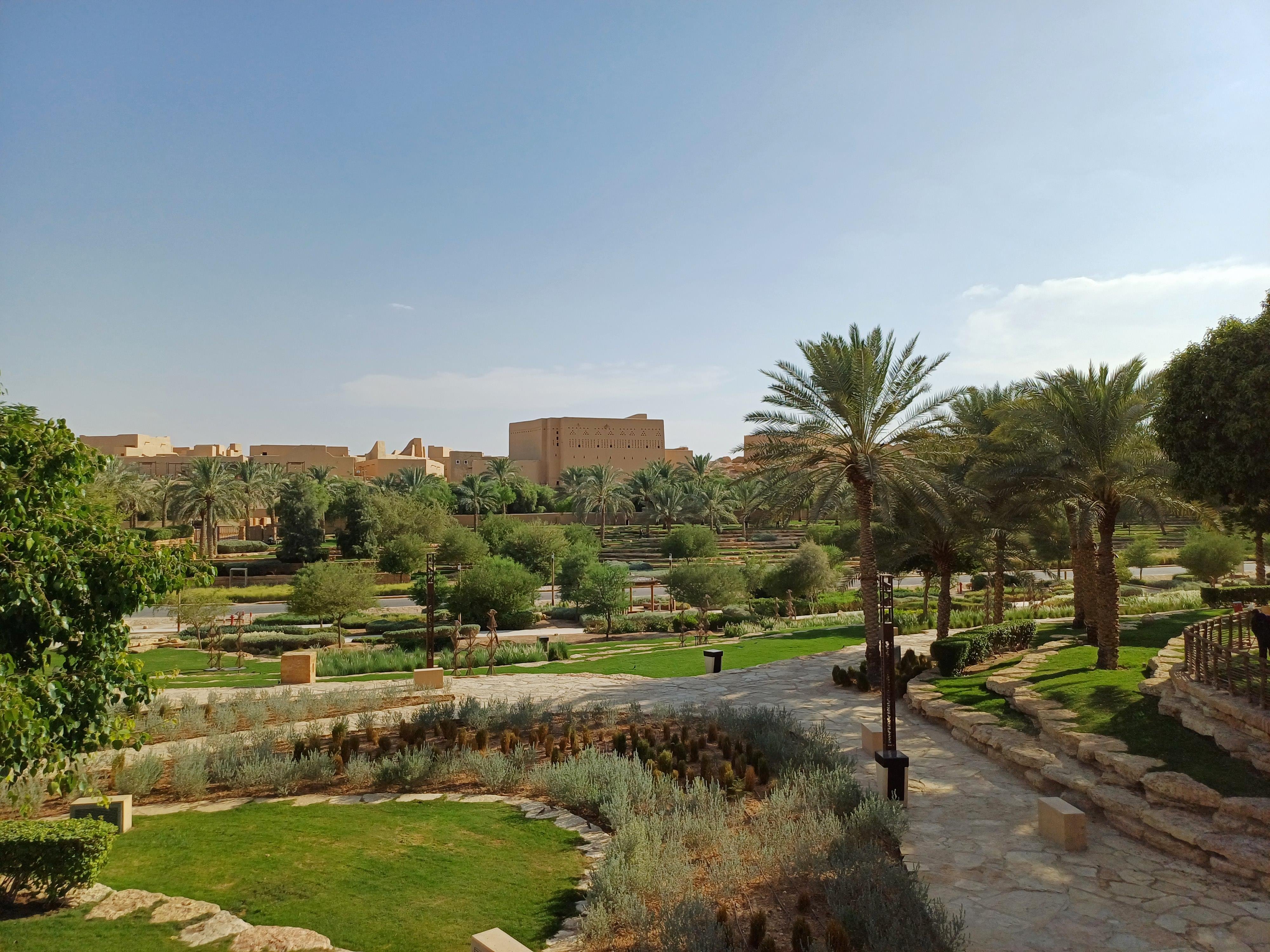
Historic Riyadh-edge oasis town where At-Turaif preserves the mud-brick heart of the First Saudi State
Dir’iyah sits on the outskirts of Riyadh in the Wadi Hanifa valley, and it is where the story of modern Saudi Arabia begins. This was the ancestral home of the Al Saud family and the capital of the First Saudi State in the 18th century, before the Ottomans destroyed it in 1818.
The At-Turaif district, the ruined mud-brick heart of the old city, is now a UNESCO World Heritage Site and one of the most impressive historical monuments in the Gulf. The distinctive Najdi architecture — thick earthen walls, narrow alleys, tall wind towers — has been extensively restored, with the Salwa Palace at its heart. Walking through the site gives a vivid sense of the scale and sophistication of what was here before the destruction.
The surrounding area has been developed into a broad cultural quarter (the Dir’iyah Gate Development) with restaurants, galleries, and events spaces — most concentrated on Bujairi Terrace, the dining strip overlooking the old town. The result is a mix of genuine history and polished tourism infrastructure. Go for the UNESCO site, which justifies the visit entirely on its own terms.
Guide
Getting There
Diriyah is a 20-minute drive north-west of central Riyadh — the easiest way is by taxi, Careem, or Uber, which should cost around 30 SAR each way. The Riyadh Metro is gradually being extended; King Fahd Road station on the Yellow Line is the current closest stop.
There is no direct intercity rail or bus to Diriyah; arrive by air at King Khalid International Airport (RUH), about 50 km north of the city.
Allow extra time on weekend evenings — local traffic builds up around At-Turaif and the dining strip.
Guide
When to Go
The Najd plateau gets brutally hot — May to September daytime temperatures regularly clear 45°C, and the mud-brick walls offer little useful shade. The right months are November to March, when daytime highs are pleasant (20–25°C) and evenings cool down enough for jackets.
The annual Diriyah E-Prix in late January or February (Formula E electric racing) and the Diriyah Season cultural events from November to February together fill out the high season. At-Turaif is most photogenic in the hour before sunset, when the mud-brick walls turn copper.