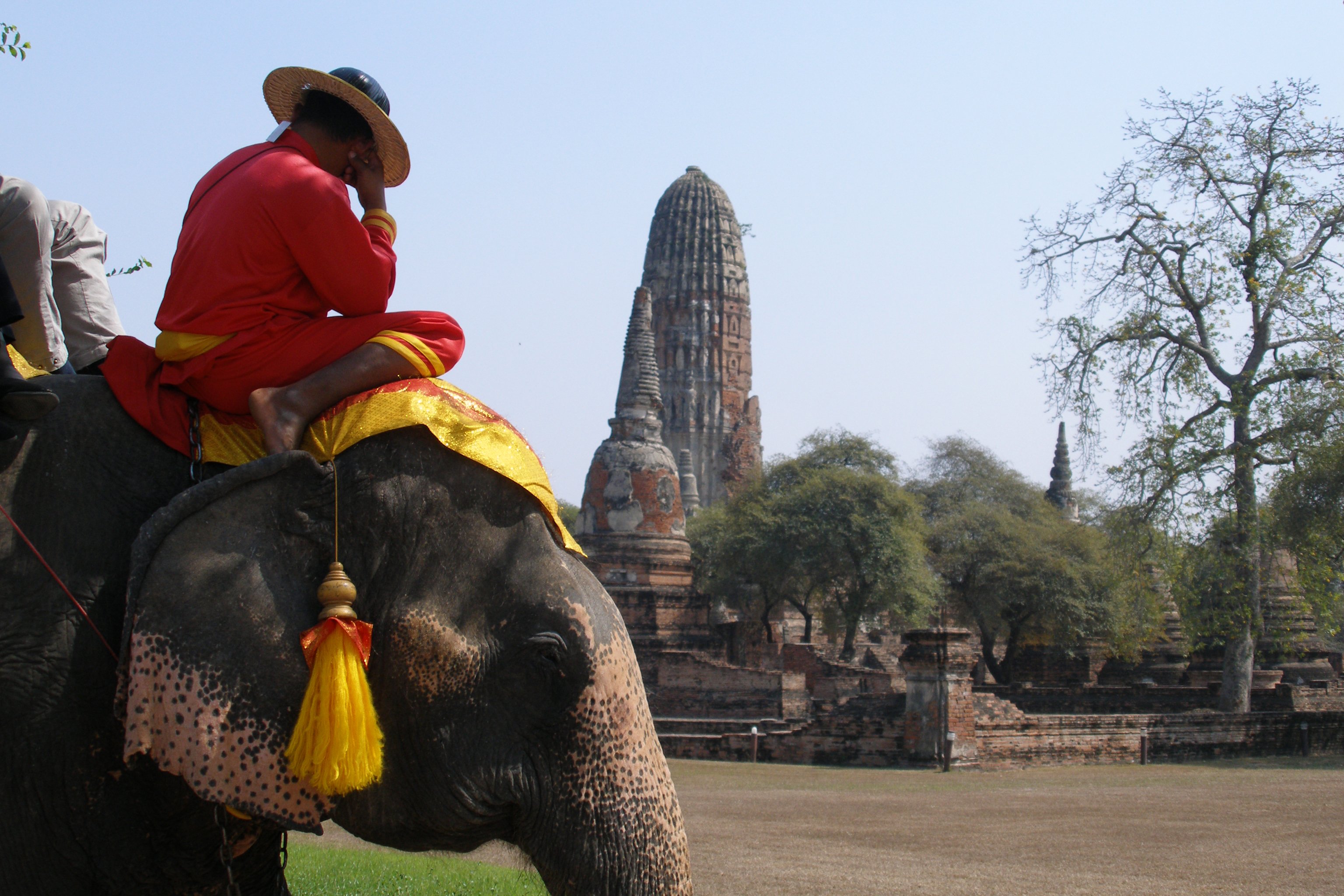
For over four centuries, Ayutthaya was the capital of Siam and one of the largest cities in the world. Founded in 1350 on an island at the confluence of three rivers, it grew into a cosmopolitan trading hub that hosted merchants from China, Japan, India, Persia, and Europe. In 1767, Burmese armies burned it to the ground.
What remains is extraordinary. The ruins of temples, palaces, and monasteries spread across an island you can cover in a day by bicycle. Brick prangs rise from flat plains, tree roots wrap around stone Buddha heads, and crumbling chedis line the riverbanks. The UNESCO World Heritage Site covers the historical core, but interesting ruins extend well beyond the official park boundaries.
The centrepiece is Wat Phra Sri Sanphet, with its three iconic royal chedis, alongside the constantly photographed Buddha head at Wat Mahathat. Wat Ratchaburana hides an underground crypt that yielded extraordinary royal gold in the 1950s. On the southern edge of the island, Wat Phanan Choeng houses a towering 19-metre golden Buddha that predates the city itself. The Wihan Phra Mongkhon Bophit contains one of Thailand's largest bronze Buddhas, and Wat Lokayasutharam presents a 42-metre reclining figure lying in the open air.
History buffs should also seek out Wat Na Phra Men, the only major temple to survive the 1767 destruction intact, and Baan Hollanda, the site of the Dutch East India Company post that traded here for over a century.
Ayutthaya sits just 80 kilometres north of Bangkok, making it one of the easiest and most rewarding day trips in Thailand. But spending a night here is worth it. The ruins are at their best in the early morning light, before the tour buses arrive, and the Chao Phrom Market and the riverside night market are fine places to end the day.