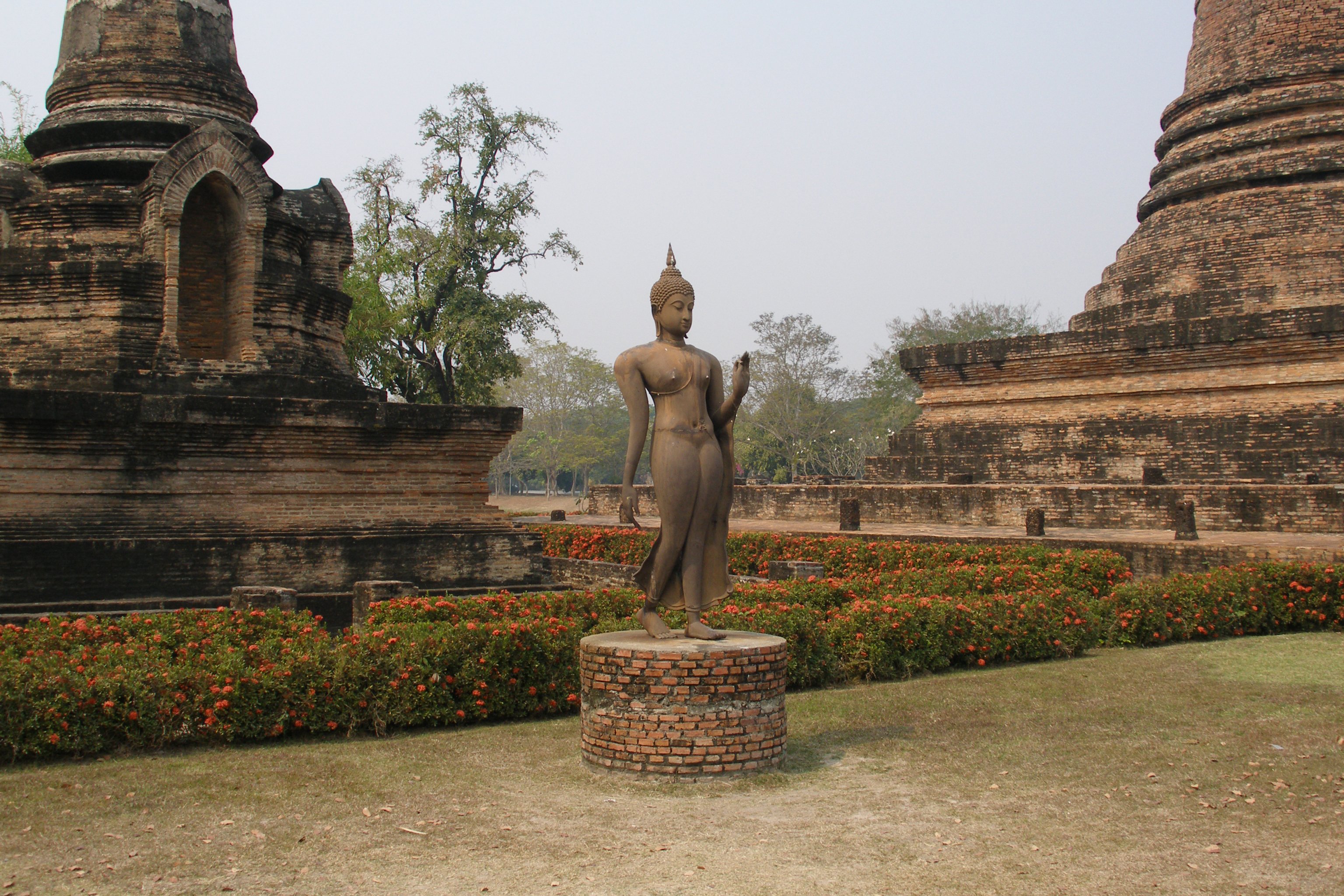
Sukhothai — the name literally means "the Dawn of Happiness" in Pali — was the first capital of the Thai kingdom, founded in 1238 and flourishing for about 120 years before being absorbed by the later kingdom of Ayutthaya. During its golden age under King Ramkhamhaeng in the late 13th century, it was the political and cultural heart of what is now central Thailand, and is often considered the birthplace of Thai civilisation: the Thai script is said to have been invented here, and the distinctive classical style of Thai sculpture and architecture reached its most refined form in Sukhothai's Buddha images — walking Buddhas with flame-tipped heads and the half-smile that would define Thai Buddhist art for centuries after.
Today Sukhothai is split into two. The new town (Sukhothai Thani), 12 km east of the historical site, is where the buses and most of the hotels and restaurants are. The Sukhothai Historical Park is where you come. Inside a rectangular moated enclosure about 2 km across, the park contains the ruins of 21 temples and the remains of the royal palace, all restored between 1978 and 1988 in one of the major UNESCO projects of the period. The temples are built of laterite and brick and sit in an immaculate landscape of ponds, lawns and tropical flowers. The most important are Wat Mahathat (the former royal temple at the heart of the complex), Wat Si Chum (containing a colossal seated Buddha 15 metres high, framed by a narrow doorway in a huge square pavilion), and Wat Sa Si on its own small island. The best way to visit is by bicycle, rented just outside the park gate.
Beyond the main park, the quieter ruins of Si Satchanalai — Sukhothai's sister city, 55 km north — are almost as impressive and have far fewer visitors. Together the two sites form one of the most rewarding historical destinations in Southeast Asia. Sukhothai has its own domestic airport (with flights from Bangkok) and is on the main north–south train line between Bangkok and Chiang Mai. Allow at least two days.