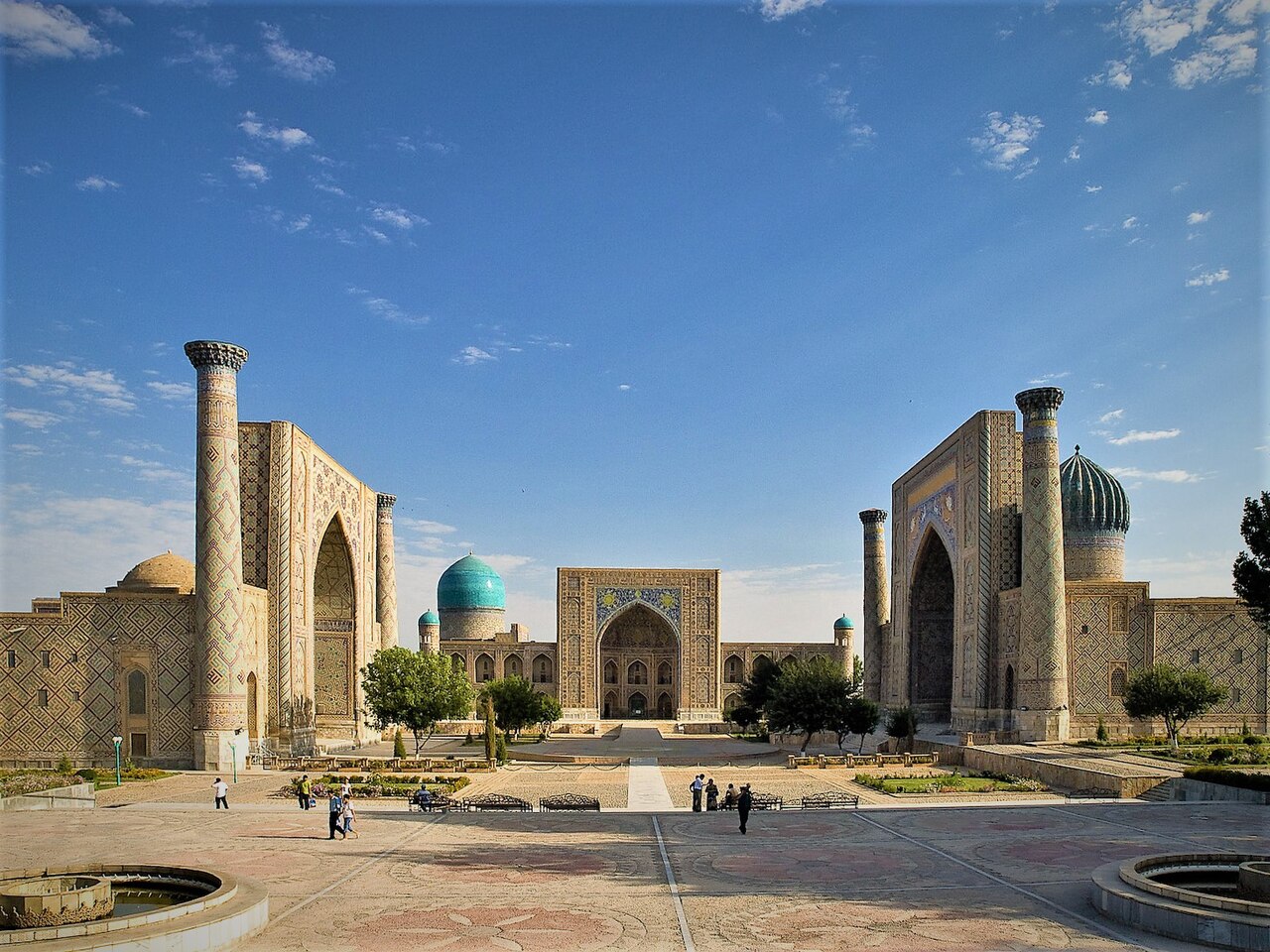
The Registan is the reason most people come to Samarkand, and rightly so. Three massive madrasas face each other across a single square, their facades covered in tile work so intricate it stops you in your tracks. It is one of the finest pieces of Islamic architecture anywhere, on par with the Alhambra or the Blue Mosque.
But Samarkand is more than one square. This was Timur's capital, the jewel of the Silk Road, and his ambition left monuments scattered across the city. The Shah-i-Zinda necropolis climbs a hillside in a procession of tiled mausoleums. The Bibi-Khanym Mosque was once the largest in Central Asia. Ulugh Beg's observatory reminds you that this was a city of science as much as conquest.
The old centre has not really survived into modern times — Soviet planning saw to that — but the monuments are well preserved and the bazaar next to Bibi-Khanym is as lively as it has been for centuries. Bread sellers stack enormous round loaves of Samarkand's famous non, which people carry home in stacks and which travellers from across Uzbekistan bring back as gifts.
If you are coming from Bukhara or Tashkent, the fast train connects all three cities comfortably. Two or three days gives you enough time to see the main sights without rushing.