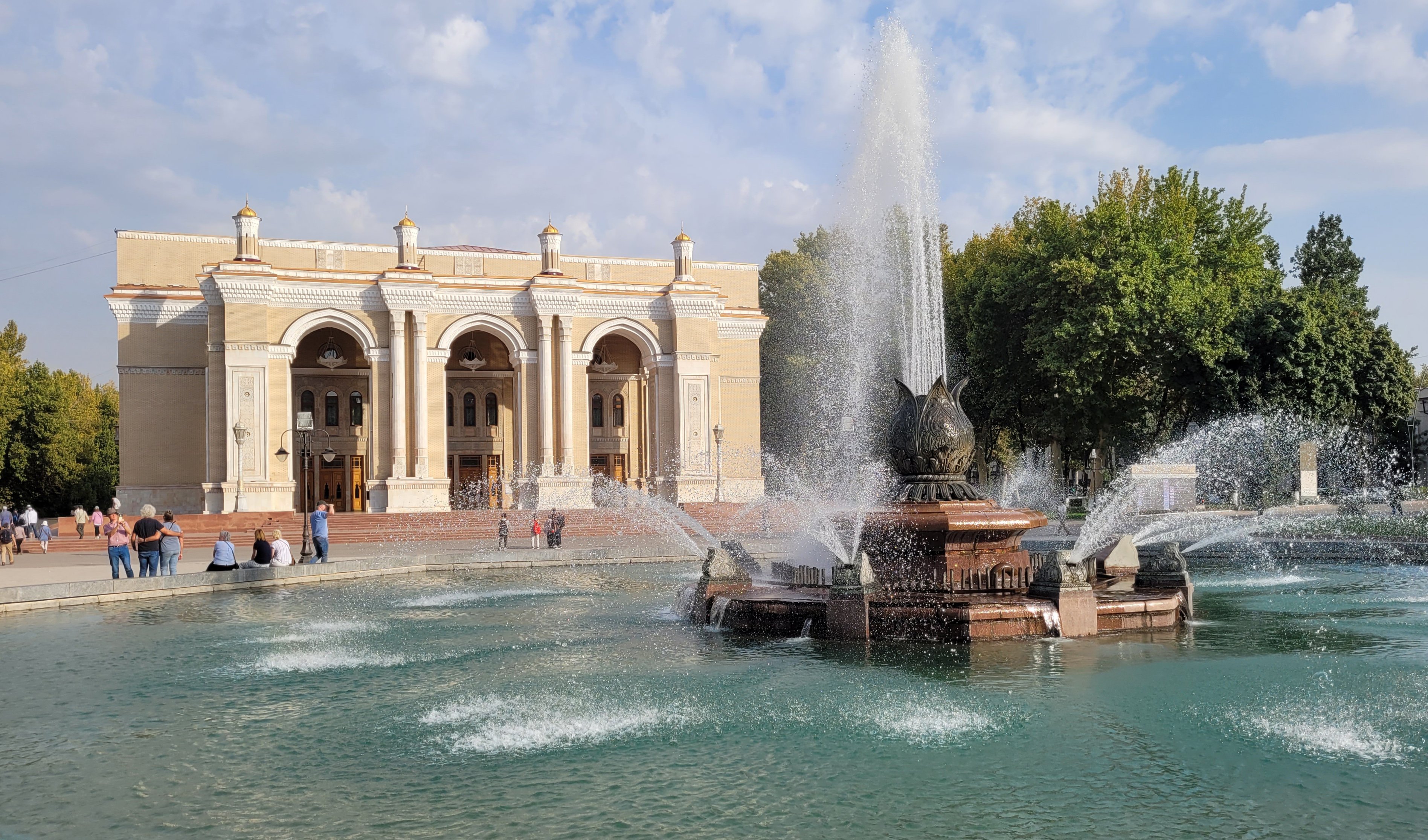
Tashkent is the capital of Uzbekistan but lacks the headline attractions of Samarkand and Bukhara. A devastating earthquake in 1966 levelled much of the old city, and the Soviets seized the moment — calling in volunteer workers from across the USSR to rebuild. Thousands came and stayed, turning the ancient Silk Road city into a modern, Soviet, and rather Russian town.
The result is not unpleasant. There may not be many historical sights, but Tashkent has a few genuinely good museums — the State Museum of History, the Museum of Applied Arts, the Amir Timur Museum — wide tree-lined boulevards, parks with fountains, and imposing Stalinist architecture that is impressive on its own terms. The metro stations alone are worth a visit, decorated with marble, chandeliers, and ornate mosaics. What remains of the old town clusters around Chorsu Bazaar and the Khast Imam Complex, which holds one of the world's oldest Qurans.
Tashkent is also an important transport hub for Central Asia. There are internal flights to Khiva, Bukhara, and Samarkand, and overland routes into Kyrgyzstan and Kazakhstan pass through here.