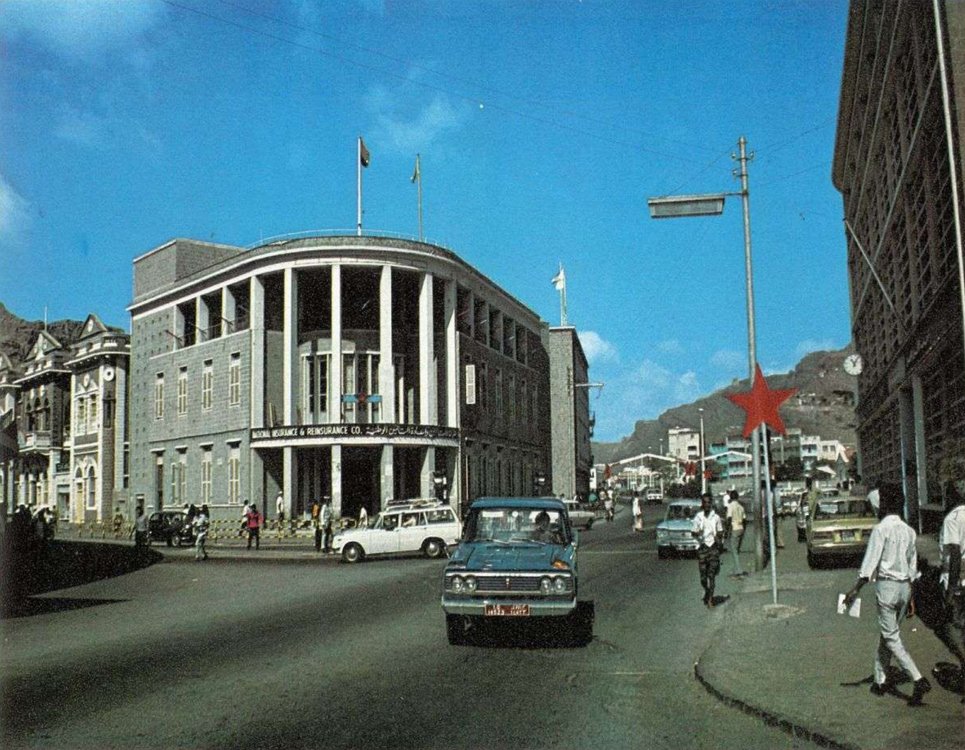
Aden is Yemen's main port and former southern capital, built in and around the crater of an extinct volcano on a peninsula jutting into the Gulf of Aden. It has a long history as a trading hub — the British made it a strategic coaling station and free port in the 19th century, and at its peak it was one of the busiest ports in the world. That era is visible in the grid of colonial-era buildings, many now crumbling.
The oldest part of the city is known as Crater, because it literally occupies the caldera of the volcano. Here you find the Cisterns of Tawila — massive man-made tanks carved out of the rock, with a combined capacity of around 20 million litres. The Aidrus Mosque and the National Museum sit a few streets away, and the colonnaded shopfronts along Queen Arwa Road preserve the architecture of the British boom years.
The Mualla district, along the waterfront, is where you see the traditional wooden dhow-style boats. Across the bay, Little Aden — also built in a volcanic crater — has small fishing villages in sheltered bays and beaches fronting the Indian Ocean. The harbour is overlooked by Sira Fortress on one side and the Al-Maashiq Palace on the other.
Note that Yemen has been in armed conflict since 2015 and travel to Aden carries serious safety risks. Check current advisories before any travel.