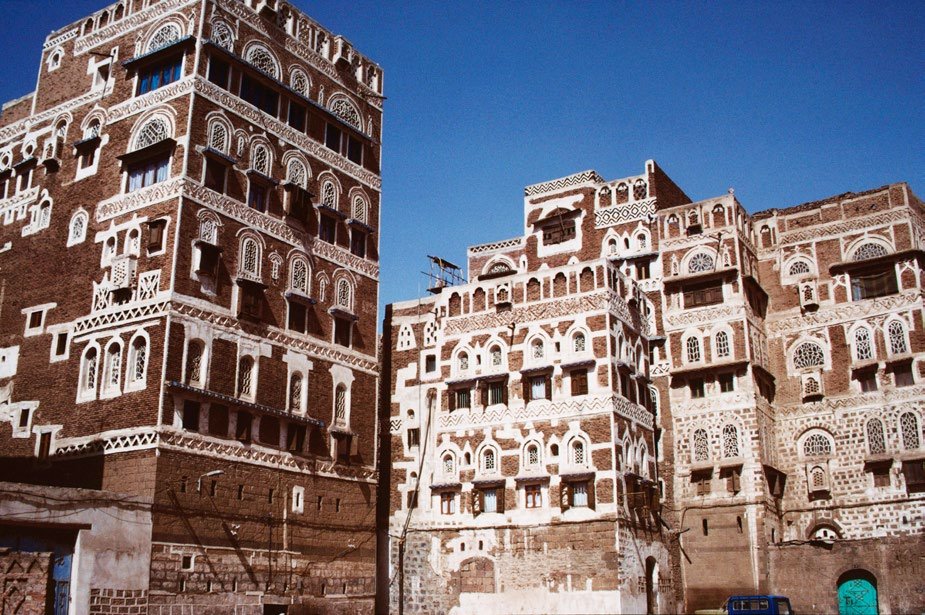
Sana'a is one of the most extraordinary cities in the Arab world — a place where the architecture has barely changed in a thousand years and where even the new quarters have the feel of somewhere very old. The city sits in a high valley at about 2,200 metres, ringed by rugged mountains, and the air is clear and cool by Arabian standards.
The old city is what brings visitors here. More than 14,000 tower houses stand in the medieval quarter, some rising eight storeys, built of stone on the lower floors and mud brick above. Each floor is separated by a band of decorative brickwork; the rooms are lit by arched stained-glass windows whose coloured light falls across whitewashed interiors. The ground floors are used as storerooms and workshops, the upper floors for living and entertaining. At the very top of every house sits the mafraj — a room of broad windows and cushioned benches where the men of the household gather to chew qat and talk in the afternoons.
The old city was a UNESCO World Heritage Site and is genuinely one of the most beautiful urban environments in the world. The souk winds through it in a maze of covered lanes: copper-smiths, spice traders, silver jewellers, and men selling the curved daggers (janbiya) that Yemeni men wear as a mark of status. Allow at least a full day to wander — the scale is deceptive and the details reward slow walking.
Note: Yemen has been in a state of severe conflict since 2015. Sana'a has been affected by the war, and travel is not possible for most visitors at present. This page is preserved for when the situation changes.