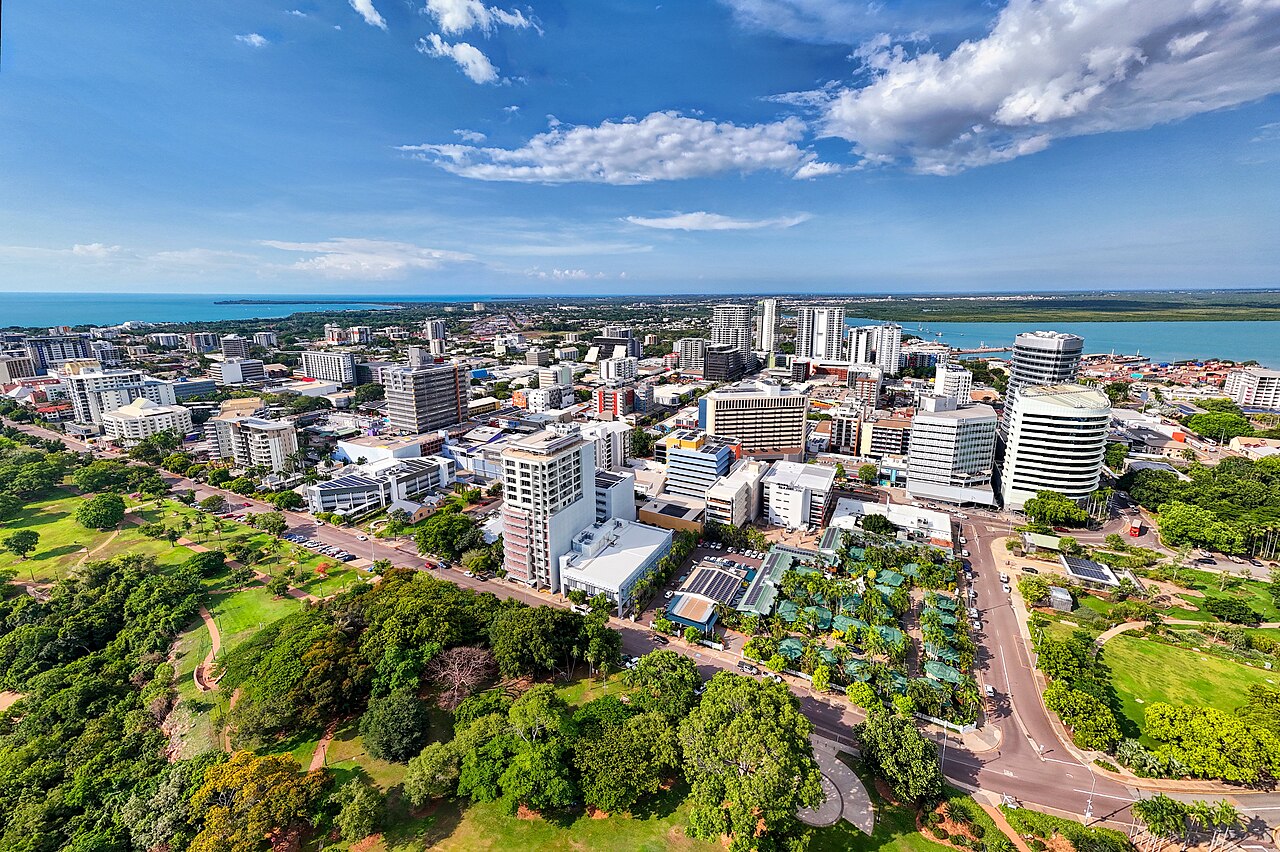
Darwin is the capital of Australia’s Northern Territory and the country’s most northerly city. It sits closer to Bali than to Sydney, and it shows — the food is heavily Southeast Asian, the population is unusually cosmopolitan, and the wet season brings monsoonal downpours that make the Top End’s dry season feel like a different world. Darwin is not a city most Australians know well, which means it surprises visitors who expect a dusty frontier town and find instead a functioning, lively city with good museums, strong food, and easy access to some of the most remarkable landscapes on earth.
The city was flattened twice in the 20th century — first by Japanese bombing raids in 1942, then by Cyclone Tracy on Christmas Eve 1974, which destroyed 70 percent of buildings and killed 71 people. The Darwin WWII Oil Storage Tunnels and the Museum and Art Gallery’s Cyclone Tracy exhibition both address this history without sentimentality. Fannie Bay Gaol, the old prison, fills in the rest of the colonial story.
For wildlife, Darwin has Crocosaurus Cove right in the city centre — saltwater crocodiles in a park on Mitchell Street, with the optional Cage of Death swim. Most travellers use Darwin as a base for Kakadu National Park, which begins about 150 km to the east and contains some of the world’s most important Aboriginal rock art. Litchfield National Park, an hour south, is less visited and has excellent swimming holes in waterfalls that don’t have crocodiles in them — a distinction that matters in the Top End.