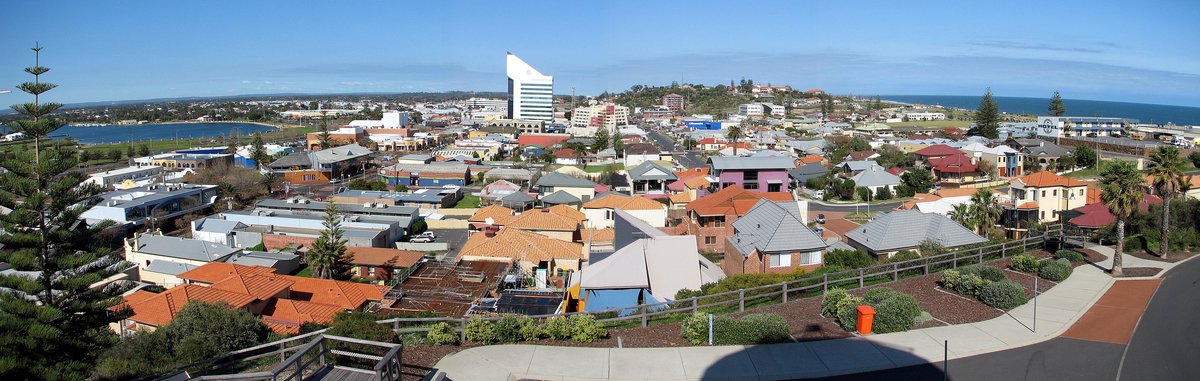
Western Australian coastal city and South West gateway, known for bottlenose dolphins in Koombana Bay.
Bunbury is Western Australia's second city and the gateway to the South West — the wine country, surf coast and wilderness that stretches from here to Cape Leeuwin. Most travellers pass through on their way to Margaret River or Busselton, but the city rewards a stop of its own.
The most distinctive thing about Bunbury is its dolphins. Up to 90 bottlenose dolphins have made Koombana Bay their home, and they regularly swim up to the beach to interact with people wading in the shallows. The Dolphin Discovery Centre on the foreshore is the hub for this — you can wade in and hope for an encounter, or join a guided cruise out into the bay.
The old city centre has reinvented itself around food. Victoria Street, locally called the Cappuccino Strip, is lined with cafes and restaurants that fill up on weekend mornings. The Marlston waterfront development, carved out of industrial land on the northern edge of the CBD, adds a modern stretch of eateries and bars overlooking the Leschenault Estuary.
The landscape around Bunbury has some geological quirks worth knowing. Ancient lava flows left distinctive basalt formations along the city beach, and the world's last native Tuart forest — a woodland of massive, gnarled trees found nowhere else — lies just south of the city at Tuart Forest National Park. In town, St Patrick's Cathedral and the Old Bunbury Railway Station are the main heritage landmarks.
Bunbury sits about 175 km south of Perth — roughly two hours by road — and makes a practical base for exploring the South West before committing to the wineries further down.
Guide
Getting There
Bunbury is about 175 km south of Perth, roughly two hours by road via the South Western Highway or the faster Kwinana Freeway and Forrest Highway combination.
TransWA runs regular coach services from Perth's Elizabeth Quay Bus Station to Bunbury, taking around two and a half hours. The Australind train — one of Western Australia's few remaining regional passenger services — runs twice daily between Perth East and the new Bunbury Passenger Terminal in East Bunbury, taking just under three hours and passing through scenic south-west countryside.
Bunbury Airport, 8 km southeast of the city centre, has limited scheduled services. Most travellers arrive by road or rail.
Guide
When to Go
Bunbury has a Mediterranean climate — warm, dry summers and mild, wet winters. The best time to visit for outdoor activities, beach swimming, and dolphin encounters is from October through April, when the weather is reliably warm and the sea is calm. Summer temperatures typically reach 28–32°C.
The dolphin encounters at Koombana Bay are possible year-round, but calm summer mornings tend to bring the dolphins closer to shore. The diving and snorkelling season at the offshore reefs runs from spring through autumn.
Winter (June–August) is mild by Australian standards — rarely cold — and the lower tourist numbers mean quieter beaches and easier accommodation. The Tuart Forest is worth visiting year-round, though spring brings wildflowers and the best birdwatching.