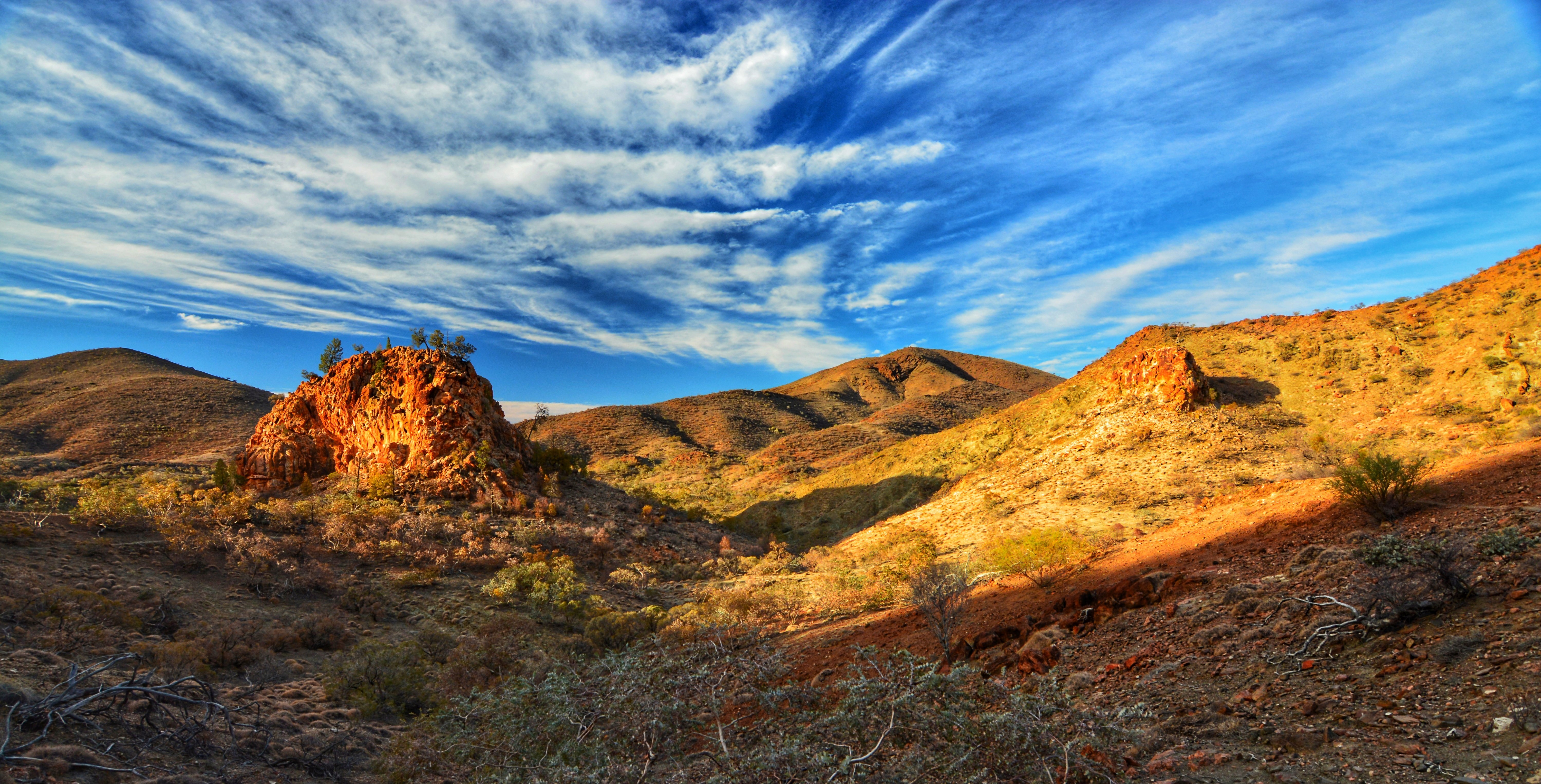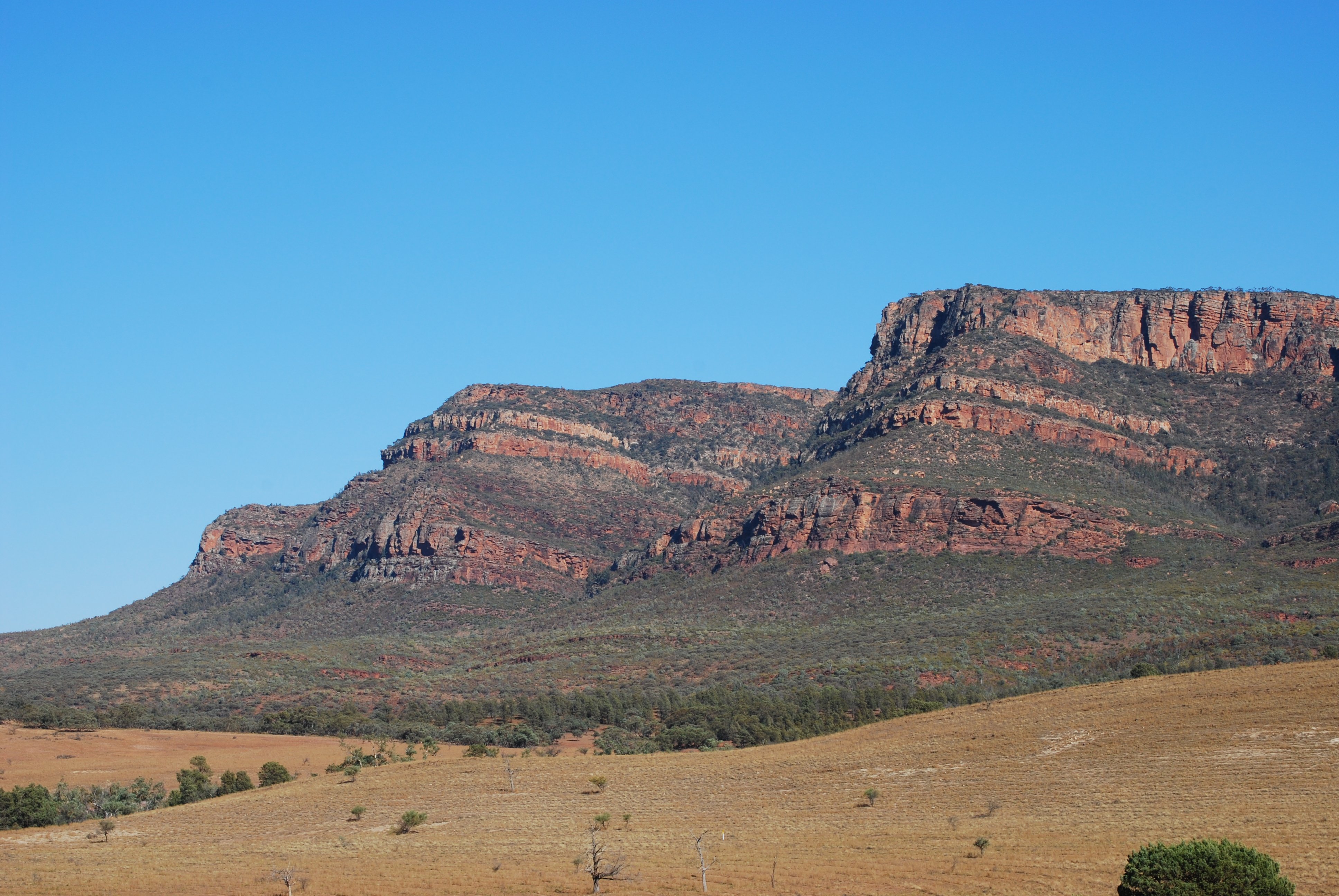
The Flinders Ranges are South Australia's great inland mountain range, stretching nearly 400 kilometres north of Adelaide through increasingly remote country. They are not the Alps — the highest point, St Mary Peak reaches just 1,171 metres — but the colours are extraordinary: red ochre gorges, white-barked gum trees, purple ranges at dusk. The light here is something painters come for.
The geological story is ancient. These are among the world's oldest mountain ranges, folded and eroded over 800 million years. The Adnyamathanha people, who have lived here for at least 17,000 years, read the landscape differently: the great natural amphitheatre of Wilpena Pound is Ikara in their language, meaning "meeting place." The pound — a ring of ridges enclosing a valley — was formed not by meteor or volcanic collapse but by a simple anticline eroded from within.
The southern Flinders around Quorn and Hawker are accessible and much visited; the northern Flinders around Arkaroola are rougher and wilder. Between them lies the national park, most of it accessible by two-wheel-drive on the sealed road to Wilpena, with the best walks and gorges on dirt roads that require more care. Wildlife includes yellow-footed rock-wallabies, emus, wedge-tailed eagles, and at dusk, large mobs of red and grey kangaroos emerging from the scrub.
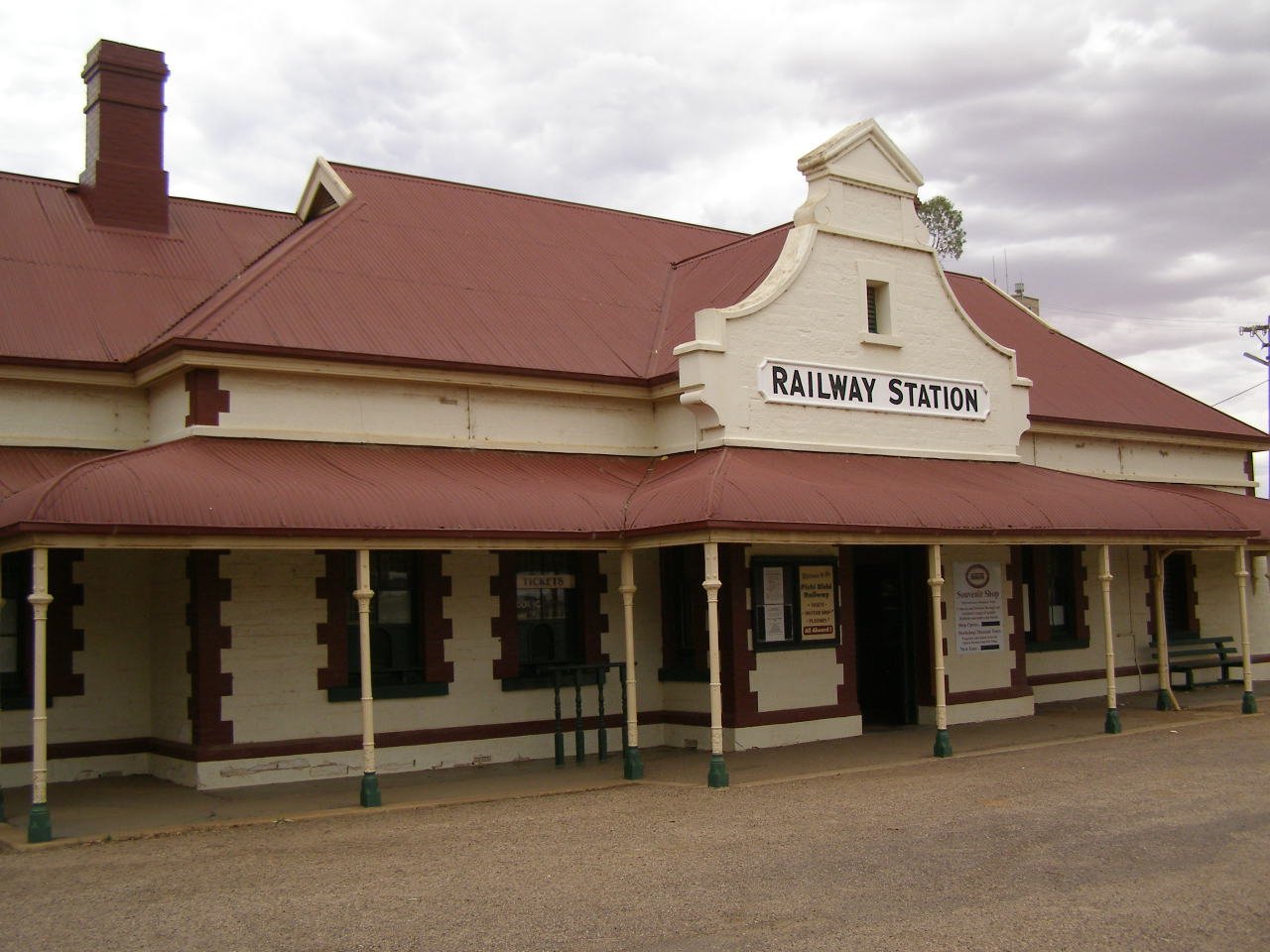
The best seasons are autumn and spring. Summer temperatures regularly exceed 40°C, and the sun is ruthless on the open ridgelines. Winter nights are cold but the days are usually clear and perfect for walking. The Pichi Richi Railway runs vintage steam trips through the southern ranges from Quorn.