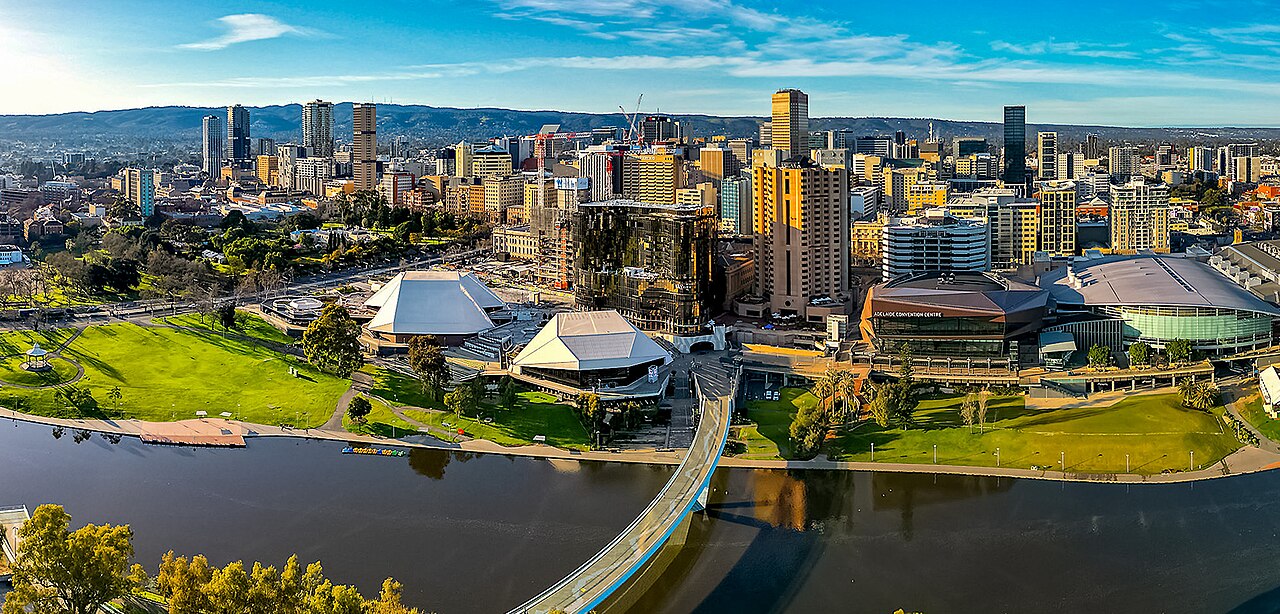
Adelaide sits on a coastal plain between the Mount Lofty Ranges and the sea, the quiet capital of South Australia and — by reputation — the most orderly, least frenetic Australian city. It was founded in 1836 as a free colony (no convicts), laid out to Colonel William Light's rigorous grid plan, and ringed entirely by parkland. That grid and those parks still define the centre: a flat, walkable square mile of wide boulevards, 19th-century sandstone and plane trees, wrapped in green.
What Adelaide lacks in Melbourne's buzz or Sydney's harbour drama, it makes up for in food, wine and festivals. The Central Market is one of the best produce markets in the country — a whole city block of cheese, charcuterie, oysters and migrant food stalls. Every March the city fills up for the Adelaide Fringe (the second-largest fringe festival in the world) and WOMADelaide. The nearby wine regions are the main event for many visitors: the Barossa Valley, McLaren Vale and the Clare Valley are all within an hour.
The seaside suburb of Glenelg, reached by the old Bay Tram from Victoria Square, is where Adelaideans go for fish and chips on the beach. North of the city, Hahndorf in the Adelaide Hills is a well-preserved German settlement with smoky beer halls. Kangaroo Island, an hour across the water, is a day or two in itself.
Summer is hot and dry; autumn is the best time for wine country and festival season.