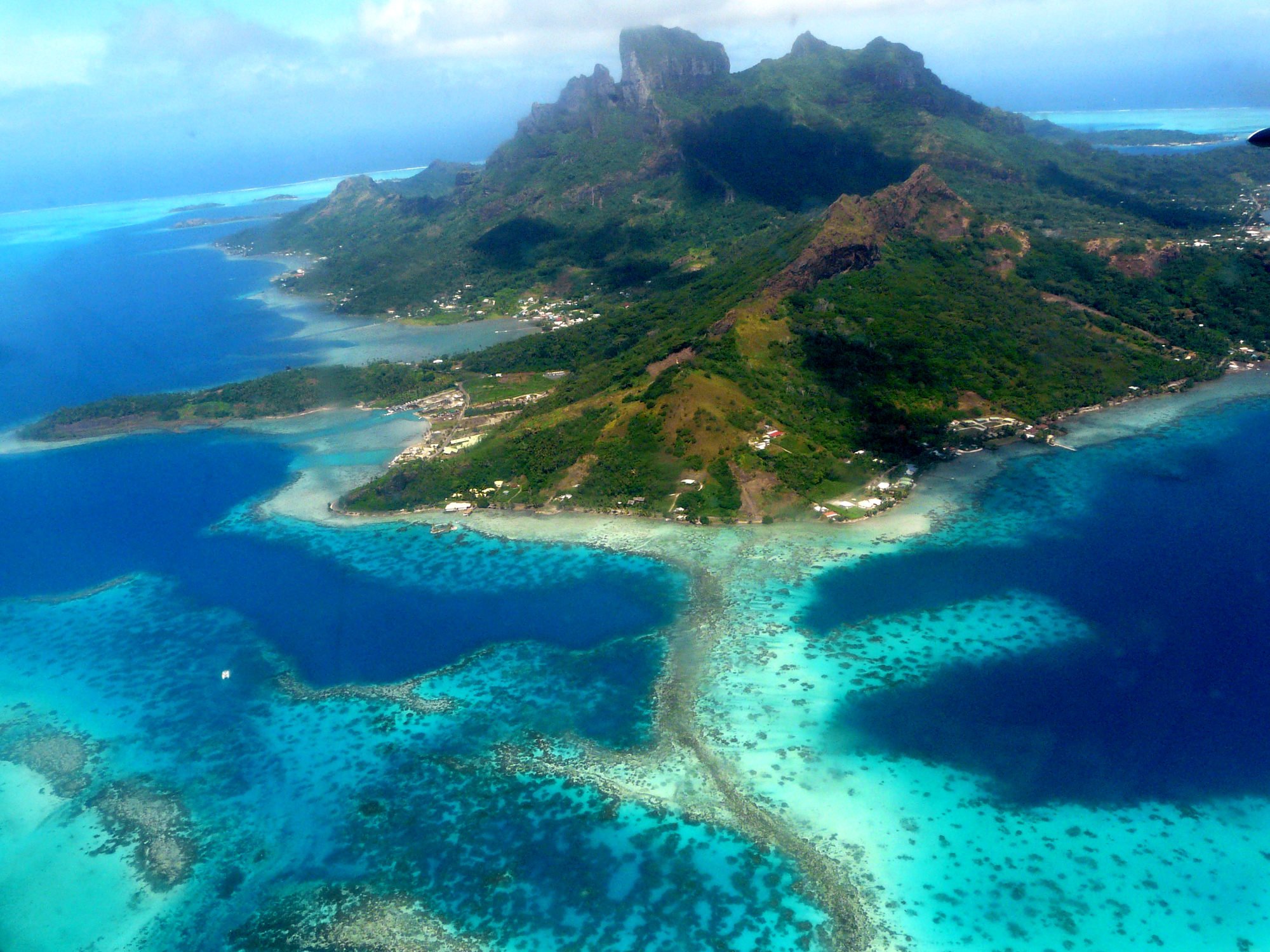
Bora Bora is an almost absurdly beautiful island in French Polynesia, roughly 230 kilometres northwest of Tahiti. A jagged volcanic core — dominated by the extinct peaks of Mount Otemanu and Mount Pahia — rises sharply from a lagoon of implausible turquoise, enclosed by a coral reef and a string of low sandy motu. The combination of lush mountain interior and luminous lagoon is genuinely hard to better anywhere in the Pacific.
Most of the island's accommodation sits on those outer motu, where the overwater bungalow was effectively pioneered. Vaitape, the main village on the western shore of the main island, is the commercial centre — a small, laid-back settlement with a few shops, restaurants, and the main quay where boats arrive from Tahiti. Budget travellers eat well here at the roulottes that appear at the waterfront each evening.
The lagoon is the main event. Snorkelling and diving here are exceptional: the water is warm and clear, the Coral Gardens at the northern end of the lagoon have some of the healthiest coral in French Polynesia, and encounters with blacktip reef sharks, leopard rays, and green turtles are routine rather than remarkable. Most visitors spend the bulk of their days on or in the water — whether on guided lagoon excursions, in kayaks, or drifting off Matira Beach, the island's one public white-sand beach.
The island's history adds unexpected depth. Bora Bora served as a major American supply base during World War II — the first US base established outside North America after Pearl Harbor. Gun emplacements and bunkers still dot the hills, and an island jeep tour covering the fortifications is one of the better half-day activities available. The tiny private island of Motu Tapu, on the western side of the lagoon, offers the most iconic view in French Polynesia: white sand and palms with Otemanu rising beyond.