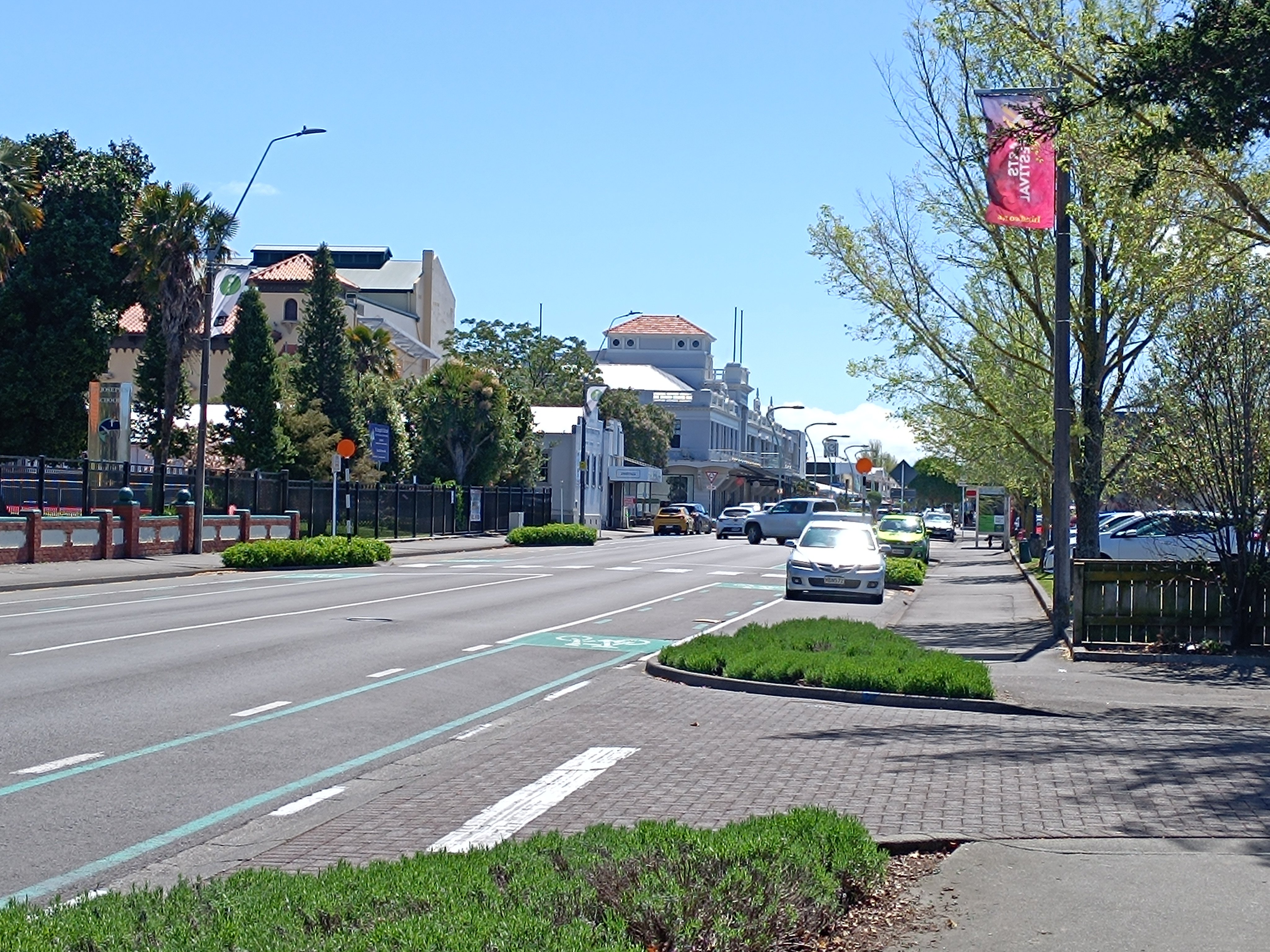
Hawke's Bay agricultural city with Art Deco architecture from the 1931 earthquake rebuild.
Hastings is a prosperous agricultural city in Hawke's Bay, set in the wide Heretaunga Plains about twenty minutes inland from the coast. It was almost entirely rebuilt after the devastating 1931 earthquake — one of New Zealand's deadliest natural disasters — and the reconstruction left it with a remarkable concentration of Art Deco and Spanish Mission architecture, rivalling Napier as a showcase of the style.
The surrounding region is New Zealand's premier wine country, and Hastings is at the centre of it. Orchards and vineyards stretch in every direction, and the city has a well-earned reputation for food: farmers' markets, cellar doors, and restaurants using produce grown within sight of the hills. Te Mata Peak, rising sharply above the plains to the south-east, is the defining landmark — you can drive or walk to the top for sweeping views across the bay and back towards the Kaweka ranges.
Guide
Getting There
Hawke's Bay Airport is in Napier, about 20 km north of Hastings, with regular flights from Auckland, Wellington, and Christchurch. Hastings is the larger city but lacks its own airport; a taxi or shuttle from the airport takes about 20 minutes.
By train, the Northern Explorer between Auckland and Wellington stops at Napier but does not serve Hastings. Intercity and Naked Bus services connect Hastings to Wellington (about 4.5 hours) and Napier. If you are driving, Hastings sits on State Highway 2, about 325 km from Wellington and 430 km from Auckland. The Napier–Hastings corridor is an easy 20-minute drive.
Guide
When to Go
Hastings has one of New Zealand's most reliably sunny climates — the Heretaunga Plains are sheltered by ranges to the west and east, and annual sunshine hours rival the top of the South Island. Summer (December–February) is warm and dry, ideal for wine touring and outdoor activity. Autumn brings the harvest festivals: the Harvest Hawke's Bay event in March draws food and wine enthusiasts from across the country and is the most atmospheric time to visit.
Winter is mild by New Zealand standards, though some cellar doors close or reduce hours. Spring (September–November) brings blossom on the orchards and is a good time for cycling the wine trails before the summer crowds.