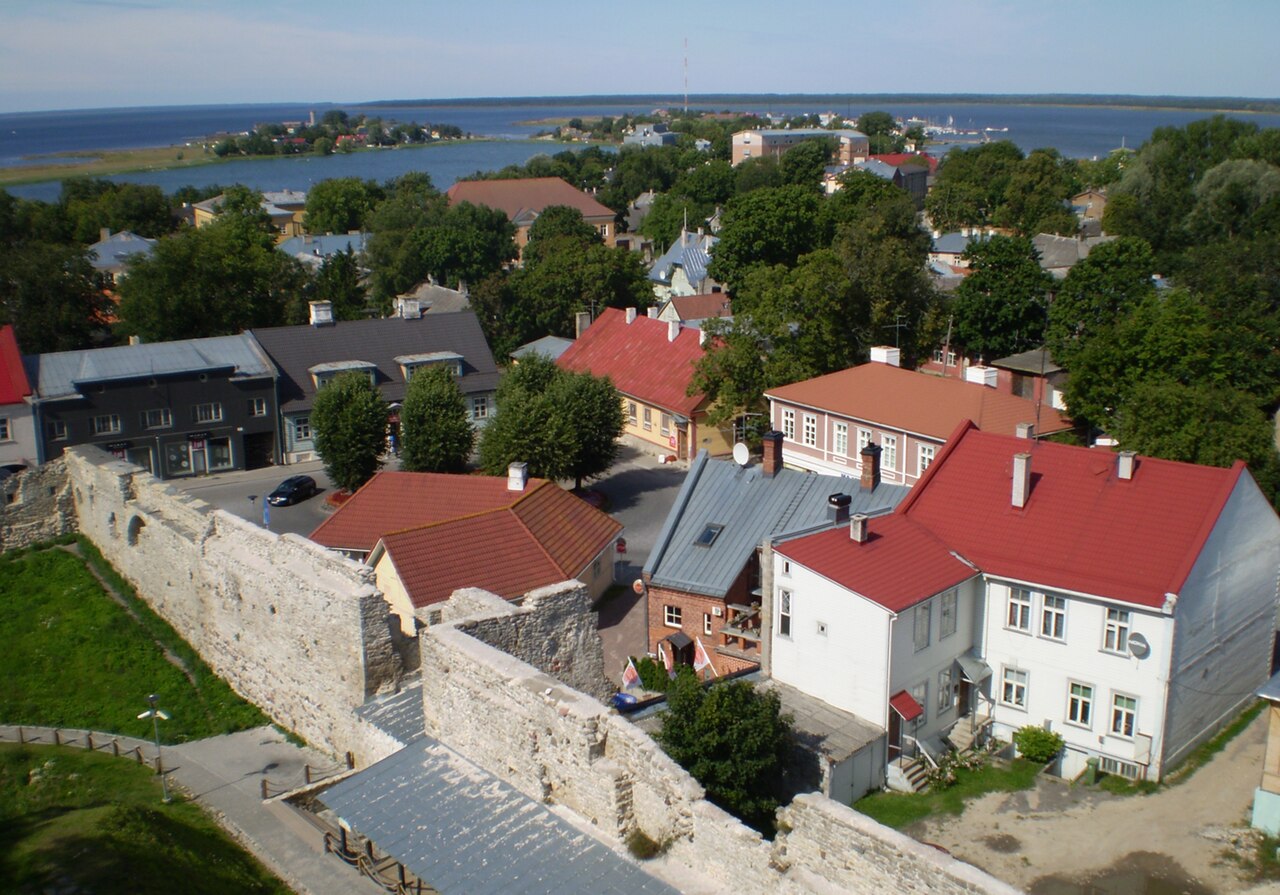
Haapsalu is a small resort town on the west coast of Estonia, known for centuries for its warm sea water, curative mud baths, and peaceful atmosphere. The narrow streets lined with early twentieth-century wooden houses make the old town a pleasant place to wander, and the pace of life here is noticeably slower than Tallinn, two hours to the east.
The main sight is the Episcopal Castle, a vast thirteenth-century fortress with a cathedral built into its walls. The legend of the White Lady — a ghostly figure said to appear in one of the castle windows during the August full moon — has turned into the town's biggest annual celebration, the White Lady Days festival. The seafront promenade and the elegant wooden Kuursaal, built in 1898, are the other centrepieces, offering a picturesque walk along the shore.
The Haapsalu Railway Station, though no longer served by trains, is an architectural highlight in its own right — built to receive the Russian imperial family, it has a covered wooden platform 214 metres long and houses the Estonian Railway and Communications Museum. For those seeking the traditional Haapsalu experience, the town's therapeutic mud is still available at the Läänemaa Spa.
Haapsalu comes alive in summer with a string of music festivals: the Old Music Festival, the strings festival Viiulimängud, the Tchaikovsky Festival (the composer was a regular visitor), and the August Blues Festival. The town is also a convenient jumping-off point for the islands of Hiiumaa and Vormsi.