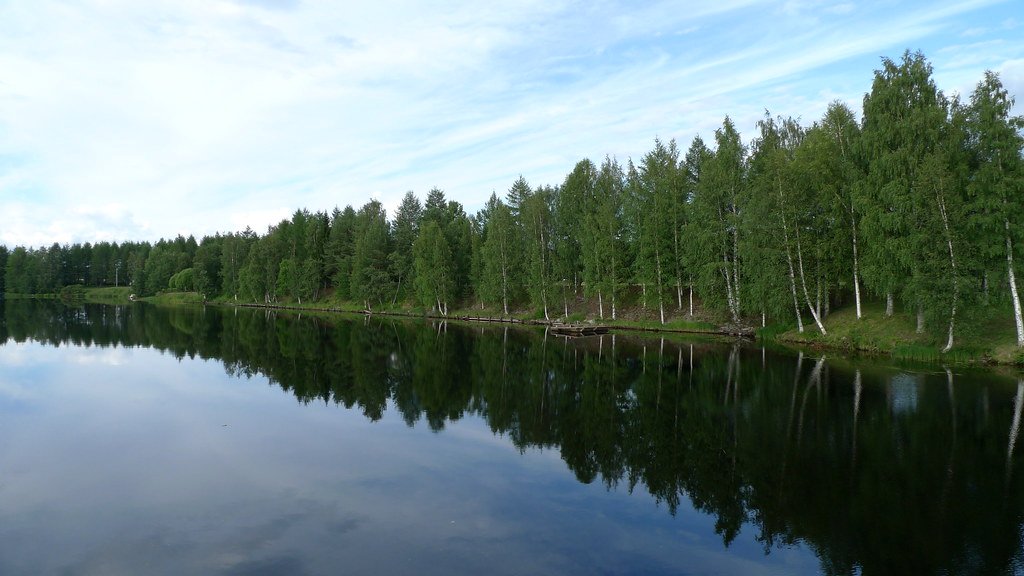
Lieksa sits on the eastern shore of Lake Pielinen in North Karelia, pressed against the Russian border and surrounded by some of the wildest forest in Finland. It is a small city — fewer than 10,000 people — but its setting is genuinely spectacular: the lake is Finland's sixth largest, and across the water rise the wooded ridges of Koli, one of the most celebrated landscapes in the country.
The town itself was founded in 1653 as Brahea by the Swedish governor Pietari Brahe, though it was suppressed just a few decades later. Modern Lieksa took shape slowly over the centuries, finally becoming a city in 1973 when the borough merged with the surrounding municipality of Pielisjärvi. Its character today is shaped more by the wilderness at its edges than by anything built within it.
For travelers, Lieksa is primarily a base for nature. The Ruunaa recreation area to the northeast offers excellent whitewater rafting and hiking along the Lieksanjoki river, and the forests around the city — including the bogs and brown-bear country of Patvinsuo National Park — are prime territory for birdwatching and, in autumn, berry and mushroom picking. The Pielinen Open-Air Museum, one of the largest in Finland, gives a vivid picture of traditional North Karelian rural life.
If you are coming from the south, the train from Joensuu takes about 90 minutes and the ride through the lakeland scenery is worth it in itself.