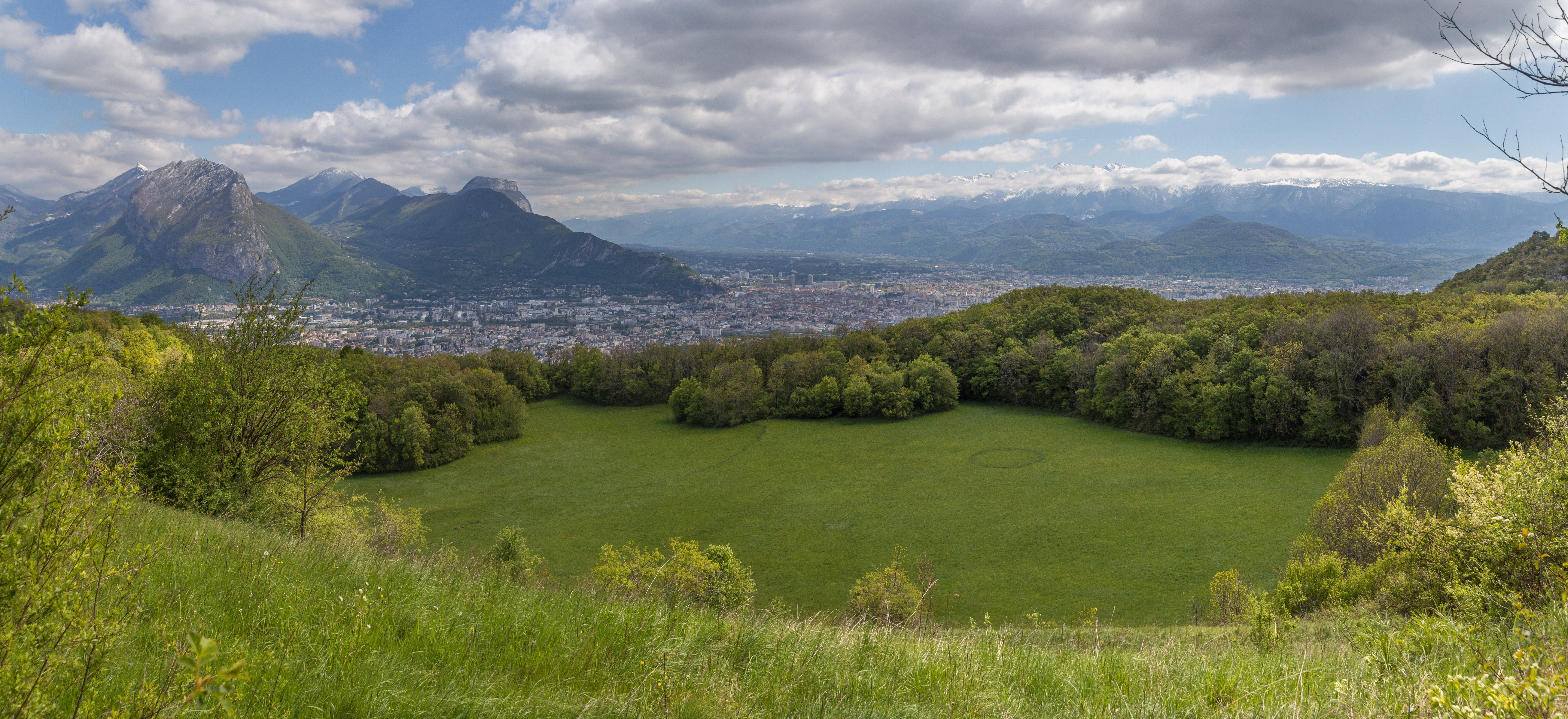
Grenoble sits at the confluence of the Drac and Isère rivers, hemmed in by three mountain ranges — the Chartreuse, Vercors, and Belledonne. The setting is dramatic: snow-capped peaks visible from almost every street corner, La Bastille fortress looming above the old town. It hosted the 1968 Winter Olympics, and the outdoors still define the city's character.
The old town is compact and walkable, centred on Place Saint-André and its medieval parliament building. The iconic cable car — known as "les bulles" (the bubbles) for its transparent spherical gondolas — rises from the Jardins de Ville to the Bastille in five minutes, giving panoramic views over the city and all three mountain ranges. North of the Isère, the Saint-Laurent quarter has a bohemian edge — galleries, small restaurants, and the Musée de l'Ancien Évêché built above centuries of excavated Roman remains.
Grenoble is also a serious university city, home to one of France's largest student populations. That means affordable restaurants, lively bars, and a cultural calendar that punches above its weight. The Musée de Grenoble holds one of France's best art collections outside Paris, while the Musée Dauphinois covers Alpine history in a beautiful hillside convent. And Grenoble claims Jacques de Vaucanson — creator of the famous Digesting Duck, forerunner of the automaton — among its native sons. Come for the mountains, but give the city itself a couple of days — it rewards the time.