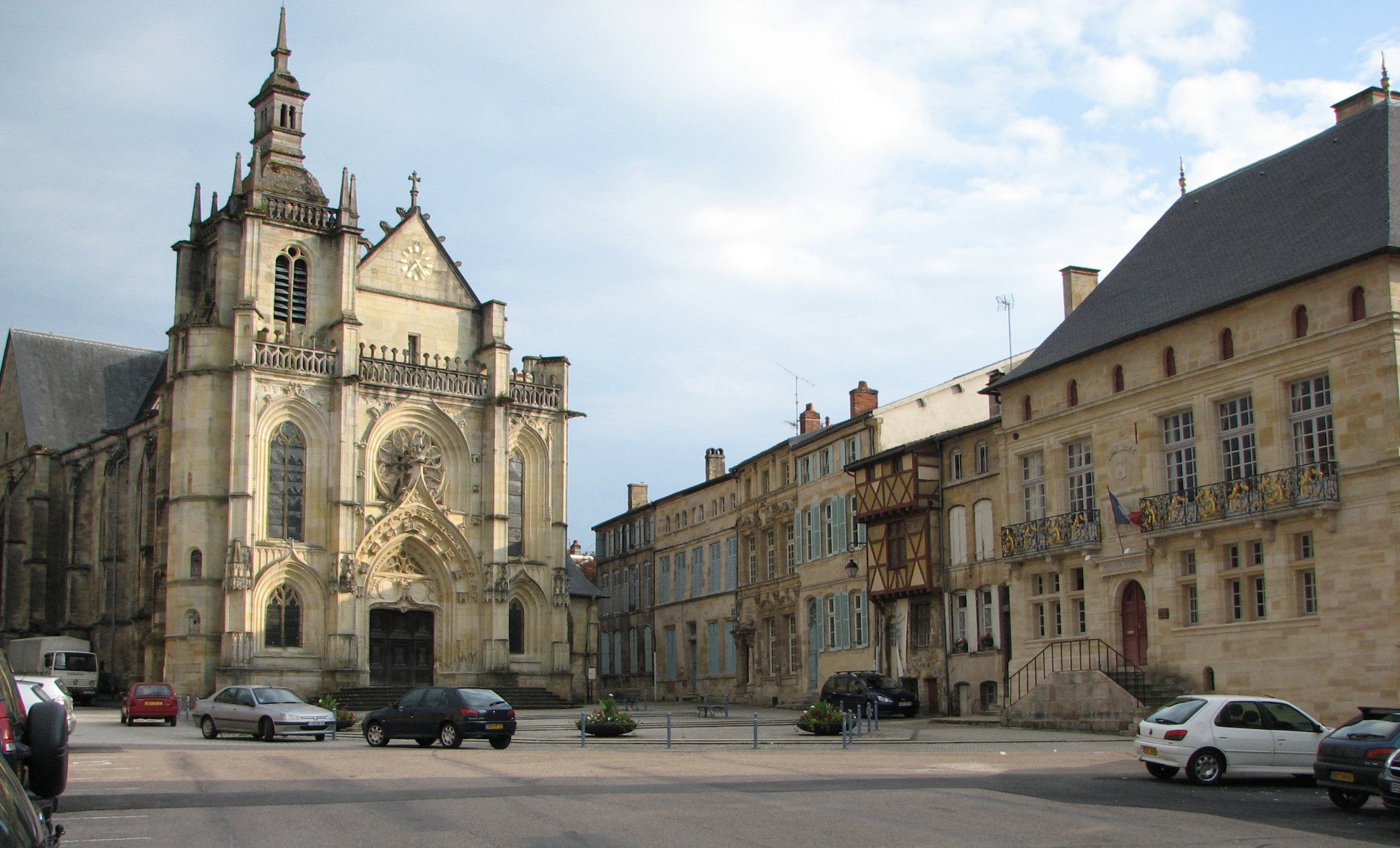
Bar-le-Duc is a quiet town in the Meuse département whose upper town contains one of the finest collections of Renaissance architecture in northeastern France. The old centre feels like an open-air museum: elegant stone facades, mullioned windows, sculptured medallions, and pilasters line the streets and squares, all built from the warm blond limestone of the Meuse.
In 1580, Montaigne declared the Collège Gilles de Trèves "the most beautiful house in France" — its Renaissance courtyard remains astonishing. The Place Saint-Pierre is surrounded by patrician mansions, and the streets of the Ducs de Bar and Bourg quarters reward slow exploration on foot. The most celebrated artwork in town is the Transi de René de Chalon, a startling 16th-century sculpture by Ligier Richier in the church of Saint-Étienne: a skeletal figure holding its own heart aloft, carved with disturbing anatomical precision.
Bar-le-Duc also played a crucial role in World War I as the starting point of the Voie Sacrée, the supply road that kept Verdun alive during the longest battle of the war. The town is also known for its redcurrant jam (confiture de groseilles), made by hand with a goose feather to remove the seeds — a local speciality since the Middle Ages.