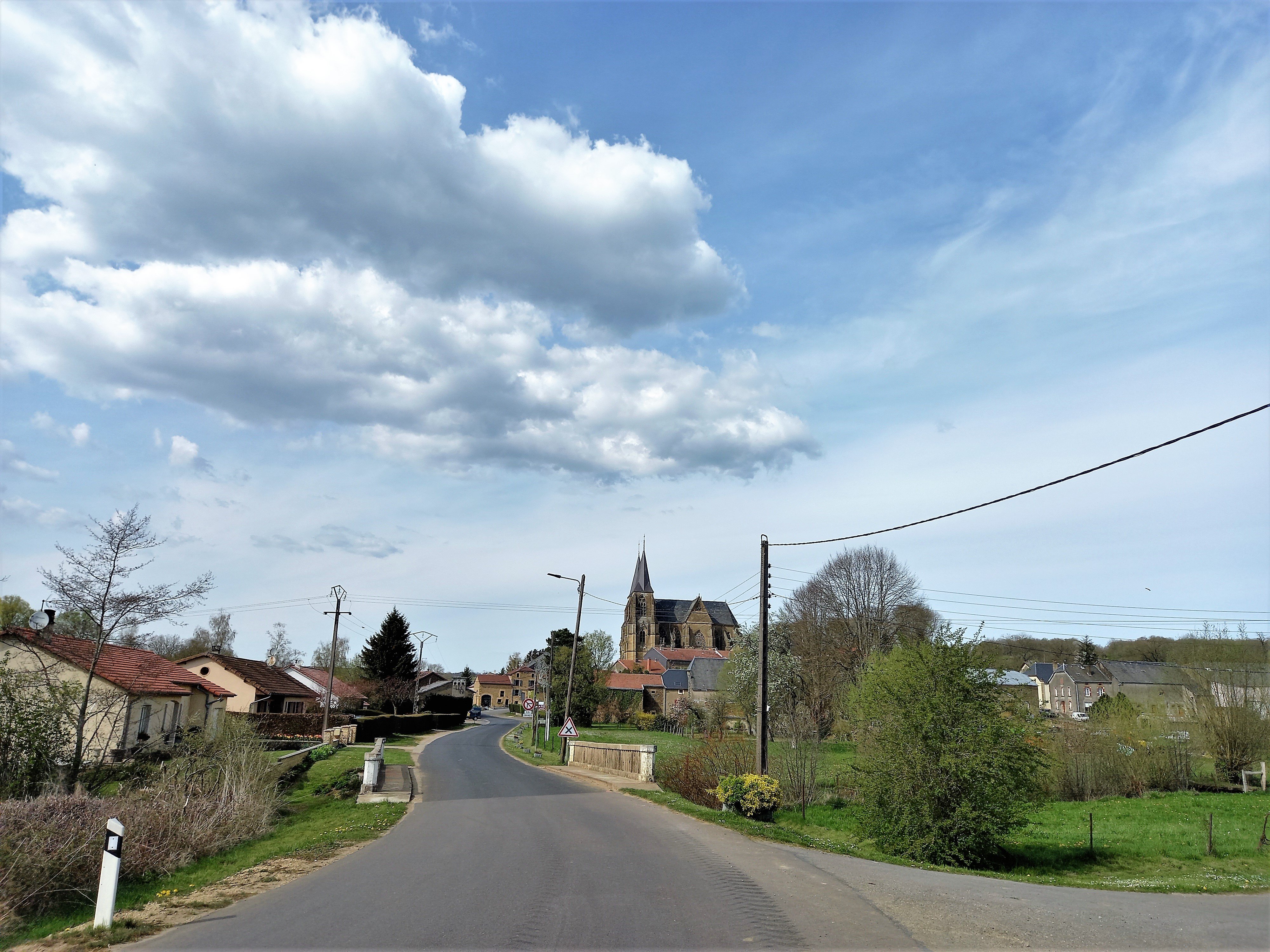
The department of Meuse in the Grand Est region occupies a quiet stretch of historical Lorraine: rolling agricultural plateaux, dense oak and beech forests, and river valleys that see relatively few tourists compared to their neighbors in Alsace and the Vosges. The Meuse river itself gives the department its name, rising in the plateau and flowing north through gently farmed land before crossing into Belgium. For most of the year the landscape has a contemplative, slightly melancholy beauty — which makes it fitting that this is also some of the most fought-over ground in Europe.
Verdun is the department's defining place and one of the most important sites of remembrance on the continent. The ten-month battle fought here in 1916 consumed roughly 700,000 lives between French and German forces and left a landscape so saturated with unexploded ordnance that large sections remain permanently off-limits more than a century later. The Mémorial de Verdun museum presents the battle with unflinching clarity, and the battlefields outside the city are visited in near-silence by people from across Europe. The Ossuaire de Douaumont contains the bones of at least 130,000 unidentified soldiers behind its lantern tower, visible for miles across the plateau. The Fort de Vaux and the surrounding craters, trenches, and remnant shell-damage speak without commentary. Further west, the Butte de Vauquois preserves the most extreme mine-warfare sector of the entire Western Front.
The Voie Sacrée — the Sacred Way — runs south from Verdun toward Bar-le-Duc, the departmental prefecture. This road was the only supply line into Verdun during the battle: trucks ran along it night and day, and it was kept open at extraordinary cost. Driving it today, through ordinary Lorraine farmland, gives some sense of what its maintenance meant. Bar-le-Duc itself is a pleasant, undervisited town with a fine Renaissance upper town, a notable church, and a tradition of making a particular seeded redcurrant jam that has been produced here since the sixteenth century. South of Verdun, the town of Saint-Mihiel marks the 1918 American offensive, and the hilltop Château de Hattonchâtel was restored after the war by an American patron.
Away from the battlefields, Meuse has a quiet rural appeal. The villages along the river valley are largely unchanged, the forests are excellent for walking, and the Lac de Madine to the south provides a large freshwater leisure area used mainly by French families. The department rewards slow travel by those willing to sit with its history rather than pass through it quickly.