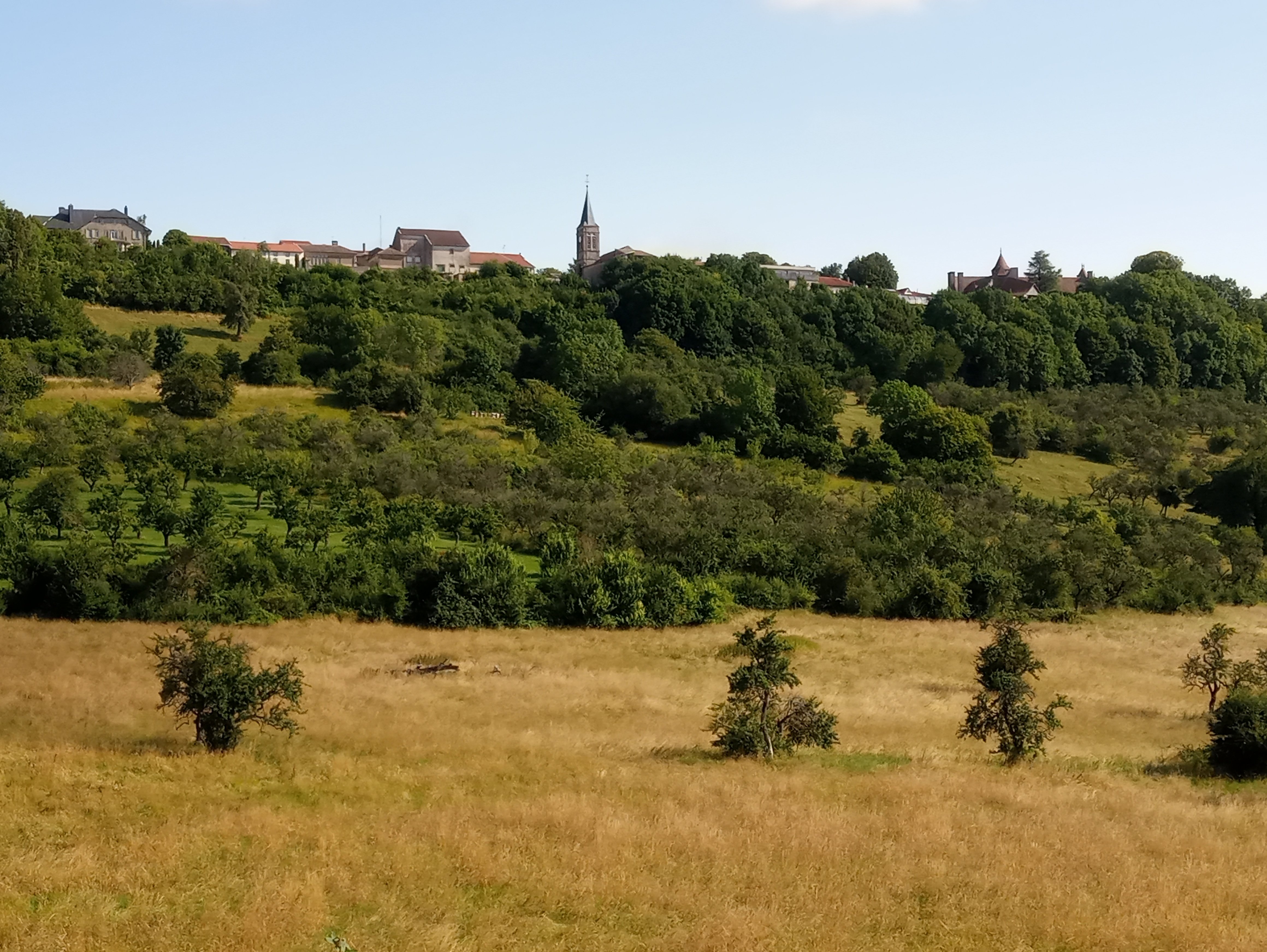
Hattonchâtel is a fortified village perched on a rocky promontory overlooking the Woëvre plain in Lorraine. It is named after Hatton, a 9th-century Bishop of Verdun who built a palace here. Cardinal Richelieu had the buildings destroyed in 1634, and the village fell into ruin.
The place was rescued in the 1920s by Belle Skinner, a wealthy American who fell in love with the village while visiting the World War I battlefields and funded its restoration. What you find today is a charming cluster of stone houses, a restored château de Hattonchâtel (now a hotel), a 14th-century cloister, and views across the Lac de Madine to the Meuse hills.
The viewpoint from the promontory is one of the finest in Lorraine — on a clear day you can see 30 kilometres across the plain. A short drive southwest brings you to the atmospheric remains of L'Étanche Abbey, a 12th-century Premonstratensian monastery. Hattonchâtel makes an excellent half-day stop when visiting the Verdun battlefield sites, which lie about 25 kilometres north.