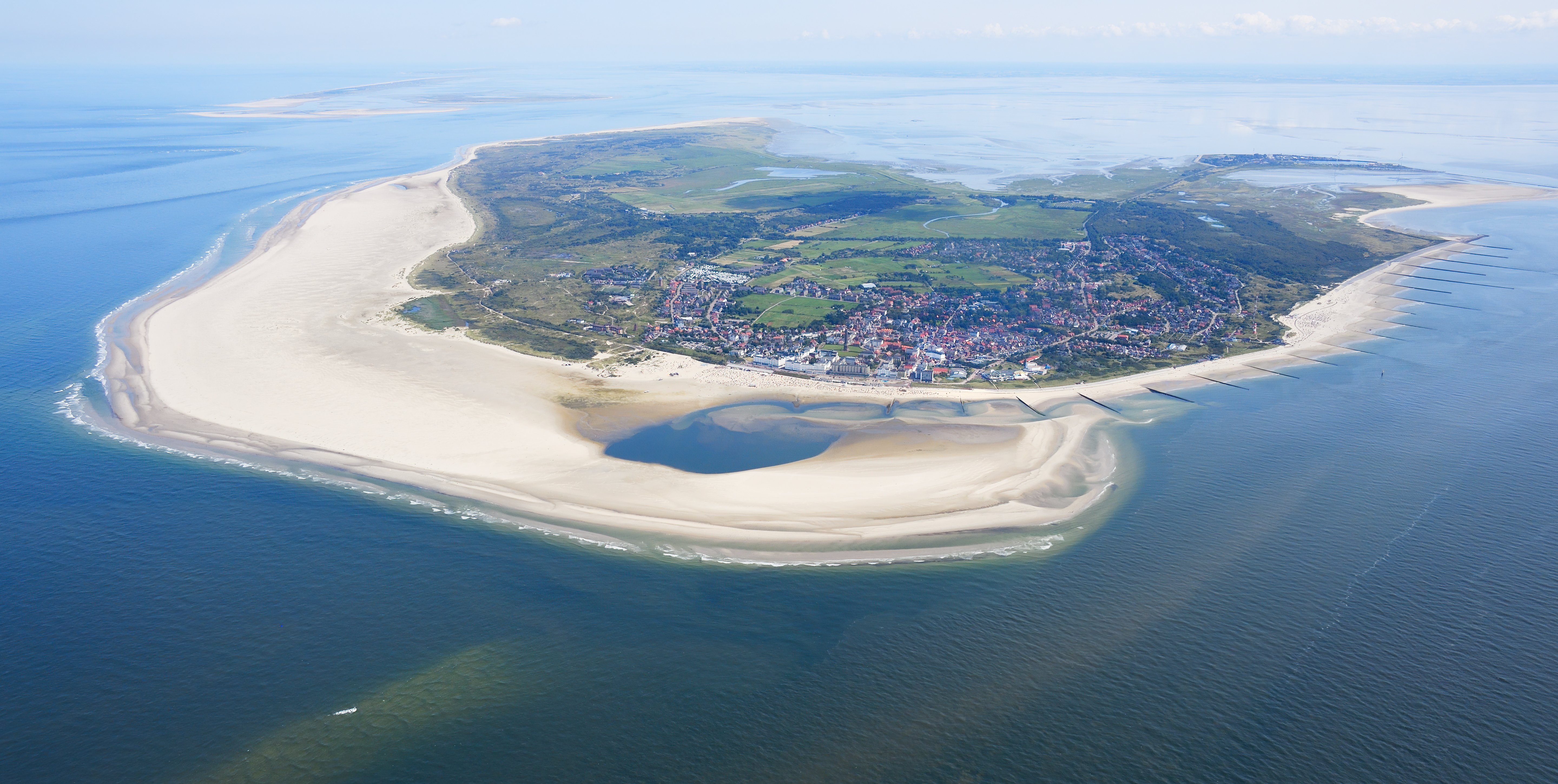
Borkum is the largest and westernmost of the East Frisian Islands, sitting where the Ems estuary meets the North Sea. It feels different from its neighbours — more spacious, more varied, and with a certain faded grandeur that comes from over 150 years as a seaside resort. The island is roughly 30 square kilometres, big enough to have distinct landscapes: wide sandy beaches along the north coast, grassy dunes in the interior, and salt marshes on the sheltered southern side facing the Wadden Sea.
The main town clusters around the Old Lighthouse and the promenade, where elegant Wilhelmine-era hotels and guesthouses line the seafront. Borkum has a livelier feel than the smaller car-free islands — cars are permitted here, though most visitors get around by bicycle. The beaches are the main draw: the north beach is broad and backed by dunes, with beach chairs (Strandkörbe) available for hire from spring through autumn.
The Dykhus Museum covers the island's whaling history — a sperm whale skeleton is the centrepiece — while the New Lighthouse offers panoramic views from its viewing platform. On the south side, guided Wadden Sea mudflat walks take you out across the UNESCO World Heritage tidal flats.
Borkum is also a certified health resort (Nordseeheilbad), and the iodine-rich sea air has attracted visitors with respiratory conditions since the nineteenth century. The island's position at the mouth of the Ems makes it an excellent spot for watching large container ships pass on their way to and from Emden and the Dutch port of Delfzijl.
Ferries run from Emden on the mainland, taking about two hours for the crossing. There is also a fast catamaran service in summer.